Comprehensive Care Personalized for You
Treatments We Offer
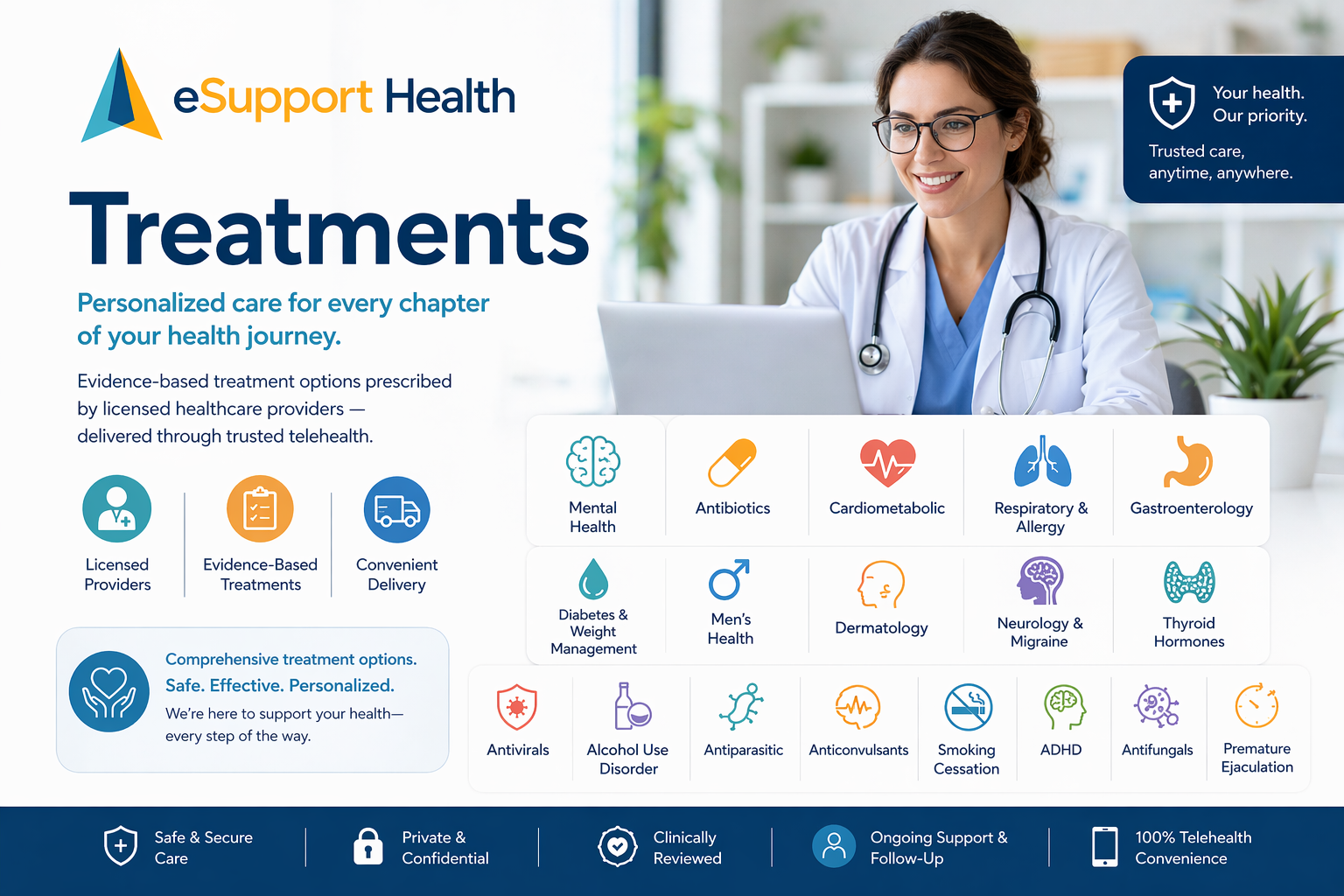
Introduction: A Structured Approach to Modern Treatment
Healthcare today is no longer defined by isolated conditions or one-time visits. Most medical care especially in outpatient settings is longitudinal, data-driven, and highly individualized, reflecting modern clinical standards described by global health authorities such as the World Health Organization (WHO). At eSupport Health, treatments are organized into clinically meaningful categories that reflect how providers evaluate and manage patients in real-world practice. This structured approach supports safe, consistent, and evidence-based care delivery across a wide range of conditions.
Rather than focusing solely on medications, this framework emphasizes:
- Diagnosis-based treatment selection
- Safety screening and contraindication review
- Ongoing monitoring and follow-up care
- Integration of lifestyle and medical factors
Each treatment category below represents a cluster of related conditions and therapies, designed to support both educational clarity and clinical decision-making.
Mental Health Treatments
Structured Care for Mood, Anxiety, and Cognitive Health
Mental health treatment involves more than symptom relief—it requires careful evaluation of psychological, neurologic, and behavioral factors. Conditions such as depression, anxiety disorders, and mood instability are often chronic and require long-term management strategies consistent with guidance from the National Institute of Mental Health (NIMH). Treatment approaches may include pharmacologic and non-pharmacologic strategies, with medication selection guided by clinical evidence, patient response, and safety considerations.
Treatment approaches may include:
- Selective serotonin reuptake inhibitors (SSRIs)
- Serotonin-norepinephrine reuptake inhibitors (SNRIs)
- Adjunctive therapies depending on clinical presentation
Telemedicine supports mental health care through:
- Structured intake and symptom screening
- Medication management when appropriate
- Ongoing follow-up and response tracking
Antibiotics
Antibiotic therapy requires careful selection to ensure effectiveness while minimizing unnecessary use. Clinical decision-making is guided by principles of antimicrobial stewardship outlined by the Centers for Disease Control and Prevention (CDC) and supported by regulatory oversight from the FDA drug approval process. Appropriate use helps reduce resistance risk and ensures that treatment remains effective for both current and future patients.
Targeted Therapy for Bacterial Infections
Antibiotics are used to treat bacterial infections and must be selected based on suspected or confirmed pathogen, infection site, and patient factors.
Clinical considerations include:
- Appropriate spectrum of activity
- Avoidance of unnecessary use (antibiotic stewardship)
- Monitoring for resistance patterns
Telehealth is appropriate for:
- Certain uncomplicated infections
- Follow-up and treatment adjustments
Men’s Health
Men’s health treatments often involve evaluation of hormonal, vascular, and urologic factors. Conditions such as erectile dysfunction and testosterone imbalance are managed using evidence-based therapies supported by clinical research and regulatory guidance, including resources provided through the National Institute of Diabetes and Digestive and Kidney Diseases (NIDDK). Individualized care plans are essential to ensure both effectiveness and long-term safety.
Hormonal, Sexual, and Urologic Care
Men’s health includes conditions affecting:
- Erectile function
- Hormonal balance (testosterone)
- Prostate-related symptoms
Treatment is highly individualized and often involves:
- PDE5 inhibitors
- Hormonal evaluation
- Lifestyle and cardiovascular risk assessment
Pain & Inflammation
Pain and inflammation management requires a balanced approach that considers both symptom control and long-term safety. Nonsteroidal anti-inflammatory drugs (NSAIDs) and other therapies are used in accordance with safety recommendations outlined by the FDA drug safety communications. Treatment strategies focus on improving function while minimizing risk associated with prolonged or inappropriate medication use.
Acute and Chronic Pain Management
Pain is a complex clinical entity involving:
- Inflammatory pathways
- Neurologic signaling
- Musculoskeletal factors
Treatment may include:
- Nonsteroidal anti-inflammatory drugs (NSAIDs)
- Neuropathic pain agents
- Adjunctive therapies
Effective management focuses on:
- Function restoration
- Long-term safety
- Minimizing unnecessary escalation
Cardiometabolic Treatments
Cardiometabolic care targets key risk factors such as hypertension, dyslipidemia, and metabolic imbalance. Treatment decisions are guided by long-term prevention strategies and clinical frameworks supported by institutions like the National Heart, Lung, and Blood Institute (NHLBI). These approaches aim to reduce the risk of cardiovascular events while supporting overall metabolic health.
Blood Pressure, Lipids, and Fluid Balance
Cardiometabolic care addresses major risk factors for:
- Heart disease
- Stroke
- Metabolic disorders
Core treatment areas include:
- Hypertension
- Dyslipidemia
- Fluid management
Medications are selected based on:
- Risk profile
- Lab values
- Long-term prevention goals
Thyroid Hormones
Thyroid disorders require ongoing monitoring and precise dose adjustments to maintain metabolic balance. Treatment approaches are aligned with clinical guidance from endocrine research bodies, including resources available through the NIDDK endocrine health information portal. Regular follow-up ensures that therapy remains effective and safe over time.
Regulation of Metabolic Function
Thyroid disorders affect:
- Energy levels
- Metabolism
- Cardiovascular function
Treatment typically involves:
- Hormone replacement or suppression
- Regular lab monitoring
- Dose adjustments over time
Respiratory & Allergy
Respiratory and allergy conditions involve complex immune and inflammatory responses that require targeted treatment strategies. Clinical management is supported by guidance from organizations such as the NHLBI asthma guidelines and global recommendations from the WHO. Treatment focuses on symptom control, prevention of exacerbations, and improved quality of life.
Airway Inflammation and Immune Response
Respiratory and allergy conditions include:
- Asthma
- Allergic rhinitis
- Seasonal or environmental sensitivities
Treatment strategies focus on:
- Reducing inflammation
- Improving airway function
- Preventing exacerbations
Gastroenterology
Gastrointestinal conditions such as GERD and functional bowel disorders are managed using a combination of pharmacologic therapy and lifestyle interventions. Clinical approaches are supported by evidence from institutions like the NIDDK digestive diseases resources, ensuring that treatment decisions are grounded in current medical knowledge.
Digestive Health and Functional Disorders
Gastrointestinal care includes:
- Acid reflux (GERD)
- Functional bowel disorders
- Inflammatory conditions
Treatment often involves:
- Acid suppression therapy
- Motility regulation
- Dietary modifications
Diabetes & Weight Management
Diabetes and weight management require long-term, data-driven strategies that address both metabolic control and overall health risk. Treatment frameworks are informed by research from the NIDDK diabetes program and global health initiatives such as those outlined by the WHO. These strategies focus on improving outcomes through sustained monitoring and individualized care.
Metabolic Control and Risk Reduction
This category addresses:
- Blood glucose regulation
- Insulin resistance
- Obesity-related risk
Treatment includes:
- Glucose-lowering medications
- Weight management therapies
- Long-term metabolic monitoring
Dermatology
Dermatologic treatments are selected based on condition severity, patient characteristics, and response to prior therapy. Clinical decision-making is supported by evidence-based dermatology resources, including research and treatment guidelines referenced by the National Library of Medicine (NLM).
Skin Health and Chronic Conditions
Dermatologic conditions range from:
- Acne
- Inflammatory skin disorders
- Chronic dermatologic conditions
Treatment is guided by:
- Severity
- Skin type
- Response to prior therapies
Neurology & Migraine
Neurologic and migraine care requires careful evaluation of symptom patterns, triggers, and patient history. Treatment approaches are informed by neurologic research supported by institutions such as the National Institute of Neurological Disorders and Stroke (NINDS), ensuring that care aligns with current clinical understanding.
Neurologic Disorders and Headache Management
Neurologic care includes:
- Migraine disorders
- Chronic headache syndromes
- Nerve-related conditions
Treatment may involve:
- Preventive medications
- Acute symptom management
- Neurologic evaluation
Antivirals
Antiviral treatments are most effective when used appropriately and within specific timeframes. Clinical use is guided by regulatory and safety standards established by the FDA and supported by infectious disease guidance from organizations such as the WHO.
Management of Viral Infections
Antiviral medications are used for:
- Herpes simplex virus (HSV)
- Influenza
- Other viral conditions
Treatment timing and appropriateness are critical for effectiveness.
Alcohol Use Disorder
Alcohol use disorder treatment involves a combination of behavioral strategies and, when appropriate, medication-assisted therapy. Evidence-based approaches are supported by research from the National Institute on Alcohol Abuse and Alcoholism (NIAAA), emphasizing long-term recovery and monitoring.
Medication-Supported Behavioral Treatment
Alcohol use disorder (AUD) is a chronic condition requiring:
- Behavioral strategies
- Medication support when appropriate
- Long-term follow-up
Medications may help:
- Reduce cravings
- Support abstinence
- Improve outcomes
Antiparasitic (Anthelmintic)
Antiparasitic (anthelmintic) treatments are used to manage infections caused by parasitic organisms, including intestinal worms and other helminths. These infections can vary widely in presentation, ranging from mild gastrointestinal symptoms to more complex systemic involvement depending on the organism and patient-specific factors. Clinical evaluation focuses on symptom patterns, exposure history, and, when appropriate, diagnostic testing to confirm the presence of a parasitic infection. Treatment selection is guided by evidence-based protocols and safety considerations, consistent with guidance from the Centers for Disease Control and Prevention (CDC) and global health authorities such as the World Health Organization (WHO).
Treatment of Parasitic Infections
Antiparasitic medications are used to treat infections caused by:
- Intestinal worms
- Parasitic organisms
Treatment selection depends on:
- Type of parasite
- Severity of infection
- Clinical presentation
Telehealth can support certain aspects of antiparasitic care, particularly for initial symptom assessment, review of exposure risk, and follow-up after treatment. However, appropriate use depends on clinical context, and some cases may require laboratory testing or in-person evaluation to ensure accurate diagnosis. A structured telehealth model allows providers to assess patient history, determine whether treatment is appropriate, and guide next steps in a manner consistent with established clinical standards.
As with all treatments, antiparasitic therapy is individualized and based on a comprehensive clinical evaluation. Not all symptoms are caused by parasitic infections, and unnecessary use of medications is avoided to maintain patient safety and treatment effectiveness. This approach reflects broader principles of responsible prescribing and aligns with global efforts to promote safe, targeted use of anti-infective therapies.
Anticonvulsants / Neuropathic Pain
Neurologic Stabilization and Pain Modulation
This category includes medications used for:
- Seizure disorders
- Neuropathic pain
- Central nervous system modulation
These therapies work by:
- Stabilizing nerve signaling
- Reducing abnormal excitability
Smoking Cessation
Smoking cessation programs integrate pharmacologic support and behavioral interventions. Clinical recommendations align with guidance from the CDC smoking cessation resources, focusing on improving quit success rates through structured support.
Behavioral and Pharmacologic Support
Smoking cessation treatment includes:
- Nicotine replacement therapy
- Prescription medications
- Behavioral support strategies
Effective programs combine:
- Medication
- Counseling
- Follow-up
ADHD
Attention and Cognitive Regulation
ADHD treatment focuses on:
- Attention control
- Impulse regulation
- Functional improvement
Therapy may include:
- Non-stimulant medications
- Behavioral strategies
- Structured evaluation
Antifungals
Treatment of Fungal Infections
Antifungal medications treat:
- Skin infections
- Systemic fungal conditions
Selection depends on:
- Infection location
- Severity
- Patient factors
Premature Ejaculation
Sexual Health and Performance Management
Premature ejaculation treatment may involve:
- SSRIs
- Behavioral techniques
- Individualized therapy plans
The goal is to improve:
- Control
- Confidence
- Overall satisfaction
How Telemedicine Supports Treatment Across Categories
Many of these conditions are well-suited for telehealth, as they rely on clinical history, symptom patterns, and longitudinal monitoring. The effectiveness of telemedicine in managing chronic conditions is supported by global healthcare frameworks, including digital health initiatives described by the World Health Organization (WHO). This model enables consistent follow-up, structured data tracking, and ongoing patient engagement while maintaining high standards of clinical care.
All treatment processes are designed with secure communication, confidential data handling, and strict regulatory compliance. These standards align with federal healthcare and privacy requirements, as well as broader global principles for patient data protection and safety in digital healthcare environments.
Explore a comprehensive range of clinician-guided treatments organized by condition and therapeutic category. Each option is supported by a structured medical evaluation, evidence-based care standards, and ongoing monitoring to ensure safe, personalized, and effective treatment.
All Treatments
A structured telehealth model includes:
Step 1 — Intake
Comprehensive medical history and symptom reporting
Step 2 — Clinical Review
Assessment by licensed providers
Step 3 — Safety Screening
Contraindications, interactions, and risk factors
Step 4 — Treatment Planning
Individualized therapy selection
Step 5 — Follow-Up
Monitoring response and adjusting care
Important Clinical Principles Across All Treatments
1. Individualization
No treatment is one-size-fits-all.
2. Monitoring
Ongoing evaluation ensures safety and effectiveness.
3. Risk-Benefit Balance
Every therapy decision weighs potential benefits against risks.
4. Long-Term Perspective
Many conditions require sustained management, not short-term fixes.
When Telemedicine Is NOT Appropriate
Telehealth is not suitable for:
- Emergency symptoms
- Acute severe conditions
- Situations requiring immediate in-person evaluation
Privacy and Compliance
All treatment processes are designed with:
- Secure communication
- Confidential data handling
- Regulatory compliance
Disclaimer
This content is for informational purposes only and does not constitute medical advice, diagnosis, or treatment. All treatment decisions must be made by a licensed healthcare provider based on individual clinical evaluation.
Frequently Asked Questions (FAQ)
Joe Duncan
Chief Executive Officer (CEO)
Joe is the cofounder of eSupport Health and has served as its CEO since the company was formed in November 2019. He is a seasoned executive with over 20 years of experience in founding, building, and leading effective organizations, and whose counsel is sought out across a variety of businesses.
Since 2012, Joe has served as an advisor to the CEO of protocols.io, the leading digital repository for academic research. He led protocols.io’s initial seed round and continues to be actively involved as a trusted advisor to the company.
From 2015 to 2017, Joe served as General Manager at Lionbridge Technologies, where he established the Legal Division, following Lionsbridge’s acquisition of Joe’s company, Geotext Translations, Inc.
In 1997, Joe founded and served as CEO of Geotext, a multimillion-dollar business providing premium language services to global 100 law firms and major corporations. Geotext became the go-to translation company for many of the world’s most critical cross-border legal matters. At its peak, Geotext had over 120 full-time employees and 3,500+ contractors around the world. In 2015, Geotext was acquired by Lionbridge.
Joe holds a B.A. in English Literature, with a Minor in Political Science, from the University of Southern California and an M.F.A. from Columbia University. Joe enjoys reading, running, and hiking in the Adirondacks with his family. Recently Joe learned to surf which involves more wiping out than catching waves, but he enjoys the challenge.