PRESCRIPTION MEDICATIONS
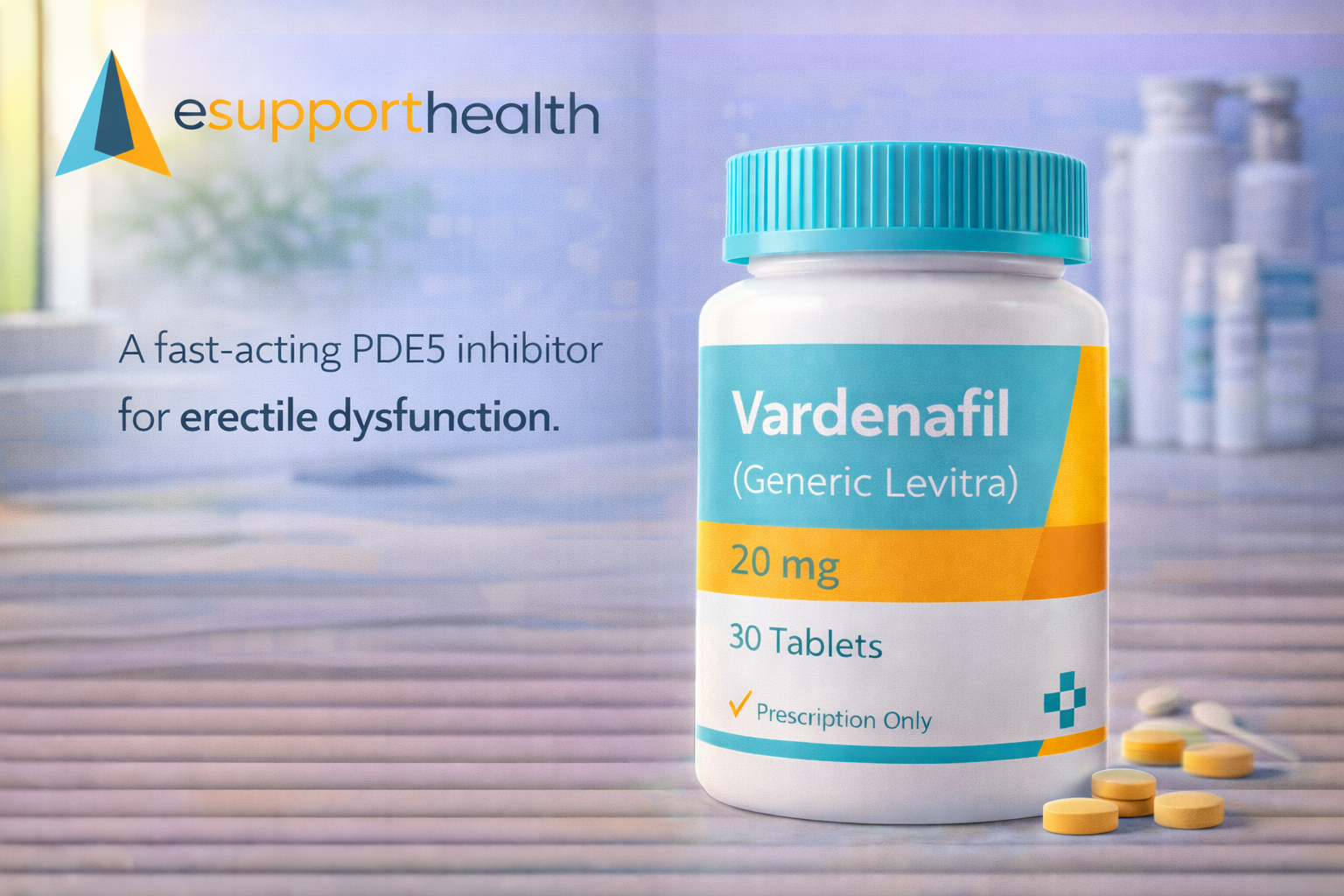
Vardenafil (Generic Levitra)
Vardenafil, commonly known as the generic form of Levitra, is a prescription medication used to treat erectile dysfunction (ED) in adult men. It belongs to a group of medications called phosphodiesterase type-5 (PDE5) inhibitors, which improve erectile function by enhancing blood flow to penile tissues during sexual stimulation.
Erectile dysfunction can occur when the biological processes responsible for achieving or maintaining an erection are impaired. These processes involve coordinated interactions between vascular circulation, nerve signaling, hormonal balance, and psychological factors.
Vardenafil works by supporting the body’s natural erectile response rather than directly causing an erection.
Begin Vardenafil Treatment Through eSupport Health
Starting treatment through eSupport Health begins with a secure online medical evaluation completed by a licensed healthcare provider. During this process, clinicians review your symptoms, medical history, and current medications to determine whether treatment is appropriate. If a medication is recommended, a prescription may be issued in accordance with medical guidelines and transmitted to a licensed pharmacy for dispensing. This streamlined telehealth approach allows patients to access professional care and treatment guidance in a convenient and confidential manner.
This page provides medically reviewed information about how Vardenafil works, treatment expectations, safety considerations, and telehealth evaluation for erectile dysfunction therapy.
Medication Overview
Vardenafil was developed as a PDE5 inhibitor designed specifically to improve erectile function through enhanced vascular signaling. Like other medications in this class, it supports the natural physiological response to sexual stimulation by promoting improved blood circulation within erectile tissues.
Healthcare providers may recommend Vardenafil for individuals experiencing persistent erectile dysfunction that affects sexual performance or quality of life.
Vardenafil is typically taken prior to anticipated sexual activity, allowing the medication to reach effective levels in the bloodstream. The medication has been studied in multiple clinical trials evaluating its effectiveness in men with ED associated with various underlying conditions, including diabetes and cardiovascular risk factors.
Because erectile dysfunction can sometimes reflect broader health concerns, clinicians often evaluate overall health and medication history before recommending treatment.
Understanding Erectile Dysfunction and Modern Treatment Approaches
Erectile dysfunction affects millions of men worldwide and may occur due to reduced blood flow, nerve impairment, hormonal changes, medication effects, or psychological stress.
Modern ED treatments focus on improving the body’s natural erectile process rather than artificially inducing erections. PDE5 inhibitors such as Vardenafil enhance the biochemical signaling pathways responsible for vascular relaxation in penile arteries.
By supporting these natural mechanisms, medications in this class can help restore erectile function when sexual stimulation occurs.
How Blood Circulation Influences Erectile Function
Healthy erectile function depends on adequate blood flow into specialized penile tissues known as the corpora cavernosa. During sexual stimulation, blood vessels widen and allow increased circulation within these tissues.
If vascular function is impaired due to conditions such as hypertension, diabetes, or endothelial dysfunction, the amount of blood reaching the penis may be insufficient to sustain an erection.
Medications that improve vascular signaling pathways can help restore the conditions necessary for erectile function.
Why PDE5 Inhibitors Became the Standard ED Therapy
Before the introduction of oral PDE5 inhibitors, treatment options for erectile dysfunction were limited and often invasive. The development of medications such as Sildenafil, Tadalafil, and Vardenafil transformed ED management by offering effective oral therapy.
These medications target the underlying physiological mechanisms of erectile function, making them widely recommended as first-line treatments for ED in many clinical guidelines.
How Erectile Dysfunction May Reflect Overall Health
Erectile dysfunction is sometimes linked to broader health conditions that affect circulation or nerve function. Cardiovascular disease, metabolic disorders, and lifestyle factors may influence erectile performance.
Because penile blood vessels are relatively small, early vascular changes may appear as erectile symptoms before other cardiovascular signs develop.
For this reason, healthcare providers often review overall health when evaluating ED symptoms.
Lifestyle Factors That May Influence Sexual Health
Several lifestyle factors can affect erectile function, including:
- smoking
- excessive alcohol use
- poor sleep patterns
- sedentary lifestyle
- chronic stress
Improving cardiovascular fitness and metabolic health may support better vascular function and sexual performance.
The Role of Nitric Oxide in the Erectile Response
During sexual stimulation, nerve signals trigger the release of nitric oxide within penile tissues. Nitric oxide activates biochemical pathways that relax smooth muscle within blood vessel walls.
This process allows blood vessels to widen and increases circulation within erectile tissues, creating the conditions necessary for erection.
Why ED Treatment Is Often Individualized
Individuals may respond differently to ED medications depending on age, underlying medical conditions, medication interactions, and overall cardiovascular health.
Healthcare providers may adjust dosage or recommend alternative treatment strategies based on individual response and tolerability.
Levitra vs Viagra: Understanding Key Differences
Vardenafil (Levitra) and Sildenafil (Viagra) belong to the same medication class and share a similar mechanism of action. Both medications enhance blood flow to penile tissues by inhibiting the PDE5 enzyme, which supports erectile function during sexual stimulation.
However, some clinical differences may influence treatment selection. Vardenafil may have a slightly longer duration of action in certain individuals and may be less affected by high-fat meals compared with some other PDE5 inhibitors. Healthcare providers evaluate factors such as medication response, side-effect tolerance, and individual lifestyle preferences when recommending an ED treatment.
Because individuals respond differently to medications, clinicians may adjust treatment strategies to identify the most effective option.
Choosing Among PDE5 Inhibitors for Erectile Dysfunction
Several medications belong to the PDE5 inhibitor class, including Sildenafil, Tadalafil, Vardenafil, and Avanafil. While these medications share a common mechanism, they differ in characteristics such as onset time, duration of action, and dosing flexibility.
For example, some medications are designed for shorter treatment windows, while others remain active for extended periods. Vardenafil is often chosen when patients prefer a balance between rapid onset and moderate duration of activity.
Healthcare providers consider factors such as cardiovascular health, medication interactions, and treatment goals when determining which ED medication may be most appropriate.
Safe Online Access to Erectile Dysfunction Treatment
Advances in telemedicine have expanded access to medical evaluation for conditions such as erectile dysfunction. Through secure telehealth platforms, individuals can consult licensed healthcare providers remotely and discuss symptoms in a confidential setting.
During these consultations, clinicians review medical history, current medications, cardiovascular risk factors, and lifestyle considerations before determining whether ED medication may be appropriate.
When treatment is recommended, prescriptions can be transmitted electronically to licensed pharmacies, helping ensure that medications are dispensed safely and in accordance with medical guidelines.
Why Some Patients Respond Differently to ED Medications
Although medications like Vardenafil, Sildenafil, and Tadalafil belong to the same PDE5 inhibitor class, individual responses can vary significantly. Factors such as metabolism, vascular health, underlying medical conditions, and concurrent medications may influence how well a particular treatment works.
Some individuals may experience better results with one medication compared with another, even though the drugs share a similar mechanism. For this reason, clinicians sometimes adjust the medication type or dosage if the initial treatment does not produce the desired response. Personalized evaluation helps determine which therapy best aligns with the patient’s health profile and treatment goals.
How Meal Timing Can Influence ED Medication Absorption
The absorption of certain erectile-dysfunction medications may be influenced by food intake. High-fat meals can sometimes slow the rate at which some medications enter the bloodstream, potentially delaying their onset of action.
Vardenafil generally begins working within about 30 to 60 minutes, but individual timing may vary depending on digestion, metabolism, and whether the medication is taken with food. For individuals planning medication timing around sexual activity, clinicians may provide guidance on how meal timing could affect medication onset.
Understanding these factors can help individuals optimize the effectiveness of their treatment.
Discover Expansion Module 12
The Role of Endothelial Health in Erectile Function
Healthy blood vessel lining, known as the endothelium, plays a critical role in erectile function. Endothelial cells regulate the release of nitric oxide, which triggers the vascular relaxation required for penile blood flow during sexual stimulation.
Conditions such as hypertension, diabetes, smoking, and metabolic syndrome can impair endothelial function and reduce nitric-oxide signaling. When this process is disrupted, the ability of blood vessels to expand properly may be reduced.
Medications such as Vardenafil help support the nitric-oxide pathway by inhibiting PDE5, allowing the signaling process responsible for vascular relaxation to remain active for longer periods during stimulation.
How Vardenafil (Levitra) Works
Vardenafil works by blocking the enzyme phosphodiesterase type-5 (PDE5), which normally breaks down cyclic guanosine monophosphate (cGMP).
cGMP is a signaling molecule that relaxes smooth muscle within penile blood vessels. When PDE5 activity is inhibited, cGMP levels remain elevated, allowing blood vessels to remain dilated and increasing blood flow during sexual stimulation.
This mechanism enhances the body’s natural erectile response rather than producing an erection independently.
Key Prescribing Information
| Medication Class | PDE5 inhibitor |
|---|---|
| Generic name | Vardenafil |
| Brand name | Levitra |
| Administration | Oral tablet |
| Typical Onset | 30–60 minutes |
| Duration | Approximately 4–6 hours |
| Prescribing | Determined by licensed clinician |
Treatment duration and dosage depend on the specific condition being treated, symptom severity, and individual patient response.
Candidate Criteria
Healthcare providers may evaluate Vardenafil for individuals experiencing symptoms such as:
- difficulty achieving an erection
- difficulty maintaining an erection
- reduced erectile rigidity
- inconsistent erectile response
Clinicians may also review cardiovascular health, medication interactions, and other underlying health conditions before recommending ED medication.
Safety
Like all medications, Tadalafil may cause side effects in some individuals.
Common side effects may include:
- headache
- facial flushing
- nasal congestion
- back pain
- indigestion
Tadalafil should not be used with nitrate medications or certain cardiovascular drugs because the combination may cause a significant drop in blood pressure.
Patients should discuss all medications and medical conditions with a healthcare provider before starting treatment.
Clinical Onset & Expectations
Vardenafil typically begins working within this time frame after ingestion.
Peak blood levels occur, allowing improved erectile response during sexual stimulation.
Therapeutic effects gradually diminish as the medication is metabolized.
Telehealth Prescribing Framework
A licensed provider reviews your information to determine whether treatment is medically appropriate. Prescriptions are not guaranteed and are issued only when clinically indicated and permitted by applicable laws.
Secure Medical Intake
Complete a confidential health questionnaire including symptoms, medical history, and current medications.
Licensed Provider Review
A licensed clinician evaluates your health information and may request additional details or a virtual consultation.
Clinical Decision & Treatment Plan
If appropriate, the provider determines a treatment plan and provides dosing guidance and monitoring instructions.
eRx & Pharmacy Fulfillment
If prescribed, the medication is electronically sent to a licensed pharmacy for dispensing.
Frequently Asked Questions
How quickly does Vardenafil work?
Vardenafil typically begins working within 30 to 60 minutes after taking the medication.
Does Vardenafil require sexual stimulation?
Yes. Sexual stimulation is necessary for the medication to produce its effect.
Is generic Vardenafil the same as Levitra?
FDA-approved generic Vardenafil contains the same active ingredient as brand-name Levitra.
Can Vardenafil interact with other medications?
Yes. Certain medications, particularly nitrates and some cardiovascular drugs, may interact with PDE5 inhibitors.
How long does Vardenafil last?
The effects of Vardenafil generally last for several hours, although individual responses may vary.
What causes erectile dysfunction?
Erectile dysfunction (ED) can result from a variety of physical and psychological factors. Common physical causes include reduced blood flow to the penis, cardiovascular disease, diabetes, hormonal imbalance, and nerve disorders. Lifestyle factors such as smoking, excessive alcohol consumption, poor sleep, and chronic stress may also contribute. In some cases, ED may be linked to psychological factors such as anxiety or relationship concerns.
How long does Levitra last compared with Viagra?
Vardenafil (Levitra) typically remains effective for about 4 to 6 hours, while Sildenafil (Viagra) generally works for around 4 hours. Although both medications belong to the PDE5 inhibitor class and have similar mechanisms of action, their duration and individual response may vary depending on metabolism, dosage, and overall health.
Is generic Levitra effective?
Yes. Generic Vardenafil contains the same active ingredient as brand-name Levitra and works through the same biological mechanism. Regulatory authorities require generic medications to demonstrate bioequivalence, meaning they provide comparable levels of the active ingredient in the bloodstream as the brand medication.
Can ED medications affect blood pressure?
PDE5 inhibitors such as Vardenafil relax blood vessels, which can lead to a temporary decrease in blood pressure. In most individuals this effect is mild, but it can become significant when combined with nitrate medications or certain cardiovascular drugs. Healthcare providers evaluate medical history and medication use before prescribing ED treatments.
Do telehealth doctors prescribe ED medications?
Yes. Licensed healthcare providers may prescribe erectile-dysfunction medications through telehealth consultations when medically appropriate. During the evaluation, clinicians review symptoms, medical history, current medications, and cardiovascular risk factors before recommending treatment.
How quickly does Vardenafil start working?
Vardenafil generally begins working within 30 to 60 minutes after taking the medication. The exact onset may vary depending on individual metabolism, dosage, and whether the medication is taken with food. Sexual stimulation is required for the medication to support the physiological processes involved in erection.
Who should not take Vardenafil?
Vardenafil may not be appropriate for individuals who take nitrate medications, certain cardiovascular drugs, or medications that strongly interact with PDE5 inhibitors. People with significant heart conditions, severe liver disease, or certain rare eye disorders may require special evaluation before using ED medications. A licensed healthcare provider can determine whether treatment is appropriate based on medical history and current medications.
Medical disclaimer: This content is provided for educational purposes only and does not constitute medical advice. Medication therapy should only be initiated or modified under the supervision of a qualified healthcare professional following an appropriate clinical evaluation.
If you are experiencing a medical emergency or severe infection symptoms, seek immediate medical care.
Explore More Treatments
Sildenafil, widely recognized as the generic form of Viagra, is a prescription medication used to treat erectile dysfunction (ED) in adult men. It belongs to a class of medications known as phosphodiesterase type-5 (PDE5) inhibitors, which support erectile function by enhancing blood flow to penile tissues during sexual stimulation.
Tadalafil, widely recognized as the generic form of Cialis, is a prescription medication used to treat erectile dysfunction (ED) and certain urinary symptoms associated with benign prostatic hyperplasia (BPH). It belongs to a group of medications known as phosphodiesterase type-5 (PDE5) inhibitors, which improve blood flow by relaxing smooth muscle within blood vessel walls.
Propecia, the brand name for Finasteride 1 mg, is a prescription medication used to treat male pattern hair loss (androgenetic alopecia) in adult men. It works by targeting hormonal processes that contribute to hair follicle miniaturization, a key factor in progressive hair thinning.