PRESCRIPTION MEDICATIONS
Quetiapine (Seroquel)
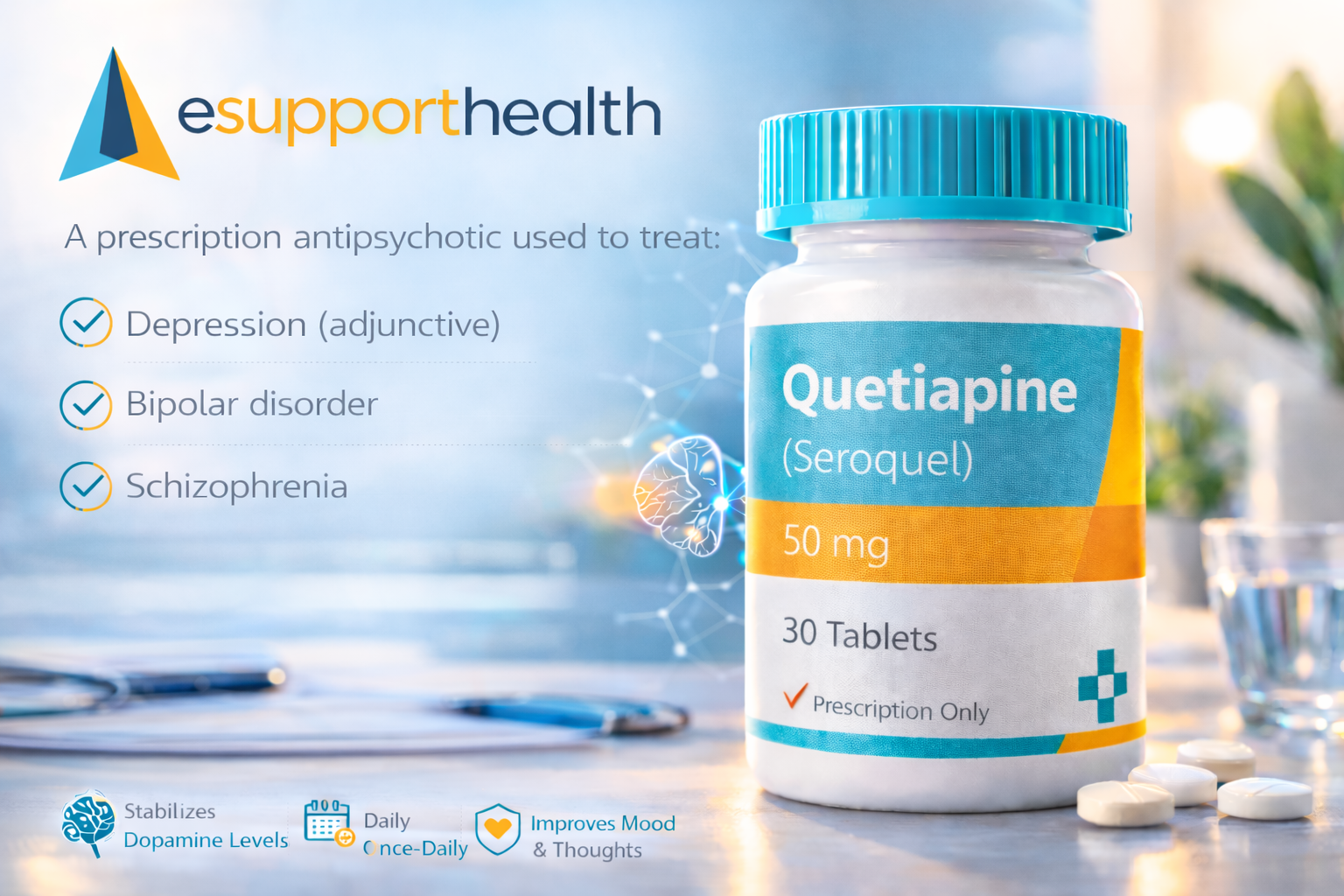
Quetiapine, commonly known by the brand name Seroquel, is a prescription medication used to treat several psychiatric conditions, including schizophrenia, bipolar disorder, and as an adjunctive therapy for major depressive disorder. It belongs to a class of medications called atypical antipsychotics, which influence multiple neurotransmitter systems involved in mood regulation, perception, and cognitive processing.
Neurotransmitters such as dopamine and serotonin play critical roles in how the brain regulates emotions, interprets sensory information, and manages stress responses. When communication between these neurotransmitter systems becomes dysregulated, individuals may experience symptoms such as mood instability, disorganized thinking, hallucinations, or severe depressive episodes.
By modulating these neurotransmitter pathways, quetiapine may help stabilize neural circuits involved in emotional regulation and cognitive function.
Begin Quetiapine Treatment Through eSupport Health
Starting treatment through eSupport Health begins with a secure online medical evaluation completed by a licensed healthcare provider. During this process, clinicians review your symptoms, medical history, and current medications to determine whether treatment is appropriate. If a medication is recommended, a prescription may be issued in accordance with medical guidelines and transmitted to a licensed pharmacy for dispensing. This streamlined telehealth approach allows patients to access professional care and treatment guidance in a convenient and confidential manner.
This page provides educational information about how Quetiapine works, who may be evaluated for treatment, safety considerations, and what individuals may expect during therapy.
Medication Overview
Quetiapine was introduced as part of a newer generation of antipsychotic medications designed to treat psychiatric conditions while reducing certain neurological side effects associated with earlier treatments.
Unlike traditional antipsychotic medications that primarily block dopamine receptors, atypical antipsychotics such as quetiapine influence both dopamine and serotonin signaling pathways. This broader receptor interaction helps clinicians address a range of psychiatric symptoms, including mood disturbances and psychotic symptoms.
Healthcare providers may prescribe quetiapine for conditions such as:
- Schizophrenia
- Bipolar disorder (manic and depressive episodes)
- Adjunctive treatment for major depressive disorder
Quetiapine is available as both brand-name Seroquel and generic quetiapine, with formulations including immediate-release tablets and extended-release versions designed for once-daily dosing.
Understanding Quetiapine: A Multi-Receptor Psychiatric Medication
Quetiapine is widely used in psychiatric medicine because it influences several neurotransmitter systems involved in emotional regulation and perception.
Unlike medications that target a single neurotransmitter pathway, quetiapine interacts with multiple receptors including dopamine, serotonin, histamine, and adrenergic receptors. These interactions contribute to the medication’s effects on mood stabilization, thought processing, and emotional balance.
Because psychiatric conditions involve complex neural networks, medications that influence multiple neurotransmitter pathways may help restore more balanced communication between brain regions responsible for cognition and emotional regulation.
Why Atypical Antipsychotics Affect Multiple Neurotransmitter Systems
Mental health conditions often involve complex interactions between several neurotransmitters rather than a single chemical imbalance. Dopamine and serotonin are particularly important for regulating perception, mood stability, and cognitive processing.
Atypical antipsychotics such as quetiapine were developed to influence multiple receptor systems simultaneously. This multi-receptor approach may help address different aspects of psychiatric conditions, including mood symptoms and disturbances in perception.
How Dopamine Dysregulation Influences Psychotic Symptoms
Dopamine plays a central role in the brain’s interpretation of sensory information and environmental stimuli. When dopamine signaling becomes dysregulated in certain brain regions, individuals may experience symptoms such as hallucinations, delusional beliefs, or disorganized thinking.
Medications that influence dopamine receptor activity may help stabilize these neural circuits and reduce symptoms associated with psychotic disorders.
The Role of Serotonin in Mood Stability
Serotonin is a neurotransmitter closely associated with emotional regulation, mood stability, and sleep cycles. Disruptions in serotonin signaling may contribute to mood disorders such as depression and bipolar disorder.
Quetiapine interacts with serotonin receptors in addition to dopamine receptors, which may help support more balanced mood regulation.
Why Some Depression Treatments Include Adjunctive Antipsychotic Therapy
In certain cases, individuals with major depressive disorder may continue to experience symptoms despite antidepressant treatment. In these situations, clinicians may evaluate adjunctive medications that influence additional neurotransmitter pathways.
Quetiapine is sometimes used as an adjunctive therapy for depression because of its effects on serotonin and dopamine signaling.
Advances in Modern Antipsychotic Medication Development
Earlier antipsychotic medications were effective in treating psychotic symptoms but were often associated with certain neurological side effects due to strong dopamine receptor blockade.
Modern atypical antipsychotics were developed to provide broader receptor modulation and improved tolerability. This evolution in psychopharmacology reflects ongoing research aimed at improving psychiatric treatment options.
Why Long-Term Monitoring Is Important in Psychiatric Treatment
Psychiatric medications often require regular clinical monitoring to ensure that treatment remains effective and well tolerated. Healthcare providers typically evaluate symptom progression, potential side effects, and overall functioning during follow-up appointments.
This ongoing evaluation helps clinicians adjust treatment strategies when necessary and ensures that therapy remains aligned with individual patient needs.
How Quetiapine Influences Sleep and Sedation Pathways
One characteristic of quetiapine is its interaction with histamine receptors, which are involved in regulating wakefulness and sleep cycles. When histamine signaling is reduced, the brain’s arousal systems may become less active, which can lead to increased sedation.
Because of this mechanism, some individuals taking quetiapine experience changes in sleep patterns, particularly during the early stages of treatment. In certain clinical situations, this effect may help individuals who experience insomnia related to mood disorders.
However, the sedative properties of quetiapine are only one part of its overall pharmacological profile. The medication’s primary therapeutic effects are related to its modulation of dopamine and serotonin pathways involved in mood regulation and perception.
Why Mood Stabilization Requires Multiple Neurotransmitter Systems
Mood disorders such as bipolar disorder involve complex disruptions across several brain circuits that regulate emotional processing, impulse control, and stress response. These circuits rely on interactions between multiple neurotransmitters, including dopamine, serotonin, and norepinephrine.
Medications that influence more than one neurotransmitter system may help stabilize these networks. Quetiapine’s ability to interact with several receptor pathways allows it to influence both mood-related and perception-related circuits within the brain.
This multi-receptor activity is one reason atypical antipsychotics are sometimes used in the treatment of bipolar mood episodes and as adjunctive therapy in certain depressive conditions.
What Research Suggests About Neural Circuit Stabilization
Modern psychiatric research increasingly focuses on the role of neural circuit regulation rather than isolated neurotransmitter imbalances. Brain regions responsible for emotional processing, decision-making, and perception communicate through interconnected signaling networks.
When these circuits become dysregulated, individuals may experience symptoms affecting mood, cognition, and perception. Medications such as quetiapine are designed to influence receptor activity within these networks, helping restore more balanced communication between key brain regions.
By modulating neurotransmitter signaling across multiple pathways, treatment may help stabilize neural circuits associated with emotional regulation and cognitive processing when used as part of a comprehensive clinical care plan.
How Quetiapine (Seroquel) Works
Quetiapine works by modulating dopamine and serotonin receptor activity in the brain. It acts primarily as an antagonist at dopamine D2 receptors and several serotonin receptor subtypes.
By reducing excessive dopamine signaling in certain brain regions while influencing serotonin pathways involved in mood regulation, the medication may help stabilize neural communication across multiple psychiatric circuits.
Quetiapine also interacts with histamine and adrenergic receptors, which contribute to some of its clinical effects and side-effect profile.
Key Prescribing Information
| Medication Class | Atypical antipsychotic |
|---|---|
| Generic name | Quetiapine |
| Brand name | Seroquel |
| Administration | Oral tablet (immediate-release or extended-release) |
| Typical Frequency | Once or twice daily depending on formulation |
| Dose Adjustment | Determined by licensed clinician |
| Monitoring | Periodic clinical follow-up recommended |
Treatment duration and dosing decisions depend on symptom severity, treatment response, and overall clinical evaluation.
Candidate Criteria
Healthcare providers may evaluate quetiapine for individuals experiencing symptoms associated with several psychiatric conditions.
Potential candidates may include individuals experiencing:
- psychotic symptoms such as hallucinations or delusions
- mood instability associated with bipolar disorder
- persistent depressive symptoms requiring adjunctive therapy
- sleep disturbances associated with mood disorders
Because psychiatric treatment plans vary widely, clinicians typically conduct a comprehensive evaluation before recommending medication therapy.
Safety
Like all prescription medications, quetiapine may cause side effects in some individuals.
Common side effects may include:
- drowsiness
- dizziness
- dry mouth
- weight changes
- increased appetite
Atypical antipsychotic medications may also influence metabolic factors such as blood glucose or cholesterol levels. For this reason, clinicians may periodically monitor metabolic health during treatment.
Patients should inform their healthcare provider about all medications and medical conditions before starting therapy.
Clinical Onset & Expectations
Treatment timelines may vary depending on the condition being treated and individual response to medication.
Some individuals may notice initial changes in sleep patterns or agitation.
Gradual improvement in mood regulation or reduction in symptom intensity may occur.
More sustained symptom stabilization may develop as treatment continues.
Regular clinical follow-up allows healthcare providers to monitor progress and adjust therapy when needed.
Telehealth Prescribing Framework
A licensed provider reviews your information to determine whether treatment is medically appropriate. Prescriptions are not guaranteed and are issued only when clinically indicated and permitted by applicable laws.
Secure Medical Intake
Complete a confidential health questionnaire including symptoms, medical history, and current medications.
Licensed Provider Review
A licensed clinician evaluates your health information and may request additional details or a virtual consultation.
Clinical Decision & Treatment Plan
If appropriate, the provider determines a treatment plan and provides dosing guidance and monitoring instructions.
eRx & Pharmacy Fulfillment
If prescribed, the medication is electronically sent to a licensed pharmacy for dispensing.
Frequently Asked Questions
How long does quetiapine take to work?
Some individuals may notice initial improvements within several weeks, although full therapeutic effects may take longer depending on the condition being treated.
Is quetiapine addictive?
Quetiapine is not classified as a controlled substance and is generally not considered addictive.
Can quetiapine be used with antidepressants?
In certain cases, clinicians prescribe quetiapine alongside antidepressants as adjunctive therapy for major depressive disorder.
Can quetiapine be used long term?
Many individuals take quetiapine long term under medical supervision depending on their treatment needs.
Does quetiapine cause drowsiness?
Some individuals may experience sedation during treatment due to the medication’s interaction with histamine receptors.
What makes quetiapine different from older antipsychotics?
Quetiapine affects multiple neurotransmitter receptors rather than strongly blocking dopamine alone.
Can quetiapine help with bipolar disorder?
Yes. Quetiapine is commonly prescribed for both manic and depressive episodes associated with bipolar disorder.
Does quetiapine affect weight?
Some individuals may experience metabolic changes, which clinicians monitor during treatment.
Why do psychiatric medications require monitoring?
Regular monitoring helps clinicians evaluate treatment effectiveness and adjust therapy if needed.
How do clinicians determine if quetiapine is appropriate?
Healthcare providers review symptoms, medical history, and possible medication interactions before recommending treatment.
Medical disclaimer: This content is provided for educational purposes only and does not constitute medical advice. Medication therapy should only be initiated or modified under the supervision of a qualified healthcare professional following an appropriate clinical evaluation.
If you are experiencing a medical emergency or severe mental health crisis, seek immediate professional assistance.
Explore More Treatments
Buspirone, commonly known by the brand name Buspar, is a prescription medication used primarily in the treatment of generalized anxiety disorder (GAD) and certain chronic anxiety conditions. Unlike benzodiazepines, buspirone belongs to a different class of medications often referred to as anxiolytic serotonin receptor modulators.
Aripiprazole, widely known by the brand name Abilify, is a prescription medication used in the treatment of several psychiatric conditions, including schizophrenia, bipolar disorder, and as an adjunctive therapy for major depressive disorder. It belongs to a class of medications called atypical antipsychotics, which influence neurotransmitter systems involved in mood regulation, perception, and cognitive function.
Bupropion, commonly known by the brand name Wellbutrin, is a prescription medication used primarily for the treatment of major depressive disorder and seasonal affective disorder. It belongs to a class of medications known as norepinephrine–dopamine reuptake inhibitors (NDRIs), which influence neurotransmitters involved in motivation, focus, and mood regulation.