PRESCRIPTION MEDICATIONS
Paroxetine (Paxil)
Paroxetine, widely recognized under the brand name Paxil, is a prescription medication used to treat several mood and anxiety disorders. It belongs to the class of medications known as selective serotonin reuptake inhibitors (SSRIs), which influence serotonin signaling within the brain.
Serotonin plays an important role in emotional regulation, stress response, sleep patterns, and cognitive processing. When serotonin communication becomes disrupted, individuals may experience persistent anxiety, depressive symptoms, or emotional instability.
By increasing the availability of serotonin in neural pathways, paroxetine may help restore more balanced communication between brain regions responsible for mood and emotional processing.
Begin Paroxetine Treatment Through eSupport Health
Starting treatment through eSupport Health begins with a secure online medical evaluation completed by a licensed healthcare provider. During this process, clinicians review your symptoms, medical history, and current medications to determine whether treatment is appropriate. If a medication is recommended, a prescription may be issued in accordance with medical guidelines and transmitted to a licensed pharmacy for dispensing. This streamlined telehealth approach allows patients to access professional care and treatment guidance in a convenient and confidential manner.
This page provides educational information about how Paroxetine works, who may be evaluated for treatment, potential safety considerations, and what patients may expect during therapy.
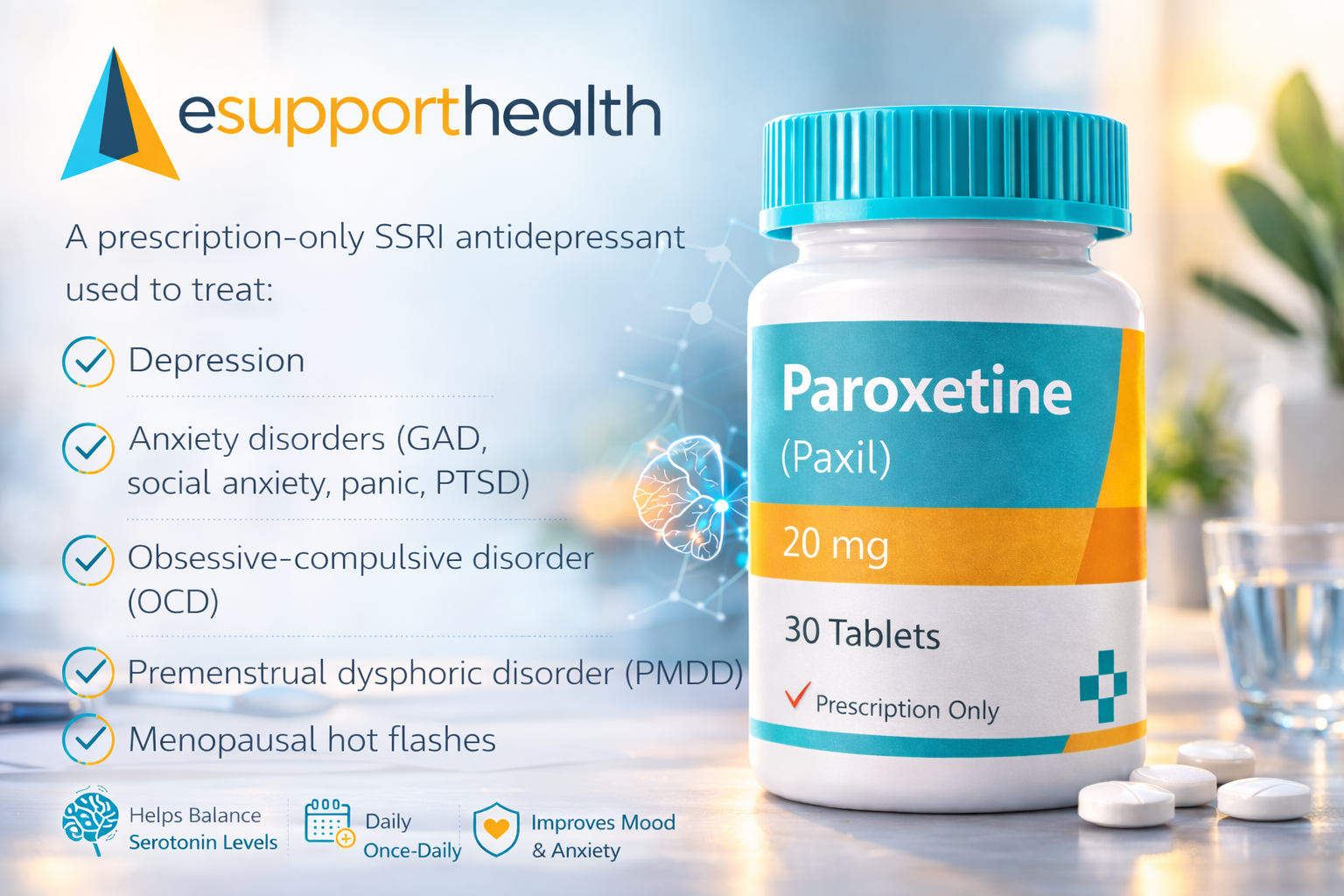
Medication Overview
Paroxetine was introduced in the early 1990s as part of the SSRI class of antidepressant medications. Since its introduction, it has been widely used in the treatment of both depressive disorders and several anxiety-related conditions.
Unlike some antidepressants that influence multiple neurotransmitter systems, SSRIs such as paroxetine focus primarily on serotonin pathways. This targeted mechanism helps clinicians address symptoms associated with mood dysregulation and anxiety disorders.
Healthcare providers may prescribe paroxetine for several clinical conditions, including:
- Major depressive disorder
- Generalized anxiety disorder
- Panic disorder
- Social anxiety disorder
- Obsessive-compulsive disorder
- Post-traumatic stress disorder
Paroxetine is available as both brand-name Paxil and generic paroxetine, allowing clinicians to tailor treatment plans based on individual patient needs and medication access.
Understanding Paroxetine: A Widely Used SSRI for Anxiety and Depression
Paroxetine has been extensively studied in clinical research and has played a significant role in the treatment of anxiety disorders. While many SSRIs are used primarily for depression, paroxetine has historically been recognized for its role in managing anxiety-related conditions.
SSRIs work by influencing the transmission of serotonin between neurons. When serotonin communication becomes disrupted, individuals may experience persistent worry, panic episodes, or depressive symptoms.
By slowing the reuptake of serotonin into nerve cells, paroxetine allows serotonin signals to remain active for longer periods. This process may help support improved emotional regulation and reduced anxiety over time.
Because antidepressants influence complex neurological systems, treatment improvements typically develop gradually as the brain adapts to changes in neurotransmitter signaling.
Why Paroxetine Is Often Used for Anxiety Disorders
Among SSRIs, paroxetine has historically been one of the medications commonly prescribed for anxiety-related conditions. Clinical research has shown that serotonin plays an important role in regulating fear responses and stress-related neural pathways.
By increasing serotonin availability, paroxetine may help stabilize neural circuits involved in anxiety and emotional regulation.
The Connection Between Serotonin and Stress Response
Serotonin influences several brain systems involved in processing stress and emotional stimuli. When serotonin signaling becomes disrupted, the brain’s stress-response system may become more reactive.
Medications such as paroxetine may help restore more balanced communication within these pathways, which may contribute to improved emotional resilience.
Why Different SSRIs Work Better for Different People
Although SSRIs share similar mechanisms of action, individual responses to specific medications can vary. Factors that may influence treatment response include genetic differences, symptom patterns, coexisting medical conditions, and prior treatment history.
Because of these differences, clinicians often evaluate multiple factors when selecting an antidepressant medication.
How Antidepressant Therapy Influences Brain Adaptation
Research suggests that antidepressant medications may influence neuroplasticity, the brain’s ability to reorganize and adapt neural connections.
This process may strengthen neural pathways involved in emotional regulation and stress adaptation. These gradual neurological changes are believed to contribute to improvements seen during long-term antidepressant therapy.
Why Treatment Plans Often Include Multiple Approaches
Medication therapy is often one component of a broader mental health treatment strategy. In many cases, clinicians recommend combining antidepressant treatment with psychotherapy, lifestyle adjustments, and stress-management techniques.
This integrated approach may help address both biological and psychological aspects of mood and anxiety disorders.
Understanding the Timeline of Antidepressant Treatment
One of the most common questions patients ask is how long antidepressants take to work. Because these medications influence neurotransmitter systems and neural adaptation processes, therapeutic effects typically develop gradually.
Early improvements may include better sleep or reduced physical tension associated with anxiety. As treatment continues, broader improvements in emotional stability and mood regulation may develop.
Why Paroxetine Is Frequently Used for Panic and Anxiety Disorders
Among selective serotonin reuptake inhibitors, paroxetine has long been recognized for its role in the treatment of panic disorder and other anxiety-related conditions. Anxiety disorders often involve heightened activity within neural circuits responsible for fear response and stress regulation.
Serotonin plays a key role in modulating these pathways. When serotonin signaling becomes dysregulated, the brain’s response to perceived threats may become exaggerated, leading to persistent worry or panic symptoms.
By increasing serotonin availability within neural synapses, paroxetine may help stabilize these stress-response networks. Over time, this effect may contribute to reduced panic intensity, improved emotional regulation, and greater resilience in stressful situations.
Because anxiety disorders can significantly affect daily functioning, clinicians often evaluate both psychological and biological factors when determining whether medication therapy may be appropriate.
What Long-Term Research Reveals About SSRIs and Brain Function
Over the past several decades, scientific research has provided important insights into how antidepressant medications influence brain function. SSRIs such as paroxetine are known to affect neurotransmitter signaling, but their effects extend beyond short-term chemical changes.
Studies suggest that antidepressant therapy may promote adaptive changes in neural circuits, particularly in brain regions involved in emotional processing, such as the amygdala and prefrontal cortex. These regions play central roles in regulating stress responses, decision-making, and emotional interpretation.
Researchers have also explored how SSRIs may influence the brain’s ability to adapt to stress through processes associated with neuroplasticity. Enhanced neural adaptability may help individuals develop more balanced emotional responses over time.
Although the exact biological mechanisms continue to be studied, decades of clinical observation suggest that antidepressant treatment may support long-term improvements in mood regulation when used under appropriate medical supervision.
Why Individualized Treatment Is Important in Depression Care
Depression and anxiety disorders are complex conditions influenced by biological, psychological, and environmental factors. Because of this complexity, treatment approaches often require personalization rather than a one-size-fits-all strategy.
Healthcare providers typically consider several factors when evaluating treatment options, including symptom severity, prior treatment history, lifestyle factors, and potential medication interactions. For some individuals, medication therapy may play a central role in treatment, while others may benefit from psychotherapy or combined approaches.
Paroxetine may be considered when symptoms suggest a pattern that may respond to serotonin-focused therapy. However, clinicians generally monitor treatment closely and may adjust strategies depending on how symptoms evolve over time.
This individualized approach helps ensure that treatment plans align with each patient’s unique clinical needs and overall health profile.
How Paroxetine (Paxil) Works
Paroxetine works by inhibiting the reuptake of serotonin within the brain. Normally, serotonin released by neurons is quickly reabsorbed after transmitting its signal.
Paroxetine slows this reabsorption process, allowing serotonin to remain active in neural synapses for longer periods. Increased serotonin availability may enhance communication between brain regions responsible for mood regulation and anxiety processing.
Over time, these neurochemical changes may help reduce symptoms associated with depression and anxiety disorders.
Key Prescribing Information
| Medication Class | Selective Serotonin Reuptake Inhibitor (SSRI) |
|---|---|
| Generic name | Paroxetine |
| Brand name | Paxil |
| Administration | Oral tablet or extended-release formulation |
| Typical Frequency | Once daily |
| Dose Adjustment | Determined by licensed clinician |
| Monitoring | Periodic clinical follow-up recommended |
Treatment duration and dosing decisions depend on symptom severity, treatment response, and overall clinical evaluation.
Candidate Criteria
Healthcare providers may evaluate paroxetine for individuals experiencing symptoms consistent with mood or anxiety disorders.
Potential candidates may include individuals experiencing:
- persistent depressive symptoms
- excessive worry or generalized anxiety
- panic attacks or sudden episodes of intense fear
- intrusive thoughts associated with obsessive-compulsive disorder
- trauma-related stress symptoms
Because mental health conditions vary among individuals, treatment decisions are based on comprehensive clinical evaluation.
Safety
Like all prescription medications, paroxetine may cause side effects in some individuals. Many side effects are mild and improve as the body adjusts to treatment.
Common side effects may include:
- nausea
- fatigue
- headache
- dry mouth
- sleep disturbances
SSRIs also carry an FDA boxed warning regarding increased risk of suicidal thoughts in adolescents and young adults during early treatment phases.
Patients should inform healthcare providers about other medications or supplements they are taking to reduce the risk of potential drug interactions.
Clinical Onset & Expectations
Antidepressant medications typically require time before therapeutic benefits become noticeable.
Some individuals may experience improved sleep patterns or reduced physical tension.
Gradual improvements in anxiety symptoms or emotional stability may begin.
Full therapeutic effects may become more noticeable as treatment continues.
Because responses to medication vary, clinicians typically monitor treatment progress and adjust therapy if needed.
Telehealth Prescribing Framework
A licensed provider reviews your information to determine whether treatment is medically appropriate. Prescriptions are not guaranteed and are issued only when clinically indicated and permitted by applicable laws.
Secure Medical Intake
Complete a confidential health questionnaire including symptoms, medical history, and current medications.
Licensed Provider Review
A licensed clinician evaluates your health information and may request additional details or a virtual consultation.
Clinical Decision & Treatment Plan
If appropriate, the provider determines a treatment plan and provides dosing guidance and monitoring instructions.
eRx & Pharmacy Fulfillment
If prescribed, the medication is electronically sent to a licensed pharmacy for dispensing.
Frequently Asked Questions
How long does paroxetine take to work?
Many individuals begin noticing gradual improvement within several weeks, although full therapeutic effects may take six to eight weeks.
Is paroxetine addictive?
Paroxetine is not classified as a controlled substance and is generally not associated with addiction.
Can paroxetine treat anxiety disorders?
Yes. Paroxetine is commonly prescribed for several anxiety-related conditions including panic disorder and generalized anxiety disorder.
Can paroxetine be taken long term?
Some individuals may benefit from longer treatment durations under medical supervision depending on symptom history.
Can therapy be combined with paroxetine?
Many clinicians recommend combining medication with psychotherapy to support long-term mental health improvement.
What makes paroxetine different from other SSRIs?
Paroxetine has pharmacological characteristics that may make it particularly effective for certain anxiety-related conditions.
Does paroxetine affect sleep?
Some individuals may experience sleep changes early in treatment, although these effects often improve over time.
Can paroxetine reduce panic symptoms?
Paroxetine may help reduce panic attacks by influencing serotonin pathways involved in fear responses.
Why do antidepressants take time to work?
Antidepressants influence complex neurotransmitter systems and neural adaptation processes that require time to stabilize.
How do clinicians determine if paroxetine is appropriate?
Healthcare providers evaluate symptoms, medical history, and potential medication interactions before recommending treatment.
Medical disclaimer:This content is provided for educational purposes only and does not constitute medical advice. Medication therapy should only be initiated or modified under the supervision of a qualified healthcare professional following an appropriate clinical evaluation.
If you are experiencing a medical emergency or severe mental health crisis, seek immediate professional assistance.
Explore More Treatments
Sertraline, widely known by the brand name Zoloft, is a prescription medication belonging to the class of drugs called selective serotonin reuptake inhibitors (SSRIs). It is commonly prescribed to help manage major depressive disorder and several anxiety-related conditions by influencing serotonin activity in the brain.
Fluoxetine, widely known by the brand name Prozac, is a prescription medication used to treat several mood and anxiety-related conditions. It belongs to a class of medications called selective serotonin reuptake inhibitors (SSRIs), which influence serotonin activity within the brain.
Escitalopram, commonly known by the brand name Lexapro, is a prescription medication used to treat major depressive disorder and generalized anxiety disorder. It belongs to the class of medications called selective serotonin reuptake inhibitors (SSRIs), which influence serotonin activity in the brain.