PRESCRIPTION MEDICATIONS
Disulfiram (Antabuse)
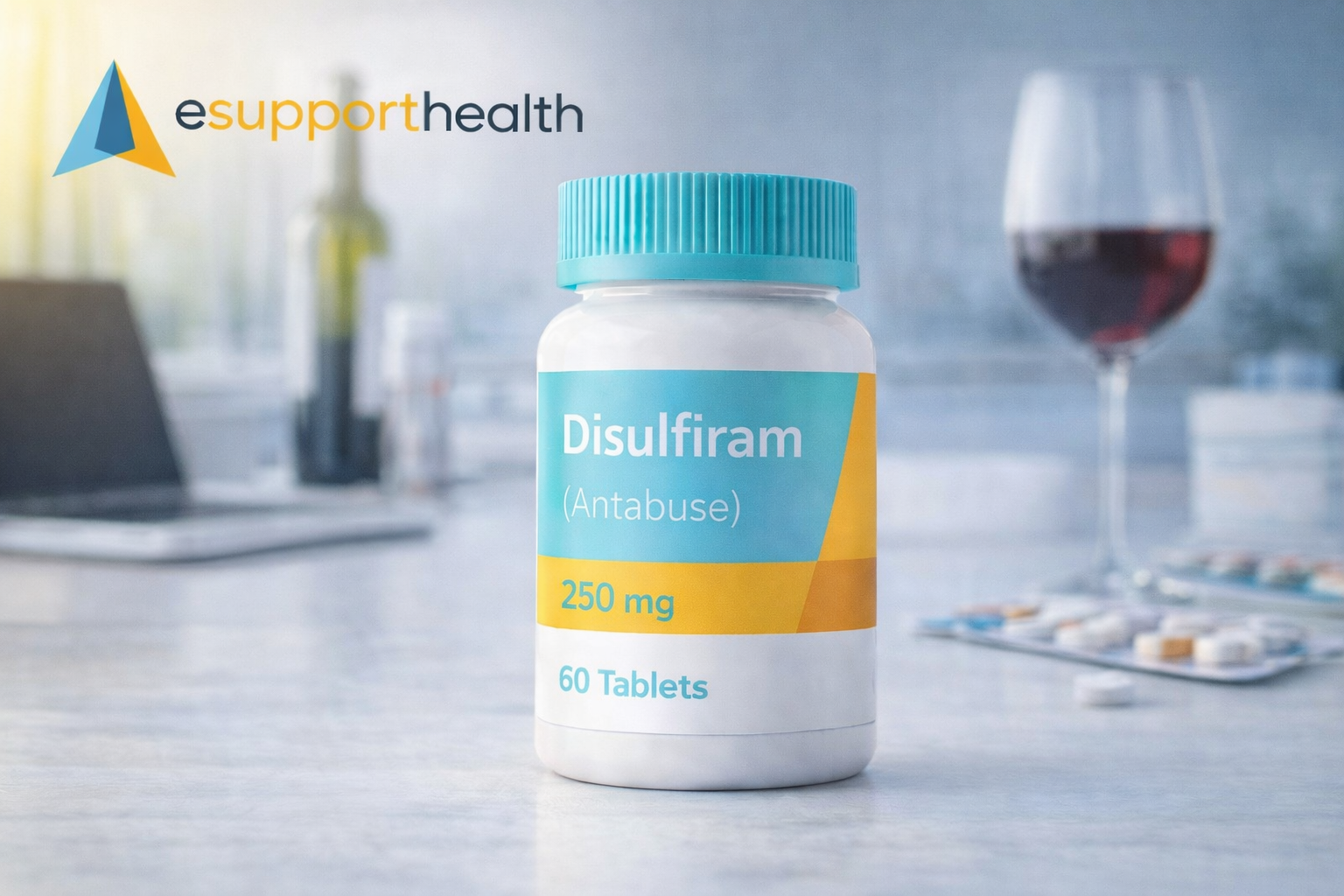
Disulfiram (Antabuse) — aversion-based therapy for alcohol use disorder (AUD). A prescription medication used to support individuals in maintaining abstinence from alcohol. Disulfiram works by creating an aversive reaction to alcohol consumption when used under medical supervision.
Begin Disulfiram Treatment Through eSupport Health
Starting treatment through eSupport Health begins with a secure online medical evaluation completed by a licensed healthcare provider. During this process, clinicians review your symptoms, medical history, and current medications to determine whether treatment is appropriate. If a medication is recommended, a prescription may be issued in accordance with medical guidelines and transmitted to a licensed pharmacy for dispensing. This streamlined telehealth approach allows patients to access professional care and treatment guidance in a convenient and confidential manner.
This page provides an educational overview of Disulfiram, including how it works, what conditions it may treat, safety considerations, and how telehealth providers evaluate treatment eligibility.
Medication Overview
Disulfiram is a medication used in the management of alcohol use disorder (AUD). It is designed to discourage alcohol consumption by producing an unpleasant physiological reaction when alcohol is ingested.
Unlike medications that reduce cravings, disulfiram functions as a behavioral deterrent. It is typically prescribed as part of a comprehensive treatment plan that may include counseling, behavioral therapy, and ongoing clinical support.
Because of its mechanism and potential risks, disulfiram requires careful patient selection and monitoring.
Disulfiram Therapy: Alcohol Aversion Mechanism, Behavioral Support, and Structured Recovery Care
Alcohol Metabolism and Acetaldehyde Accumulation
Alcohol is metabolized in the liver through a two-step process.
First, it is converted into acetaldehyde, a toxic intermediate. Normally, acetaldehyde is quickly broken down into a less harmful substance.
Disulfiram interferes with this second step.
Aldehyde Dehydrogenase Inhibition
Disulfiram inhibits the enzyme aldehyde dehydrogenase.
This leads to accumulation of acetaldehyde when alcohol is consumed, resulting in unpleasant physiological effects such as flushing, nausea, and discomfort.
Behavioral Deterrence and Treatment Adherence
The reaction produced by disulfiram is intended to discourage alcohol consumption.
This aversive response can reinforce abstinence by creating a strong association between alcohol intake and discomfort.
Role in Comprehensive Recovery Programs
Disulfiram is most effective when used as part of a structured treatment plan.
Behavioral therapy, counseling, and support systems are typically integrated into care to address underlying factors contributing to alcohol use disorder.
Patient Selection and Clinical Assessment
Not all individuals are suitable candidates for disulfiram.
Clinical evaluation includes assessment of medical history, liver function, and readiness for abstinence. Appropriate selection supports safer and more effective use.
Adherence, Supervision, and Treatment Outcomes
Consistent adherence is essential for disulfiram effectiveness.
In some cases, supervised administration may be considered to support compliance. Regular follow-up helps monitor progress and adjust treatment as needed.
Hidden Sources of Alcohol and Risk Awareness
Alcohol may be present in unexpected products such as certain medications, foods, and hygiene products.
Patients using disulfiram must be aware of these sources to avoid unintended reactions. Education and awareness are essential components of safe treatment.
Liver Function Monitoring and Clinical Oversight
Because disulfiram is metabolized in the liver, monitoring liver function is important.
Regular assessment helps detect potential issues early and supports safe continuation of therapy.
Behavioral Reinforcement and Long-Term Recovery Support
Disulfiram supports behavioral reinforcement by linking alcohol use with adverse effects.
When combined with counseling and structured support, this approach can contribute to sustained recovery and improved outcomes.
How Disulfiram Works
Disulfiram inhibits aldehyde dehydrogenase, an enzyme involved in alcohol metabolism.
When alcohol is consumed, acetaldehyde accumulates in the body, producing an aversive reaction. This mechanism discourages alcohol use and supports abstinence.
Key Prescribing Information
| Medication Class | Alcohol deterrent (aldehyde dehydrogenase inhibitor) |
|---|---|
| Generic name | Disulfiram |
| Brand name | Antabuse |
| Administration | Oral tablet |
| Typical Dose | Determined by clinician based on treatment plan |
| Indication | Alcohol use disorder (support for abstinence) |
| Prescribing | Determined by a licensed clinician following medical evaluation |
Treatment duration and dosage depend on the specific condition being treated, symptom severity, and individual patient response.
Candidate Criteria
Disulfiram may be considered for individuals with alcohol use disorder who are committed to abstinence.
Candidates typically include patients who can adhere to treatment guidelines and understand the risks associated with alcohol consumption during therapy. Suitability depends on medical history and clinical evaluation.
Final eligibility is determined through a licensed provider.
Safety
Disulfiram requires strict adherence to safety precautions.
Alcohol consumption during treatment can result in significant reactions, including flushing, nausea, vomiting, and cardiovascular effects. Patients must avoid alcohol in all forms, including hidden sources.
Liver function monitoring and clinical oversight are important components of safe use.
Clinical Onset & Expectations
The medication becomes active after initiation, and alcohol sensitivity develops.
Patients may begin to experience behavioral reinforcement of abstinence.
Sustained adherence may support long-term abstinence as part of a comprehensive treatment plan.
Telehealth Prescribing Framework
Disulfiram prescribing through telehealth follows a structured clinical process.
Patients complete a secure intake including alcohol use history, medical background, and readiness for treatment. A licensed provider evaluates suitability and discusses treatment expectations.
If prescribed, treatment includes guidance on safe use, monitoring, and follow-up care.
Secure Medical Intake
Complete a confidential health questionnaire including symptoms, medical history, and current medications.
Licensed Provider Review
A licensed clinician evaluates your health information and may request additional details or a virtual consultation.
Clinical Decision & Treatment Plan
If appropriate, the provider determines a treatment plan and provides dosing guidance and monitoring instructions.
eRx & Pharmacy Fulfillment
If prescribed, the medication is electronically sent to a licensed pharmacy for dispensing.
Frequently Asked Questions
Can I buy Disulfiram online?
Disulfiram may be prescribed online through a licensed provider following a clinical evaluation.
What is Disulfiram used for?
It is used to support abstinence in alcohol use disorder.
How does Disulfiram work?
It creates an aversive reaction when alcohol is consumed.
Can Disulfiram be used alone?
It is typically part of a broader treatment program.
Does Disulfiram require monitoring?
Yes, clinical monitoring is recommended during treatment.
What happens if alcohol is consumed with Disulfiram?
An aversive reaction may occur due to acetaldehyde buildup.
Is Disulfiram a cure for alcohol dependence?
No, it supports abstinence but does not cure the condition.
Can Disulfiram reduce cravings?
It primarily works as a deterrent rather than reducing cravings.
How long does Disulfiram stay active?
Its effects may persist after discontinuation for a period of time.
Is Disulfiram safe for long-term use?
It may be used long-term under medical supervision.
Medical disclaimer: This content is for informational purposes only and does not constitute medical advice, diagnosis, or treatment. Disulfiram is a prescription medication and should be used only under the supervision of a licensed healthcare provider. Treatment decisions are based on individual clinical evaluation and medical history.
Explore More Treatments
Naltrexone (Revia) — medication-assisted support for alcohol and opioid use disorders. A prescription medication used to support recovery by reducing cravings and blocking the effects of opioids. Naltrexone is used as part of a structured treatment plan under medical supervision.
Varenicline (Chantix) — targeted therapy for smoking cessation and nicotine dependence. A prescription medication used to support smoking cessation by reducing cravings and diminishing the rewarding effects of nicotine. Varenicline is used as part of a structured treatment plan under medical supervision.
Gabapentin (Neurontin) — neuromodulating therapy for nerve pain and neurologic conditions. A prescription medication used to manage neuropathic pain and certain neurologic conditions. Gabapentin works by modulating nerve signaling and is prescribed based on clinical evaluation.