











How it Works

Home|About Us

How it Works 

POWERFUL CONVERSATIONS

Weekly Connection

Every eSupport group is 45 minutes long, held weekly. Sessions are conducted via secure online video, allowing you to participate from anywhere with an internet connection. Group members are all people living with MS, or family and loved ones of people with MS. They understand and share your concerns and challenges in a safe and welcoming environment. Groups are eight people on average, creating opportunities for you to connect and interact with the other members of the group and receive personal attention as well.
WELCOMING AND INFORMATIVE

Professional Support

Every eSupport group is facilitated by a professional coach, all licensed therapists who have expertise in MS and truly understand the challenges that come with it. Our coaches facilitate and guide discussions so everyone has a chance to be heard and to share their relevant experiences. Coaches ensure that every group is built upon a solid foundation of mutual trust and respect.

Billy

This group is just about the best thing I’ve got going in my life right now.

Meet Two of Our Coaches

Victoria M. Leavitt

Chief Scientific Officer & Clinical Director
Dr. Leavitt’s experience moderating online support groups for people with MS dates back to 2017, when she convinced an intrepid group of patients at Columbia’s MS Center to join her in a place called Zoom, which no one had ever heard of at the time. They’ve been hooked ever since!

Amanda R. Cohen

Head Coach 
Amanda Cohen is an Occupational Therapist working with people living with MS for over 10 years. She helps to recover and maintain the skills necessary for daily living. Amanda enjoys leading the support groups each week, and values the continued therapeutic relationship with each member.

How Telemedicine Works at eSupport Health

A Structured, Physician-Led Approach to Virtual Care

At eSupport Health, our telemedicine process is built around clinical rigor, regulatory compliance, and patient-centered care. We combine secure digital technology with licensed medical expertise to deliver comprehensive psychiatric evaluation, treatment planning, and medication management in a fully remote setting.

Every step of our workflow is designed to mirror the standards of an in-person medical visit while improving accessibility, continuity of care, and long-term treatment outcomes.

Controlled Substances Policy: eSupport Health does not prescribe controlled substances through its telemedicine services. Our clinicians focus on evidence-based evaluation and treatment using non-controlled medications and non-pharmacologic options when clinically appropriate. If a patient’s condition requires a controlled medication, we recommend establishing care with an in-person provider for further assessment and ongoing management.

Step 1

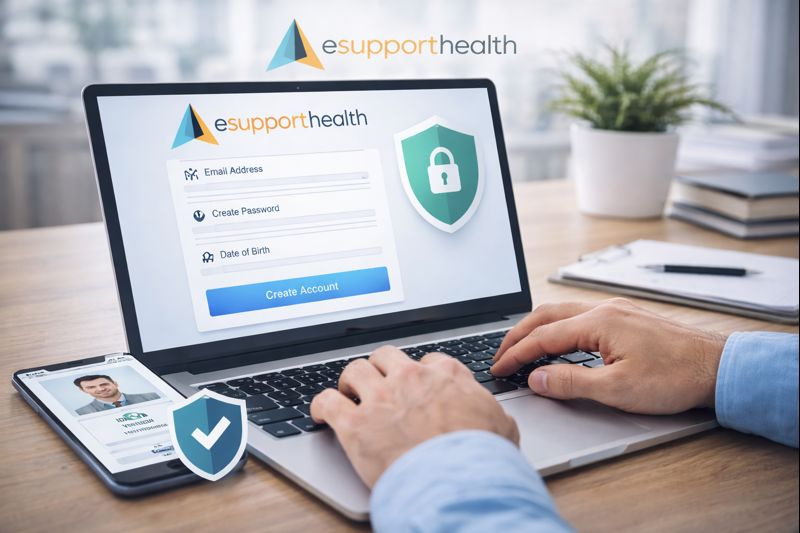
Secure Account Creation and Identity Verification

Your care journey begins by creating a private patient profile on eSupport Health. During registration, you provide essential identifying and contact information to establish a verified medical record.

This step ensures:

  • Accurate patient identification
  • Eligibility for telehealth services in your state
  • Secure communication between you and your care team

All information is protected using HIPAA-compliant encryption and access controls.


Create Your Secure Account
Complete-Health-Intake
Step 2

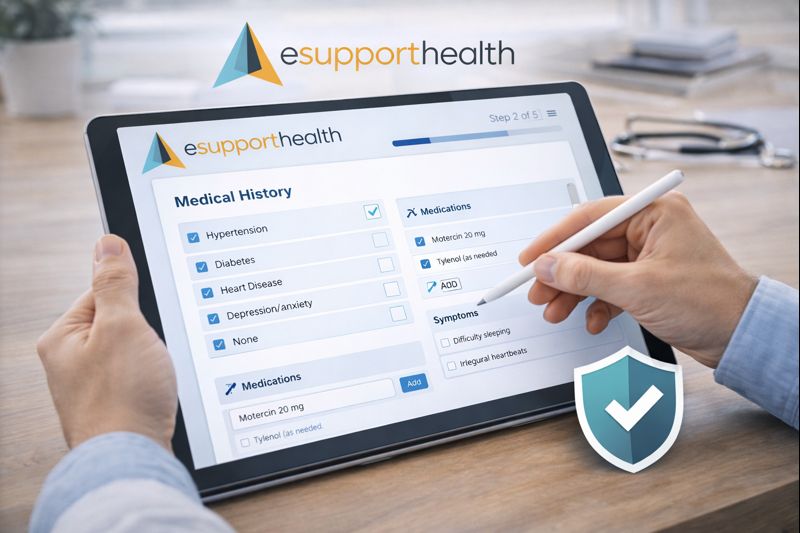
Structured Intake and Pre-Visit Medical Forms

Before your appointment, you complete a series of secure intake forms that gather critical clinical data, including:

  • Psychiatric and medical history
  • Current symptoms and functional limitations
  • Prior diagnoses and past treatments
  • Medication history, allergies, and adverse reactions
  • Substance-use history and relevant risk factors

These forms allow your clinician to prepare for your visit and conduct a focused, evidence-based evaluation.

Step 3

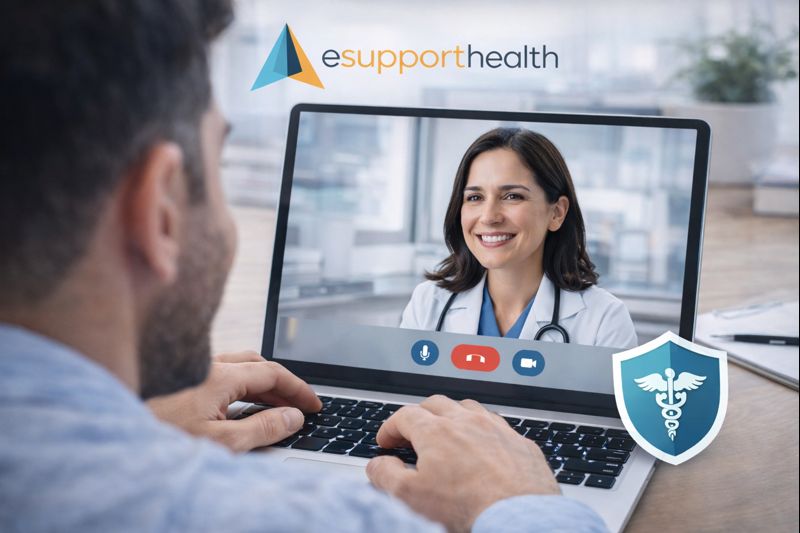
Live Telehealth Consultation with a Licensed Clinician

You meet with a licensed medical provider through a secure, real-time video platform. This consultation is the clinical foundation of your care.

During your visit, your clinician will:

  • Review your intake information
  • Conduct a structured psychiatric assessment
  • Clarify symptoms, timelines, and severity
  • Evaluate risks, benefits, and treatment options
  • Answer your clinical questions

All prescribing decisions are based on this live medical evaluation.


Meet a Licensed Clinician
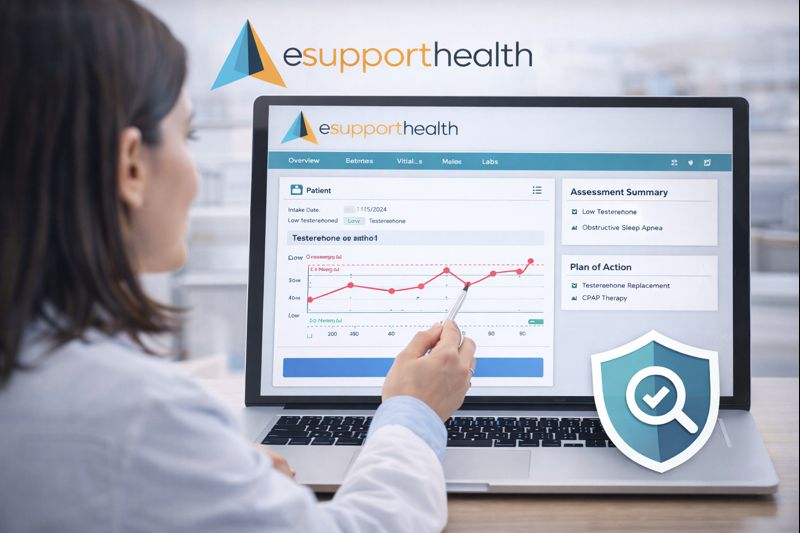
Clinical Evaluation
Step 4

Diagnostic Assessment and Clinical Determination

Using recognized psychiatric criteria and professional guidelines, your clinician determines whether a formal diagnosis is present and whether treatment is medically indicated.

This assessment focuses on:

  • Diagnostic accuracy
  • Symptom burden and functional impairment
  • Safety considerations and contraindications
  • Risk factors such as dependence potential or medication interactions

No medication is prescribed without a documented clinical justification.

Step 5

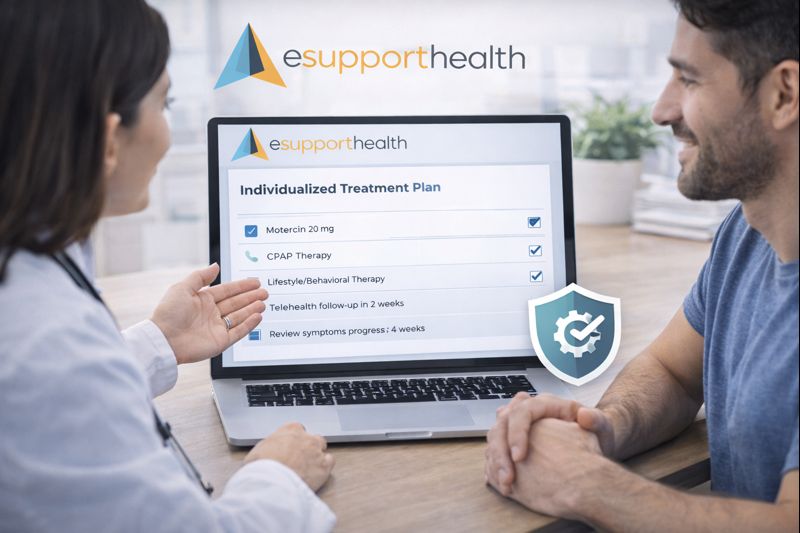
Individualized Treatment Planning

If treatment is indicated, your clinician develops a personalized care plan. Depending on your needs, this may include:

  • Medication therapy
  • Behavioral or lifestyle recommendations
  • Referral to therapy or specialty services
  • Monitoring schedules and follow-up intervals

If medication is recommended, your provider will explain:

  • Why a specific medication was chosen
  • Expected benefits and timelines
  • Possible side effects and safety risks
  • Duration of therapy and monitoring requirements


Personalized Treatment Plan
Prescription Issued
Step 6

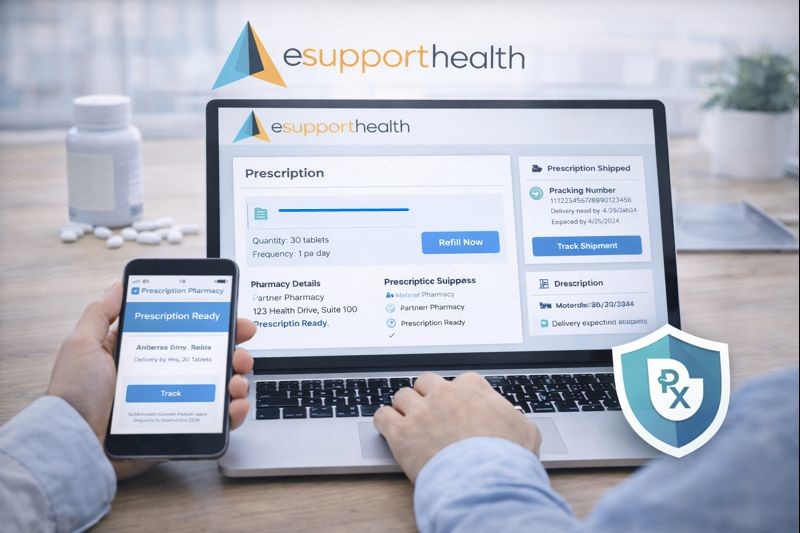
Prescription Issued

When clinically appropriate, a licensed provider may issue a prescription based on a comprehensive medical evaluation, including:

  • Review of the patient’s medical history and reported symptoms
  • Assessment of clinical appropriateness and potential risks
  • Confirmation of prescribing authority and patient eligibility
  • Adherence to applicable federal and state prescribing regulations

All prescriptions are issued in accordance with established clinical guidelines, professional standards of care, and regulatory requirements to support safe and responsible medication use.

Step 7

Pharmacy Fulfillment

When a prescription is issued, eSupport Health coordinates pharmacy fulfillment through licensed U.S. pharmacies operating in compliance with applicable regulations, including:

  • Verification of prescriptions issued by licensed clinicians
  • Dispensing through state-licensed and regulated pharmacies
  • Adherence to federal and state pharmacy and medication laws
  • Quality control, secure handling, and medication safety standards

This process helps ensure medications are dispensed accurately, responsibly, and in alignment with established clinical, pharmacy, and regulatory requirements.


Pharmacy Fulfillment
Discreet Shipping
Step 8

Discreet Shipping

Medications dispensed through eSupport Health are delivered using secure, privacy-focused shipping practices, including:

  • Plain, unmarked packaging to protect patient confidentiality
  • Secure handling by licensed pharmacy partners
  • Delivery processes designed to maintain privacy and safety
  • Compliance with applicable shipping, handling, and safety regulations

These measures help ensure medications are delivered confidentially and responsibly as part of a compliant and patient-centered care experience.

Step 9

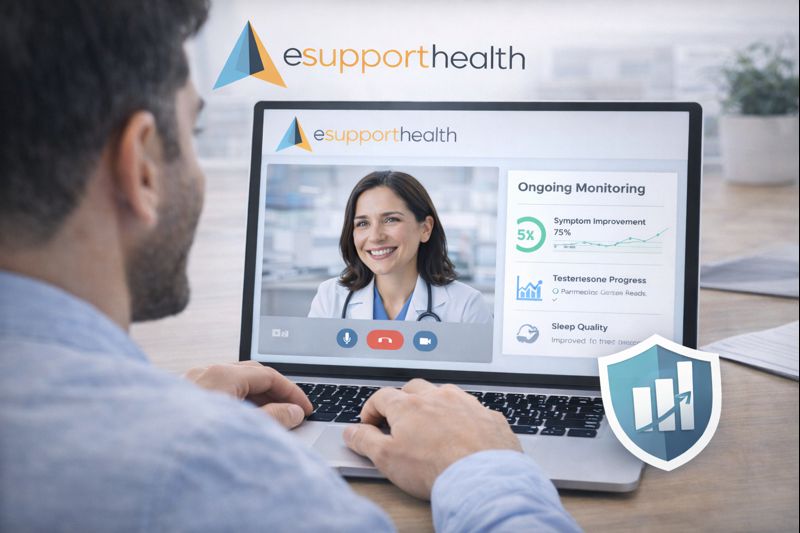
Follow-Up Visits and Ongoing Monitoring

Telemedicine at eSupport Health is not limited to a single visit. We emphasize continuous care and regular reassessment.

Follow-up care may include:

  • Scheduled telehealth check-ins
  • Symptom and functional outcome tracking
  • Medication dose adjustments
  • Monitoring for side effects or emerging risks

Your care plan is refined based on your response and evolving clinical needs.


Follow Up Care
Long-Term Treatment Support
Step 10

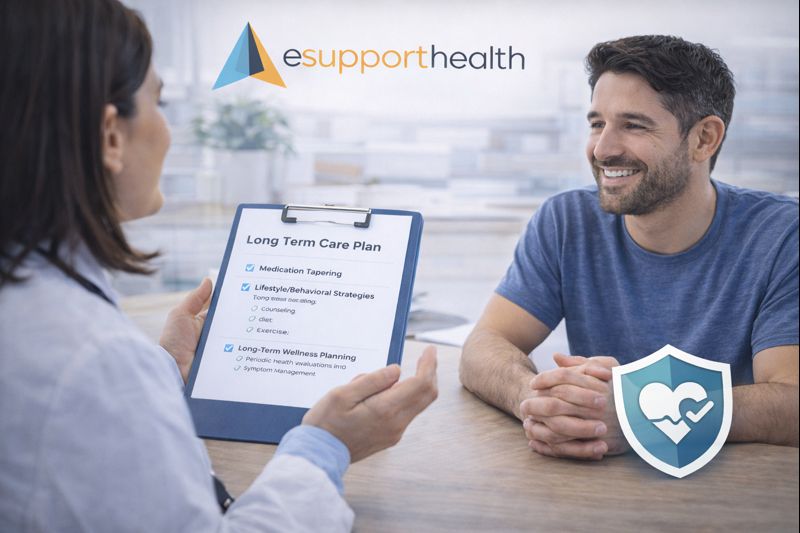
Safe Discontinuation and Long-Term Care Planning

For medications that require tapering or time-limited use, clinicians design structured discontinuation protocols.

This includes:

  • Gradual dose-reduction schedules
  • Monitoring for withdrawal symptoms
  • Transition to alternative therapies
  • Ongoing clinical support

Our goal is long-term stability, not indefinite medication use.

Step 11

Compliance, Privacy, and Quality Assurance

All care delivered through eSupport Health adheres to:

  • Federal and state telehealth regulations
  • HIPAA privacy and data-security standards
  • Controlled-substance prescribing laws
  • Evidence-based clinical guidelines

We maintain internal quality assurance systems to monitor clinical outcomes, patient satisfaction, and regulatory compliance.

Privacy & Quality Assurance
Why Patients Choose eSupport Health
Care made simple

Why Patients Choose eSupport Health

Licensed U.S. Clinicians +
All care at eSupport Health is provided by licensed U.S. healthcare professionals. Patients are evaluated by qualified clinicians who meet state licensing requirements and practice according to established medical standards.
Secure, HIPAA-Compliant Technology +
eSupport Health uses secure, HIPAA-compliant platforms to protect patient privacy. Medical information is encrypted and handled in accordance with federal healthcare data protection requirements.
Evidence-Based Psychiatric Care +
Clinical decisions are guided by evidence-based guidelines and current medical research. Treatment recommendations are tailored to the individual and aligned with accepted standards of psychiatric care.
Integrated Pharmacy Coordination +
When medication is clinically appropriate, eSupport Health coordinates with licensed pharmacies to support accurate and timely prescription fulfillment, ensuring continuity of care.
Ongoing Monitoring and Follow-Up +
CPatient care does not end after the initial visit. eSupport Health supports ongoing monitoring and follow-up to assess treatment effectiveness and make adjustments when clinically indicated.
Transparent Clinical Standards +
eSupport Health follows clear clinical protocols and ethical standards. Patients receive straightforward information about evaluations, treatment options, and care processes to support informed decision-making.
Prescription Medications

Frequently Prescribed Medications

eSupport Health provides access to prescription medications when clinically appropriate and prescribed by licensed healthcare providers. All medications are selected based on established clinical guidelines and individual patient needs.

Medications prescribed through eSupport Health are commonly used in the management of a range of medical and mental health conditions. Treatment decisions are made following a thorough evaluation to help ensure safety, effectiveness, and appropriate use.

All prescriptions are issued in accordance with federal and state regulations and dispensed through licensed pharmacies. Patients receive clear instructions and ongoing support to promote responsible medication use as part of their care plan.


Frequently Prescribed Medications


JOIN WITH EASE

What Comes Next?

Once you sign up for eSupport, one of our coaches will reach out to schedule an initial one-on-one session where we will get to know you and answer any questions you have. We will also work with you during this meeting to determine which group works best for you and your schedule—a group where you will receive authentic support from people like you, experiencing similar challenges. We work hard to keep the per-session cost at or below a typical co-pay, and offer 3 subscription plans: $129/month, $299/quarter, or $999/year. Sign up now.

Roland

With eSupport, the difference is the coaches. It’s all about the coaches.
ANYWHERE YOU ARE

Safe and Stress-free

Life is complicated — sometimes managing MS can feel like a full-time job. The last thing you need is another burden. eSupport Health is designed to reduce your stress. We don’t ask you to come to another appointment — we bring our groups to you, wherever you are.

Our groups are available everywhere, whether you’re at home, at work, on the train — if you’re online, you’re in.

Support groups are great — especially when you don’t have to face traffic, parking, or weather to get there.

Finding time in your schedule can be really hard. We minimize the hassle by bringing your support right to you, wherever you are.

Insurance

Currently eSupport Health does not accept health insurance. However, we are actively working with healthcare insurers, with the goal of accepting insurance in the future. In the meantime, if you believe eSupport Health is covered under your existing plan as an out-of-network benefit, we will provide the information you need to submit a claim to your insurance provider.
Get Started Today

Connecting People who Understand MS

Mary Rouvelas, JD

Senior Counsel, American Cancer Society Cancer Action Network

Mary is Senior Counsel to the American Cancer Society Cancer Action Network (ACS CAN). She created and directs the Judicial Advocacy Initiative, managing law firms that donate pro bono public policy work to ACS CAN. The initiative currently has nine multinational firms working on health issues ranging from access to care to tobacco control. Mary also serves on the Activism Advisory Committee for the National Multiple Sclerosis Society (NMSS), which advises the NMSS’s Chief Executive Officer on how to use public policy to change the lives of people affected by MS. Mary graduated magna cum laude from Wellesley College, and earned her Juris Doctor from University of Virginia School of Law. She is admitted to practice law in Virginia, the District of Columbia, the US Courts of Appeals for the Fourth and DC Circuits, and at the US Supreme Court.

Victoria M. Leavitt, Clinical Director

Chief Scientific Officer (CSO)

Vicky is a neuropsychologist specializing in the psychological and cognitive symptoms of MS. For over ten years, Dr. Leavitt’s research has focused on symptoms that affect quality of life for people living with MS, including fatigue, cognitive impairment, depression, anxiety, and loneliness. She also studies neural network alterations in MS.

In 2018, Dr. Leavitt received a grant from the National Multiple Sclerosis Society to support a clinical trial of eSupport. With enough rigorous trial evidence supporting the benefits of online support groups, we hope to move from a world in which we recommend support groups to one in which we prescribe support groups.

Dr. Leavitt is an assistant professor in the Department of Neurology at Columbia University Irving Medical Center. She has received grants from the National Institutes of Health, the United States Department of Defense, and the National Multiple Sclerosis Society.

Vicky earned a Bachelor’s of Science in Human Development from Cornell University in Ithaca, New York, and received her Ph.D. from the City University of New York.

Bill Zeman

Chief Developer

Technology leader with 20 years of experience in website development, content management systems and database applications. Bill has founded companies and served as CTO, including for two Scott Galloway startups, L2 (acquired by Gartner for $134M in March 2017) and Section4 (also known as Prof G) through January 2020. As founding CTO of Section4, a video-focused business media startup, Bill helped set the strategic business direction and participated in leadership decisions. He also designed and implemented the full-stack content-delivery solution for videos, podcasts and articles. He implemented best-of-breed stack components to keep costs to a minimum with high flexibility and maintainability, featuring a headless Wordpress CMS, React frontend, and AWS, JWPlayer, Stripe, Zoom, and hubspot integrations. Bill holds a B.A. from Brown University.

Jamie Tobias

Head of Growth & Partnerships

Jamie Tobias joined eSupport Health as Head of Growth & Partnerships in March of this year. In this new role, Jamie is focused on building relationships with MS Centers around the country, launching new marketing initiatives and providing overall advisory support to the organization. Before joining eSupport, Jamie was VP of Business Development at Section4, an online education startup founded by NYU Professor Scott Galloway. Before joining Section4, Jamie spent 9 years at NYU's Stern School of Business, most recently as Assistant Dean where she oversaw a portfolio of the school's most strategic global programs and relationships.  Prior to joining NYU, Jamie spent 3 years as Vice President of Business Development for Marquis Jet Partners (now NetJets) and held various positions at American Express managing large enterprise partnerships.

Lenny Teytelman, PhD

CEO & Co-Founder, protocols.io

Lenny is Chief Executive Officer and co-founder of protocols.io, a leading platform for collaborative research method development and sharing, leveraging web and mobile technology to create a global online community of researchers. The collaborative platform is used for sharing science methods, computational workflows, clinical trials, operational procedures, safety checklists, instruction manuals and more. Lenny holds a B.A. in Mathematics from Columbia University and a Ph.D. in Genetics and Computational Biology from the University of California, Berkeley. He was also a Postdoctoral Researcher at MIT.

Zongqi Xia, MD, PhD

Principal Investigator, Pittsburgh Institute of Multiple Sclerosis Care and Research

Dr. Xia is a Principal Investigator in the Pittsburgh Institute of Neurodegenerative Diseases & the Pittsburgh Institute of Multiple Sclerosis Care and Research. He is an Assistant Professor of Neurology, Biomedical Informatics and Bioengineering at the University of Pittsburgh. Dr. Xia holds a B.A. from Swarthmore College, MD and PhD from Case Western Reserve University, and a Master’s degree in Clinical Investigation from Harvard Medical School. Dr. Xia completed his Neurology residency at the Brigham and Women’s Hospital and Massachusetts General Hospital, and a post-doctoral fellowship at Harvard and Broad Institute. Dr. Xia's interdisciplinary translational research program leverages multi-stream data from patients and applies data science approaches to address clinically relevant questions in the field of multiple sclerosis and related disorders.

Brenda Williams, MFA

Executive Director, Human Resources at the Depository Trust & Clearing Corporation (DTCC)

Brenda Williams is an Executive Director at The Depository Trust & Clearing Corporation (DTCC) with over 25 years of experience in Human Resources. Brenda concurrently serves as Chief of Staff to the Chief Human Resources Officer and Global Head of Employee Relations. Within this role, she is responsible for leading HR strategic planning, providing oversight of human capital risk for the organization, and developing an integrated, global employment practices function. Prior to this role, Brenda led DTCC’s Learning and Talent Management team with responsibility for leadership development, learning solutions, talent/succession planning and organizational development. Before joining DTCC in 2009, Brenda held a number of HR leadership roles, including positions at Merrill Lynch, Bank of America and American Express. She is an active mentor and has a long history of supporting arts & education-related community initiatives. She holds a B.A. from Yale University and an MFA from Columbia University.

David Wennberg, MD, MPH

Board Member, Quartet Health

David is a board member and former Chief Executive Officer of Quartet Health, a technology company focused on patients with chronic medical and concomitant behavioral health conditions. The company's goal is to use technology to transform mental health through partnering with health insurers and providers to deliver an integrated model of care. Previously, David was Chief Executive Officer at High Value Healthcare Collaborative, a consortium of 15 healthcare delivery systems who participated in data collaboration. David has a Doctor of Medicine degree from McGill University and a Master's in Public Health from Harvard University.

Alexei Stoliartchouk, MS

CTO, CPO & Co-Founder of Protocols.Io

Alexei is Cofounder and Chief Technology Officer of protocols.io, a leading platform for digital respiratory academic research that leverages web and mobile technology to create a global online community of scientists. The collaborative platform is used for sharing science methods, computational workflows, clinical trials, operational procedures, safety checklists, instruction manuals and more. Alexei has expertise in leading the development process of complex technologies that help professionals share and discover life sciences from concept to production. Alexei holds a B.S. from the Moscow Aviation Institute and his Master's degree from the University of Memphis.

Victoria M. Leavitt, PhD, FAAN

Chief Scientific Officer (CSO)

Vicky is a neuropsychologist specializing in the psychological and cognitive symptoms of MS. For over ten years, Dr. Leavitt’s research has focused on symptoms that affect quality of life for people living with MS, including fatigue, cognitive impairment, depression, anxiety, and loneliness. She also studies neural network alterations in MS.

In 2018, Dr. Leavitt received a grant from the National Multiple Sclerosis Society to support a clinical trial of eSupport. With enough rigorous trial evidence supporting the benefits of online support groups, we hope to move from a world in which we recommend support groups to one in which we prescribe support groups.

Dr. Leavitt is an assistant professor in the Department of Neurology at Columbia University Irving Medical Center. She has received grants from the National Institutes of Health, the United States Department of Defense, and the National Multiple Sclerosis Society.

Vicky earned a Bachelor’s of Science in Human Development from Cornell University in Ithaca, New York, and received her Ph.D. from the City University of New York.

Ed Moed

CEO, Hot Paper Lantern

Ed is the Chief Executive Officer of Hot Paper Lantern, an agency that fuses marketing and communications with business consulting and technology solutions to help make brands more relevant. Ed is an industry veteran with more than 25 years of experience. He leads business strategy and provides overall direction to operations, finances, new services development, client services and new business. He is currently a trustee for his alma mater, Drew University, and has been on various other boards and advisory councils including Council of PR Firms, YJP, the Montclair Art Museum, Little Kids Rock and MyGoodDeed.org. Ed holds his B.A. from Drew University.

Phil De Jager, MD, MPhil

Director, MS Center, Columbia University Irving Medical Center

Dr. Phil De Jager serves as Director at the Center for Translational Computational Neuroimmunology and Multiple Sclerosis Center at Columbia University Irving Medical Center. He is also a professor in the Taub Institute for Research on Alzheimer's Disease and the aging Brain. His focus is on characterizing and targeting the neuro-immunologic component of neurodegenerative diseases. Dr. De Jager's work as a clinician-scientist is to apply modern methods of neuro-immunology, statistical genetics, and systems biology to the understanding of common neurodegenerative diseases such as MS. After graduating summa cum laude with a B.S. from Yale University, Dr. De Jager received a PhD in Neurogenetics from Rockefeller University and an MD from Cornell University Medical College, before completing his MMSc in Clinical Investigation at Harvard Medical School (HMS) and MIT.

Sean Cavanaugh, MPH

Former Deputy Director, Center for Medicare & Medicaid Services (CMS) under President Barack Obama

Sean is currently the Chief Commercial Officer and the Chief Policy Officer at Aledade, Inc., a platform that assists primary care providers such as independent practices, health centers and clinics, through offering data, analytics and regulatory expertise. Previously, Sean served as Deputy Administrator and Director at the Center for Medicare and Medicaid Services (CMS) under President Barack Obama. He has extensive expertise in the health care space and a deep passion for aiding those with disabilities. Sean holds a B.A. from University of Pennsylvania and Master’s of Public Health from Johns Hopkins Bloomberg School of Public Health.

Laura A. Kozak

LPC

As a Licensed Professional and National Certified Counselor, Laura has over 15 years of experience providing inpatient crisis care, clinical project management, and behavioral counseling for children and families. She recently served as a resilience coach in a clinical trial telehealth intervention for individuals with multiple sclerosis and their caregivers. She has a B.A. in Psychology, M.A. in Clinical Mental Health Counseling and Ed.S. in Counseling Services from Rider University. In her free time, Laura enjoys practicing self-care and wellness, which includes yoga, essential oils and spending time at the beach.

Amanda R. Cohen

MSOT

Amanda Cohen is an Occupational Therapist working with people who have neurologic impairments, helping them to recover and maintain the skills necessary for daily living. She assists in improving function, modifying lifestyle, and achieving goals to enhance overall quality of life. Amanda has training in group therapy, and values the support provided in that setting. She is a New Jersey native, now residing in Miami, Florida. Amanda holds a B.A. in Psychology, and received her M.S. degree in Occupational Therapy from New York University. For several years Amanda has led "Neurotango" classes, tango dancing as a therapeutic treatment for individuals with neurologic disability, to improve ambulation and functional mobility.

Robin Reyes

Chief Technology Officer (CTO)

As Chief Technology Officer, Robin oversees the information technology strategy and provides leadership on governance, risk, and compliance.

Robin brings over 15 years of technology leadership experience to eSupport Heath. In his previous role as Global Director of Information Technology, Robin was responsible for IT operations at Geotext—and later Lionbridge Legal—where he led the technology team in a broad range of functions to ensure the continuity of services and safeguarding of data for the world’s top law firms, financial institutions, and other leading enterprises.

Robin is recognized by ISACA as a CISM (Certified Information Security Manager) and holds a B.A. from the City University of New York.

An avid sports fan, Robin has developed a love for playing golf. He also ran the 2021 TCS New York City Marathon.

Joe Duncan

Chief Executive Officer (CEO)

Joe is the cofounder of eSupport Health and has served as its CEO since the company was formed in November 2019. He is a seasoned executive with over 20 years of experience in founding, building, and leading effective organizations, and whose counsel is sought out across a variety of businesses.

Since 2012, Joe has served as an advisor to the CEO of protocols.io, the leading digital repository for academic research. He led protocols.io’s initial seed round and continues to be actively involved as a trusted advisor to the company.

From 2015 to 2017, Joe served as General Manager at Lionbridge Technologies, where he established the Legal Division, following Lionsbridge’s acquisition of Joe’s company, Geotext Translations, Inc.

In 1997, Joe founded and served as CEO of Geotext, a multimillion-dollar business providing premium language services to global 100 law firms and major corporations. Geotext became the go-to translation company for many of the world’s most critical cross-border legal matters. At its peak, Geotext had over 120 full-time employees and 3,500+ contractors around the world. In 2015, Geotext was acquired by Lionbridge.

Joe holds a B.A. in English Literature, with a Minor in Political Science, from the University of Southern California and an M.F.A. from Columbia University. Joe enjoys reading, running, and hiking in the Adirondacks with his family. Recently Joe learned to surf which involves more wiping out than catching waves, but he enjoys the challenge.