PRESCRIPTION MEDICATIONS
Amoxicillin (Amoxil)
Amoxicillin, commonly known by the brand name Amoxil, is a prescription antibiotic widely used to treat bacterial infections affecting the respiratory tract, urinary system, skin, and other areas of the body. It belongs to the penicillin class of antibiotics, which work by interfering with the formation of bacterial cell walls.
Bacterial infections occur when harmful microorganisms multiply within the body and disrupt normal physiological functions. Antibiotics such as amoxicillin are designed to eliminate susceptible bacteria while allowing the body’s immune system to restore normal balance.
Because antibiotics are effective only against bacterial infections, healthcare providers typically evaluate symptoms and medical history before recommending treatment.
Begin Amoxicillin Treatment Through eSupport Health
Starting treatment through eSupport Health begins with a secure online medical evaluation completed by a licensed healthcare provider. During this process, clinicians review your symptoms, medical history, and current medications to determine whether treatment is appropriate. If a medication is recommended, a prescription may be issued in accordance with medical guidelines and transmitted to a licensed pharmacy for dispensing. This streamlined telehealth approach allows patients to access professional care and treatment guidance in a convenient and confidential manner.
This page provides educational information about how Amoxicillin works, who may be evaluated for treatment, safety considerations, and what individuals may expect during therapy.
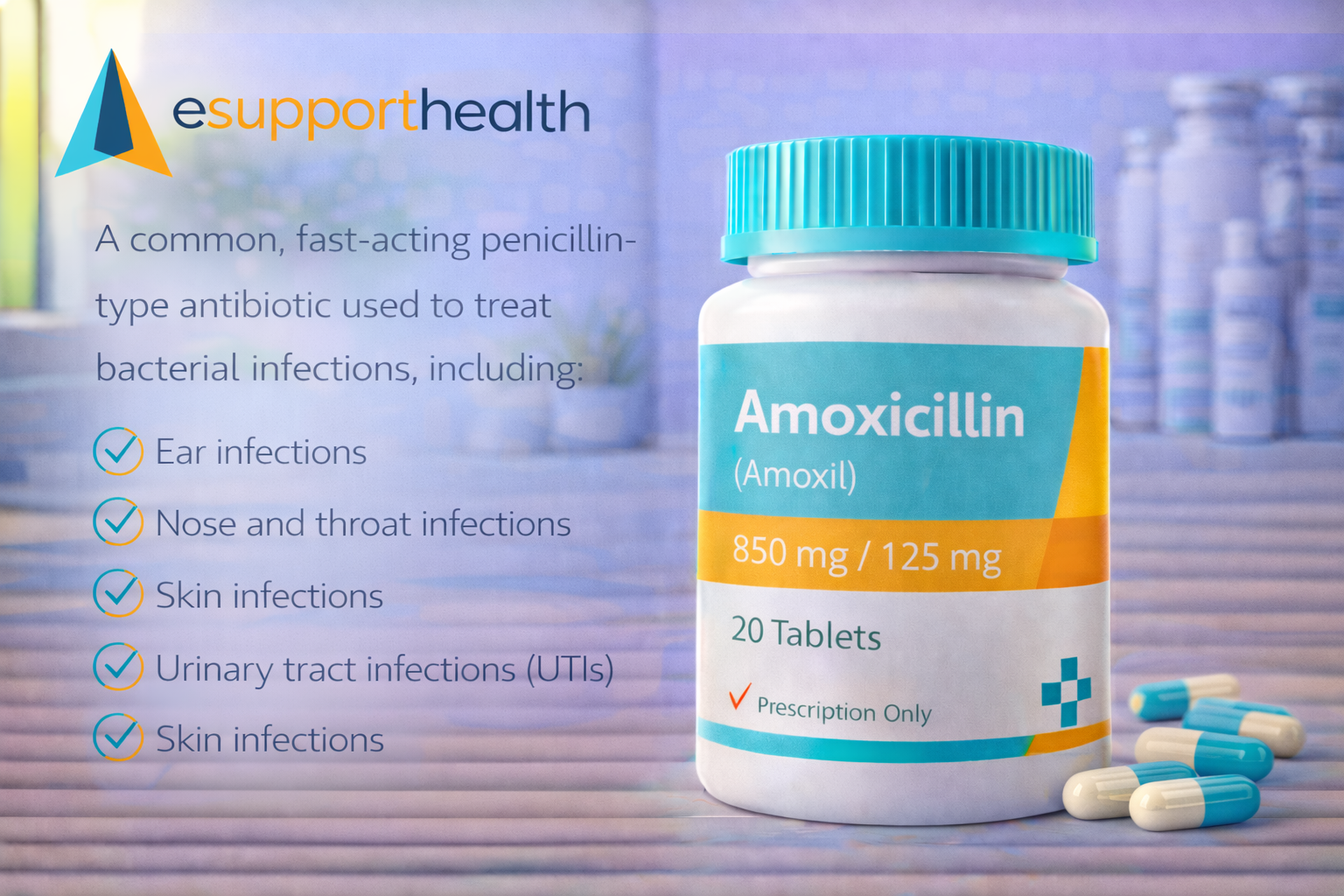
Medication Overview
Amoxicillin has been widely used in clinical medicine for decades and remains one of the most commonly prescribed antibiotics worldwide. It is valued for its broad effectiveness against many bacterial pathogens and its well-established safety profile.
Healthcare providers may prescribe amoxicillin for infections such as:
- respiratory tract infections
- ear infections (otitis media)
- sinus infections
- urinary tract infections
- skin and soft tissue infections
- certain dental infections
Amoxicillin is available in several formulations including capsules, tablets, chewable tablets, and oral suspensions, allowing clinicians to tailor treatment to individual patient needs.
Because inappropriate antibiotic use can contribute to antibiotic resistance, clinicians typically prescribe antibiotics only when bacterial infection is suspected or confirmed.
Understanding Amoxicillin: A Widely Used Penicillin Antibiotic
Amoxicillin belongs to the beta-lactam antibiotic family, a group of medications designed to disrupt bacterial cell wall synthesis. Bacteria rely on strong cell walls to maintain structural integrity. When these walls cannot form properly, bacterial cells become unable to survive or reproduce.
This mechanism makes amoxicillin effective against a wide range of bacterial organisms responsible for common infections. Because human cells do not have bacterial cell walls, antibiotics like amoxicillin are able to target bacteria without affecting most human cellular structures.
Proper diagnosis and appropriate antibiotic use remain essential to ensuring effective treatment and preventing unnecessary antibiotic exposure.
Why Antibiotics Are Prescribed Only for Bacterial Infections
Antibiotics are designed to treat infections caused by bacteria, not viruses. Viral illnesses such as the common cold, influenza, and many sore throats do not respond to antibiotic treatment.
Healthcare providers typically evaluate symptoms, medical history, and sometimes diagnostic tests to determine whether an infection is bacterial in nature. Prescribing antibiotics only when necessary helps reduce the risk of antibiotic resistance and preserves the effectiveness of these medications for future use.
How Bacteria Develop Antibiotic Resistance
Antibiotic resistance occurs when bacteria evolve mechanisms that allow them to survive exposure to medications that previously eliminated them. This process can occur when antibiotics are used unnecessarily or when treatment courses are not completed as prescribed.
Responsible antibiotic use is an important public health strategy aimed at slowing the development of resistant bacterial strains.
Why Amoxicillin Is Often Used as a First-Line Antibiotic
Amoxicillin is frequently considered a first-line treatment for many common infections because it has a long history of clinical use and is effective against a variety of bacterial organisms.
Its pharmacological properties allow it to be absorbed efficiently when taken orally, making it convenient for outpatient treatment.
The Importance of Completing Antibiotic Treatment
Even when symptoms improve early during treatment, completing the full course of antibiotics is typically recommended. Stopping treatment prematurely may allow remaining bacteria to survive and potentially contribute to recurrent infection or antibiotic resistance.
Following the treatment plan recommended by a healthcare provider helps ensure the infection is fully resolved.
How the Immune System Works Alongside Antibiotics
Antibiotics help reduce the number of bacteria causing infection, but the body’s immune system also plays an important role in recovery. Immune cells identify and eliminate remaining bacteria while repairing affected tissues.
Adequate rest, hydration, and supportive care may assist the body’s natural defense systems during infection recovery.
Advances in Antibiotic Development and Stewardship
Modern medicine continues to emphasize antibiotic stewardship, a practice aimed at preserving the effectiveness of existing antibiotics while encouraging the development of new treatments.
Healthcare providers, public health organizations, and researchers work together to promote responsible antibiotic prescribing and educate patients about the importance of appropriate antibiotic use.
Why Amoxicillin Is One of the Most Widely Prescribed Antibiotics
Amoxicillin has remained one of the most frequently prescribed antibiotics for decades because of its broad activity against many common bacterial pathogens and its well-understood safety profile. The medication belongs to the beta-lactam family of antibiotics, which has been extensively studied in clinical medicine.
Many respiratory, ear, sinus, and urinary infections are caused by bacteria that remain susceptible to penicillin-class antibiotics. Because amoxicillin is effective against several of these organisms and can be taken orally, clinicians often consider it as an initial treatment option for certain infections.
Its long history of clinical use also means physicians have extensive experience with appropriate dosing strategies and treatment durations.
How Doctors Identify Bacterial Infections
Determining whether an infection is bacterial is an important step before prescribing antibiotics. Healthcare providers typically evaluate several factors during this process, including symptom patterns, medical history, and the physical examination findings.
Certain infections present with characteristics that suggest bacterial involvement, such as localized inflammation, persistent fever, or symptoms that worsen over time rather than improve. In some cases, diagnostic tests such as throat cultures, urine analysis, or laboratory testing may help confirm the presence of bacterial organisms.
This careful evaluation helps ensure that antibiotics such as amoxicillin are used appropriately and only when bacterial infection is likely.
The Global Importance of Responsible Antibiotic Use
Antibiotics have transformed modern medicine by making many previously life-threatening infections treatable. However, the effectiveness of antibiotics depends on responsible use and careful prescribing practices.
Public health organizations around the world emphasize the importance of antibiotic stewardship programs designed to reduce unnecessary antibiotic exposure. These programs encourage clinicians to prescribe antibiotics only when bacterial infection is suspected and to select medications that are appropriate for the specific organism involved.
Patients also play an important role by taking antibiotics exactly as prescribed and avoiding the use of leftover medications. Responsible antibiotic use helps preserve the effectiveness of treatments such as amoxicillin for future generations.
How Amoxicillin (Amoxil) Works
Amoxicillin works by inhibiting bacterial cell wall synthesis. Bacterial cell walls contain structural components that maintain the shape and stability of the microorganism.
Amoxicillin binds to enzymes known as penicillin-binding proteins, preventing bacteria from forming the cross-linked cell wall structures necessary for survival. As a result, bacterial cells become structurally unstable and eventually break apart.
This bactericidal action helps eliminate susceptible bacteria responsible for infection.
Key Prescribing Information
| Medication Class | Penicillin-class antibiotic |
|---|---|
| Generic name | Amoxicillin |
| Brand name | Amoxil |
| Administration | Oral tablet, capsule, chewable tablet, or suspension |
| Typical Frequency | Two to three times daily depending on infection |
| Dose Adjustment | Determined by licensed clinician |
| Monitoring | Clinical follow-up if symptoms persist |
Treatment duration and dosage depend on the specific condition being treated, symptom severity, and individual patient response.
Candidate Criteria
Healthcare providers may evaluate amoxicillin for individuals experiencing symptoms consistent with bacterial infection.
Potential candidates may include individuals experiencing:
- bacterial respiratory infections
- ear or sinus infections
- urinary tract infections
- dental infections
- skin infections
Clinicians evaluate symptoms, medical history, and possible allergies before prescribing penicillin-class antibiotics.
Safety
Like all medications, amoxicillin may cause side effects in some individuals.
Common side effects may include:
- nausea
- diarrhea
- mild skin rash
- gastrointestinal discomfort
Some individuals may experience allergic reactions to penicillin antibiotics, which can range from mild skin reactions to more severe hypersensitivity responses. Patients should inform healthcare providers about any history of penicillin allergy.
Clinical Onset & Expectations
Antibiotics typically begin working soon after treatment begins, although noticeable symptom improvement may take several days.
Bacterial growth begins to slow as the medication reaches effective levels.
Many individuals begin noticing symptom improvement.
Completing the full treatment course helps ensure the infection is fully resolved.
If symptoms worsen or do not improve, medical evaluation may be recommended.
Telehealth Prescribing Framework
A licensed provider reviews your information to determine whether treatment is medically appropriate. Prescriptions are not guaranteed and are issued only when clinically indicated and permitted by applicable laws.
Secure Medical Intake
Complete a confidential health questionnaire including symptoms, medical history, and current medications.
Licensed Provider Review
A licensed clinician evaluates your health information and may request additional details or a virtual consultation.
Clinical Decision & Treatment Plan
If appropriate, the provider determines a treatment plan and provides dosing guidance and monitoring instructions.
eRx & Pharmacy Fulfillment
If prescribed, the medication is electronically sent to a licensed pharmacy for dispensing.
Frequently Asked Questions
How long does amoxicillin take to work?
Some individuals begin noticing improvement within 24–48 hours, although the full course of treatment should be completed as prescribed.
Can amoxicillin treat viral infections?
No. Amoxicillin is effective only against bacterial infections and does not treat viral illnesses.
Is amoxicillin safe for children?
Amoxicillin is commonly prescribed for children, although dosing is determined by a healthcare provider.
What should I do if I miss a dose?
Patients should follow the instructions provided by their healthcare provider or pharmacist.
Can I stop taking amoxicillin once I feel better?
It is generally recommended to complete the entire prescribed course to ensure the infection is fully treated.
What infections does amoxicillin treat?
Amoxicillin is used to treat several bacterial infections including respiratory, ear, urinary, and skin infections.
Can amoxicillin cause allergic reactions?
Some individuals may experience allergic reactions to penicillin antibiotics.
Does amoxicillin interact with other medications?
Certain medications may interact with antibiotics, so patients should inform healthcare providers about all current medications.
Why is antibiotic resistance a concern?
Overuse or misuse of antibiotics can allow bacteria to develop resistance to treatment.
How do doctors determine if antibiotics are necessary?
Healthcare providers evaluate symptoms, medical history, and sometimes diagnostic tests before prescribing antibiotics.
Medical disclaimer: This content is provided for educational purposes only and does not constitute medical advice. Medication therapy should only be initiated or modified under the supervision of a qualified healthcare professional following an appropriate clinical evaluation.
If you are experiencing a medical emergency or severe infection symptoms, seek immediate medical care.
Explore More Treatments
Augmentin is a prescription antibiotic that combines amoxicillin, a penicillin-class antibacterial agent, with clavulanate potassium, a compound that helps protect the antibiotic from certain bacterial defense mechanisms. This combination allows the medication to treat infections caused by bacteria that might otherwise resist standard penicillin antibiotics.
Azithromycin, commonly known by the brand name Zithromax, is a prescription antibiotic used to treat a variety of bacterial infections affecting the respiratory system, skin, ears, and certain sexually transmitted infections. It belongs to the macrolide class of antibiotics, which work by interfering with bacterial protein production.
Doxycycline is a prescription antibiotic commonly used to treat a wide range of bacterial infections, including respiratory infections, skin infections, sexually transmitted infections, and certain tick-borne diseases. It belongs to the tetracycline class of antibiotics, which work by interfering with bacterial protein production.