PRESCRIPTION MEDICATIONS
Mebendazole (Vermox, Emverm)
Mebendazole (Vermox, Emverm) — targeted anthelmintic therapy for intestinal parasitic infections. Mebendazole is a prescription antiparasitic medication used to treat specific intestinal worm infections in humans. Therapy is guided by clinical evaluation, diagnosis, and individual patient considerations.
Begin Mebendazole Treatment Through eSupport Health
Starting treatment through eSupport Health begins with a secure online medical evaluation completed by a licensed healthcare provider. During this process, clinicians review your symptoms, medical history, and current medications to determine whether treatment is appropriate. If a medication is recommended, a prescription may be issued in accordance with medical guidelines and transmitted to a licensed pharmacy for dispensing. This streamlined telehealth approach allows patients to access professional care and treatment guidance in a convenient and confidential manner.
This page provides an educational overview of Mebendazole, including how it works, what conditions it may treat, safety considerations, and how telehealth providers evaluate treatment eligibility.
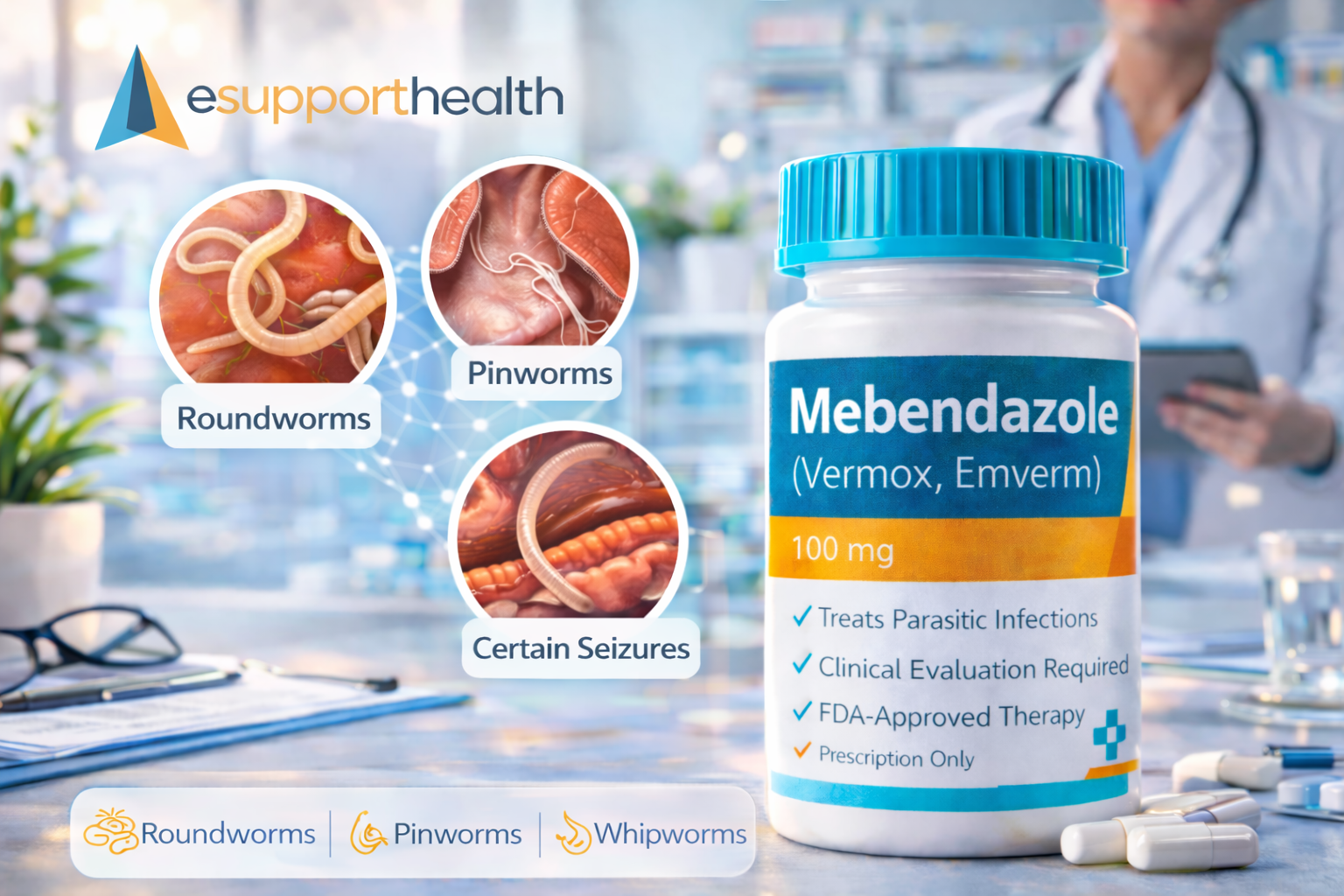
Medication Overview
Mebendazole is an anthelmintic medication used to treat infections caused by parasitic worms, including pinworms, roundworms, and whipworms. It works by disrupting the parasite’s ability to absorb nutrients, ultimately leading to its elimination from the body.
This medication is commonly used in outpatient settings and is typically administered as a short-course therapy, depending on the type of infection. In certain cases, repeat dosing may be recommended to address reinfection or parasite lifecycle stages.
Mebendazole is prescribed based on clinical assessment, as symptoms of parasitic infections may overlap with other gastrointestinal or dermatologic conditions.
Mebendazole Therapy: Targeted Parasite Elimination and Clinical Treatment Strategy
Understanding Intestinal Parasitic Infections
Intestinal worm infections occur when parasitic organisms colonize the gastrointestinal tract, often through contaminated food, water, or environmental exposure.
Common infections include:
- Pinworms (Enterobius vermicularis)
- Roundworms (Ascaris lumbricoides)
- Whipworms (Trichuris trichiura)
Symptoms may range from mild discomfort to more persistent gastrointestinal or systemic effects.
Selective Action Against Parasites
Mebendazole targets parasite-specific metabolic pathways, particularly those involved in glucose uptake.
By impairing energy production within the parasite, the medication leads to gradual immobilization and elimination, while minimizing systemic effects on human cells.
Short-Course Treatment with Lifecycle Consideration
Treatment duration is typically short, but timing matters.
Some parasitic infections require:
- Single-dose therapy
- Repeat dosing after a defined interval
This approach helps address both active organisms and newly hatched parasites.
Transmission and Reinfection Risk
Certain parasitic infections—especially pinworms—can spread easily in household or community settings.
Management may include:
- Treating close contacts when appropriate
- Hygiene measures to reduce reinfection
- Environmental cleaning strategies
Diagnosis-Based Treatment Approach
Not all gastrointestinal symptoms are caused by parasites.
Clinical evaluation ensures:
- Accurate diagnosis
- Appropriate medication selection
- Avoidance of unnecessary treatment
Role in Global and Outpatient Medicine
Mebendazole is widely used in both individual treatment and public health programs aimed at reducing parasitic disease burden.
Its safety profile and targeted mechanism make it a commonly utilized first-line therapy for several helminthic infections.
Pinworm Infections and Nighttime Symptoms
Pinworm infections often present with nighttime itching due to the parasite’s lifecycle. This symptom pattern is an important diagnostic clue and helps guide treatment timing and follow-up.
Gastrointestinal Impact of Helminth Infections
Parasitic worms can interfere with nutrient absorption and gut function. In some cases, this may contribute to abdominal discomfort or changes in digestion.
Targeted treatment helps restore normal gastrointestinal balance.
Prevention Strategies After Treatment
Effective treatment extends beyond medication.
Prevention strategies may include:
- Hand hygiene
- Cleaning shared surfaces
- Laundering bedding
- Avoiding reinfection sources
These measures support long-term treatment success.
Lifecycle Disruption and Why Repeat Dosing May Be Necessary
Many intestinal parasites, particularly pinworms, have lifecycle stages that influence treatment success. While mebendazole effectively targets adult worms, eggs may survive initial therapy and hatch days later.
For this reason, clinicians may recommend a second dose after a defined interval to ensure complete eradication. This approach helps break the reinfection cycle and reduces the likelihood of persistent symptoms.
Understanding parasite lifecycle timing is essential for effective treatment, especially in household settings where reinfection can occur.
Minimal Systemic Absorption and Targeted Gastrointestinal Action
Mebendazole is characterized by limited systemic absorption, meaning most of the medication remains within the gastrointestinal tract where the parasites reside.
This localized activity provides:
- Targeted treatment of intestinal worms
- Reduced systemic exposure
- Favorable tolerability in appropriate patients
Because of this pharmacologic profile, mebendazole is often considered a practical first-line option for common helminth infections.
Household Transmission Patterns and Coordinated Treatment
Certain parasitic infections—particularly pinworms—can spread easily among close contacts due to microscopic egg transmission on surfaces, clothing, and hands.
Effective management may include:
- Treating multiple household members when clinically appropriate
- Reinforcing hygiene practices (handwashing, nail care)
- Cleaning bedding and shared items
Without coordinated treatment and preventive measures, reinfection can occur even after successful initial therapy. Clinical guidance helps determine when broader management strategies are needed.
How Mebendazole Works
Mebendazole inhibits microtubule formation in parasitic cells, disrupting glucose uptake and depleting energy stores.
This leads to:
- Reduced parasite mobility
- Impaired survival
- Eventual elimination through normal intestinal processes
Human cells are less affected due to differences in cellular structure and drug selectivity.
Key Prescribing Information
| Medication Class | Antiparasitic (anthelmintic) |
|---|---|
| Generic name | Mebendazole |
| Brand name | Vermox, Emverm |
| Administration | Oral (tablet or chewable) |
| Typical Dose | Short-course therapy depending on infection |
| Indication | Parasitic infections |
| Prescribing | Determined by a licensed clinician following medical evaluation |
Treatment duration and dosage depend on the specific condition being treated, symptom severity, and individual patient response.
Candidate Criteria
Mebendazole may be considered for individuals with suspected or confirmed intestinal parasitic infections.
Candidates may include those with:
- Anal itching (especially at night)
- Gastrointestinal discomfort
- Known exposure to parasitic infections
- Household transmission patterns
Final eligibility is determined through clinical review.
Safety
Mebendazole is generally well tolerated when used as directed.
Considerations may include:
- Mild gastrointestinal symptoms
- Headache (less common)
- Rare hypersensitivity reactions
Clinical review is important for patients with:
- underlying medical conditions
- concurrent medications
- pregnancy considerations
Clinical Onset & Expectations
Medication begins disrupting parasite metabolism.
Symptoms such as itching or discomfort may begin to improve.
Complete elimination depends on parasite type and may require repeat dosing.
Telehealth Prescribing Framework
Mebendazole prescribing through telehealth follows a structured evaluation process.
Secure Medical Intake
Complete a confidential health questionnaire including symptoms, medical history, and current medications.
Licensed Provider Review
A licensed clinician evaluates your health information and may request additional details or a virtual consultation.
Clinical Decision & Treatment Plan
If appropriate, the provider determines a treatment plan and provides dosing guidance and monitoring instructions.
eRx & Pharmacy Fulfillment
If prescribed, the medication is electronically sent to a licensed pharmacy for dispensing.
Frequently Asked Questions
Can I buy mebendazole online?
Mebendazole may be prescribed online after evaluation by a licensed provider.
What infections does mebendazole treat?
It is used for certain intestinal worm infections such as pinworms and roundworms.
Is mebendazole safe for humans?
It is generally safe when prescribed and used appropriately.
Do I need repeat treatment?
Some infections require repeat dosing depending on lifecycle considerations.
Can others in my household need treatment?
In some cases, clinicians may recommend treating close contacts.
How does mebendazole work?
It blocks energy production in parasites, leading to their elimination.
How quickly does mebendazole work?
It begins acting within the first few days after dosing.
Can parasitic infections return after treatment?
Reinfection is possible without proper hygiene measures.
Is mebendazole the same as ivermectin?
No, they are different antiparasitic medications used for different conditions.
Do I need a prescription for mebendazole?
In many cases, yes—depending on region and formulation.
Medical disclaimer: This content is for informational purposes only and does not constitute medical advice, diagnosis, or treatment. Ivermectin is a prescription medication and should be used only under the supervision of a licensed healthcare provider. Treatment decisions are based on individual clinical evaluation and medical history.
Explore More Treatments
Ivermectin — antiparasitic therapy for parasitic and dermatologic conditions. A prescription medication used to treat certain parasitic infections affecting the skin and gastrointestinal system. Ivermectin is prescribed based on clinical evaluation and diagnosis.
Gabapentin (Neurontin) — neuromodulating therapy for nerve pain and neurologic conditions. A prescription medication used to manage neuropathic pain and certain neurologic conditions. Gabapentin works by modulating nerve signaling and is prescribed based on …
Prednisone — systemic corticosteroid for inflammation & immune modulation. A prescription corticosteroid used to reduce inflammation and regulate immune system activity across a wide range of conditions. Prednisone is commonly prescribed when rapid anti-inflammatory or …