PRESCRIPTION MEDICATIONS
Naltrexone (Revia)
Naltrexone (Revia) — medication-assisted support for alcohol and opioid use disorders. A prescription medication used to support recovery by reducing cravings and blocking the effects of opioids. Naltrexone is used as part of a structured treatment plan under medical supervision.
Begin Naltrexone Treatment Through eSupport Health
Starting treatment through eSupport Health begins with a secure online medical evaluation completed by a licensed healthcare provider. During this process, clinicians review your symptoms, medical history, and current medications to determine whether treatment is appropriate. If a medication is recommended, a prescription may be issued in accordance with medical guidelines and transmitted to a licensed pharmacy for dispensing. This streamlined telehealth approach allows patients to access professional care and treatment guidance in a convenient and confidential manner.
This page provides an educational overview of Naltrexone, including how it works, what conditions it may treat, safety considerations, and how telehealth providers evaluate treatment eligibility.
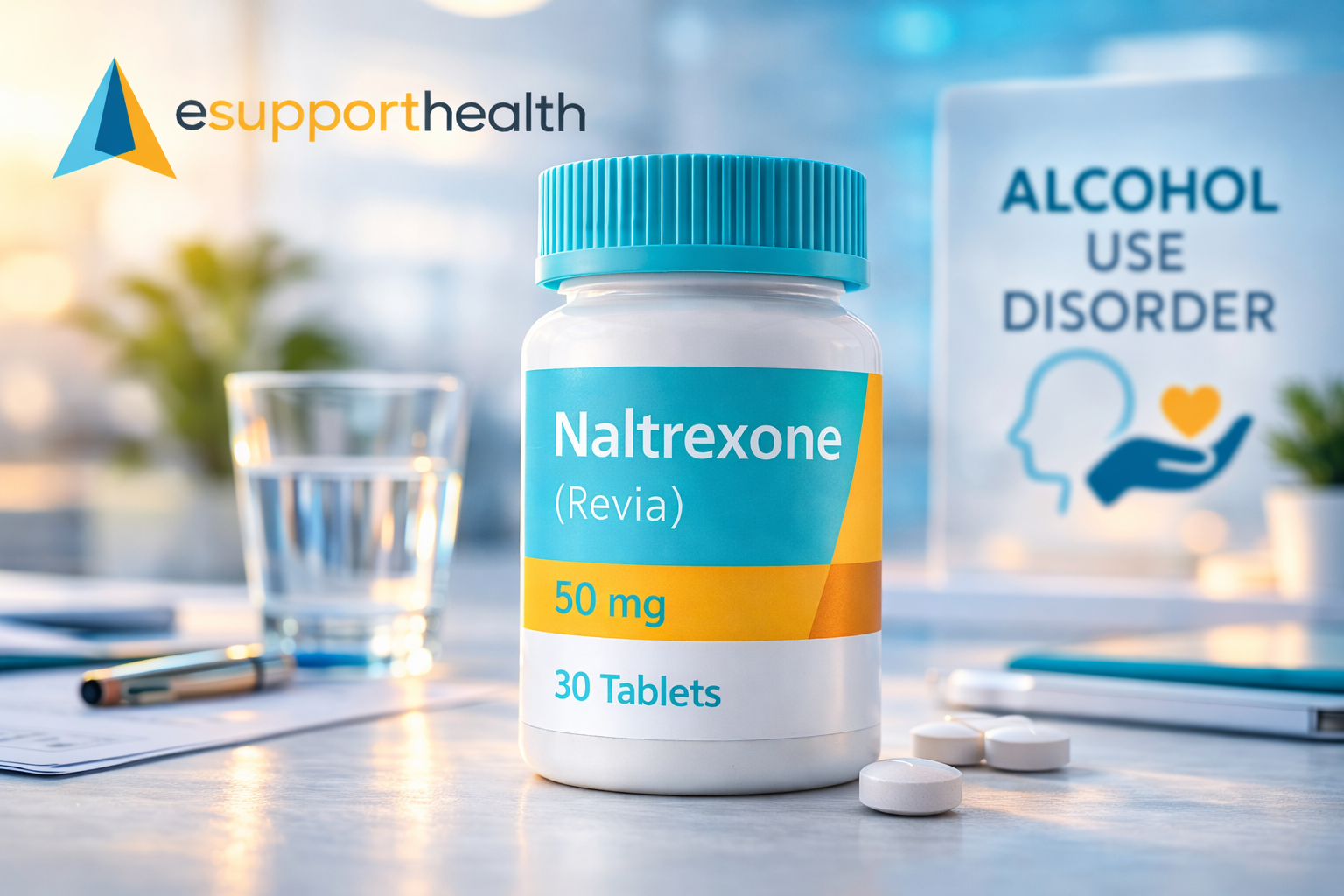
Medication Overview
Naltrexone is an opioid receptor antagonist used in the management of alcohol use disorder (AUD) and opioid use disorder (OUD).
Unlike aversion-based therapies, naltrexone works by blocking opioid receptors in the brain. This reduces the rewarding effects of alcohol and prevents opioids from producing euphoria, helping support relapse prevention.
Naltrexone is typically incorporated into a comprehensive treatment plan that may include behavioral therapy, counseling, and ongoing clinical monitoring.
Naltrexone Therapy: Opioid Receptor Blockade, Craving Reduction, and Recovery Support
Opioid Receptors and Reward Pathways
The brain’s reward system is influenced by opioid receptors.
Activation of these receptors contributes to feelings of pleasure associated with alcohol and opioid use. Disrupting this pathway can help reduce reinforcement of substance use behaviors.
Receptor Blockade and Reduced Reinforcement
Naltrexone binds to opioid receptors without activating them.
This blocks the effects of opioids and reduces the reinforcing properties of alcohol, helping decrease motivation to continue use.
Craving Modulation in Alcohol Use Disorder
Naltrexone may help reduce cravings in individuals with alcohol use disorder.
By altering reward signaling, it supports behavioral change and helps individuals maintain treatment goals.
Role in Opioid Use Disorder Management
For individuals with opioid use disorder, naltrexone blocks the effects of opioids.
This helps prevent relapse by eliminating the expected effects of opioid use, supporting abstinence when combined with structured care.
Integration with Behavioral Therapy
Medication alone is not sufficient for comprehensive recovery.
Naltrexone is most effective when combined with counseling, behavioral interventions, and support systems that address underlying factors.
Individualized Treatment Planning
Recovery is highly individualized.
Naltrexone may be used based on patient-specific factors such as substance use history, treatment goals, and readiness for change. Clinical evaluation ensures appropriate use.
Detoxification Requirements and Opioid-Free Interval
For opioid use disorder, individuals must be opioid-free before starting naltrexone.
Initiating treatment prematurely may trigger withdrawal symptoms. Proper timing and clinical supervision are essential for safe initiation.
Liver Function and Clinical Monitoring Considerations
Naltrexone is metabolized by the liver, making liver function an important factor in treatment planning.
Baseline and periodic monitoring may be recommended to ensure safe use and detect potential issues early.
Behavioral Reinforcement and Long-Term Recovery Support
Naltrexone supports recovery by reducing reinforcement associated with substance use.
When combined with behavioral therapy and structured support, it contributes to long-term recovery strategies and improved treatment adherence.
How Naltrexone Works
Naltrexone competitively binds to opioid receptors in the brain.
By blocking these receptors, it prevents opioids from producing their effects and reduces the rewarding sensations associated with alcohol use. This helps support relapse prevention and behavioral change.
Key Prescribing Information
| Medication Class | Opioid receptor antagonist |
|---|---|
| Generic name | Naltrexone |
| Brand name | Revia |
| Administration | Oral tablet (extended-release injectable forms also exist) |
| Typical Dose | Determined by clinician based on treatment plan |
| Indication | Alcohol use disorder, opioid use disorder |
| Prescribing | Determined by a licensed clinician following medical evaluation |
Treatment duration and dosage depend on the specific condition being treated, symptom severity, and individual patient response.
Candidate Criteria
Naltrexone may be considered for individuals with alcohol or opioid use disorder.
Candidates typically include patients seeking support for relapse prevention who have completed detoxification when required (particularly for opioid use disorder). Suitability depends on medical history and clinical evaluation.
Final eligibility is determined through a licensed provider.
Safety
Naltrexone requires appropriate clinical assessment prior to use.
It should not be used in individuals currently dependent on opioids without proper detoxification, as it may precipitate withdrawal. Liver function considerations may also be relevant.
Monitoring and adherence to medical guidance are essential.
Clinical Onset & Expectations
Receptor blockade begins after initiation, and changes in craving patterns may occur.
Reduced reinforcement from substance use may support behavioral changes.
Consistent use as part of a comprehensive program may support sustained recovery.
Telehealth Prescribing Framework
Naltrexone prescribing through telehealth follows a structured evaluation process.
Patients complete a secure intake including substance use history, treatment goals, and medical background. A licensed provider assesses eligibility and readiness for therapy.
If prescribed, treatment includes guidance on safe use, monitoring, and follow-up care.
Secure Medical Intake
Complete a confidential health questionnaire including symptoms, medical history, and current medications.
Licensed Provider Review
A licensed clinician evaluates your health information and may request additional details or a virtual consultation.
Clinical Decision & Treatment Plan
If appropriate, the provider determines a treatment plan and provides dosing guidance and monitoring instructions.
eRx & Pharmacy Fulfillment
If prescribed, the medication is electronically sent to a licensed pharmacy for dispensing.
Joe Duncan
Chief Executive Officer (CEO)
Joe is the cofounder of eSupport Health and has served as its CEO since the company was formed in November 2019. He is a seasoned executive with over 20 years of experience in founding, building, and leading effective organizations, and whose counsel is sought out across a variety of businesses.
Since 2012, Joe has served as an advisor to the CEO of protocols.io, the leading digital repository for academic research. He led protocols.io’s initial seed round and continues to be actively involved as a trusted advisor to the company.
From 2015 to 2017, Joe served as General Manager at Lionbridge Technologies, where he established the Legal Division, following Lionsbridge’s acquisition of Joe’s company, Geotext Translations, Inc.
In 1997, Joe founded and served as CEO of Geotext, a multimillion-dollar business providing premium language services to global 100 law firms and major corporations. Geotext became the go-to translation company for many of the world’s most critical cross-border legal matters. At its peak, Geotext had over 120 full-time employees and 3,500+ contractors around the world. In 2015, Geotext was acquired by Lionbridge.
Joe holds a B.A. in English Literature, with a Minor in Political Science, from the University of Southern California and an M.F.A. from Columbia University. Joe enjoys reading, running, and hiking in the Adirondacks with his family. Recently Joe learned to surf which involves more wiping out than catching waves, but he enjoys the challenge.