PRESCRIPTION MEDICATIONS
Clindamycin Topical
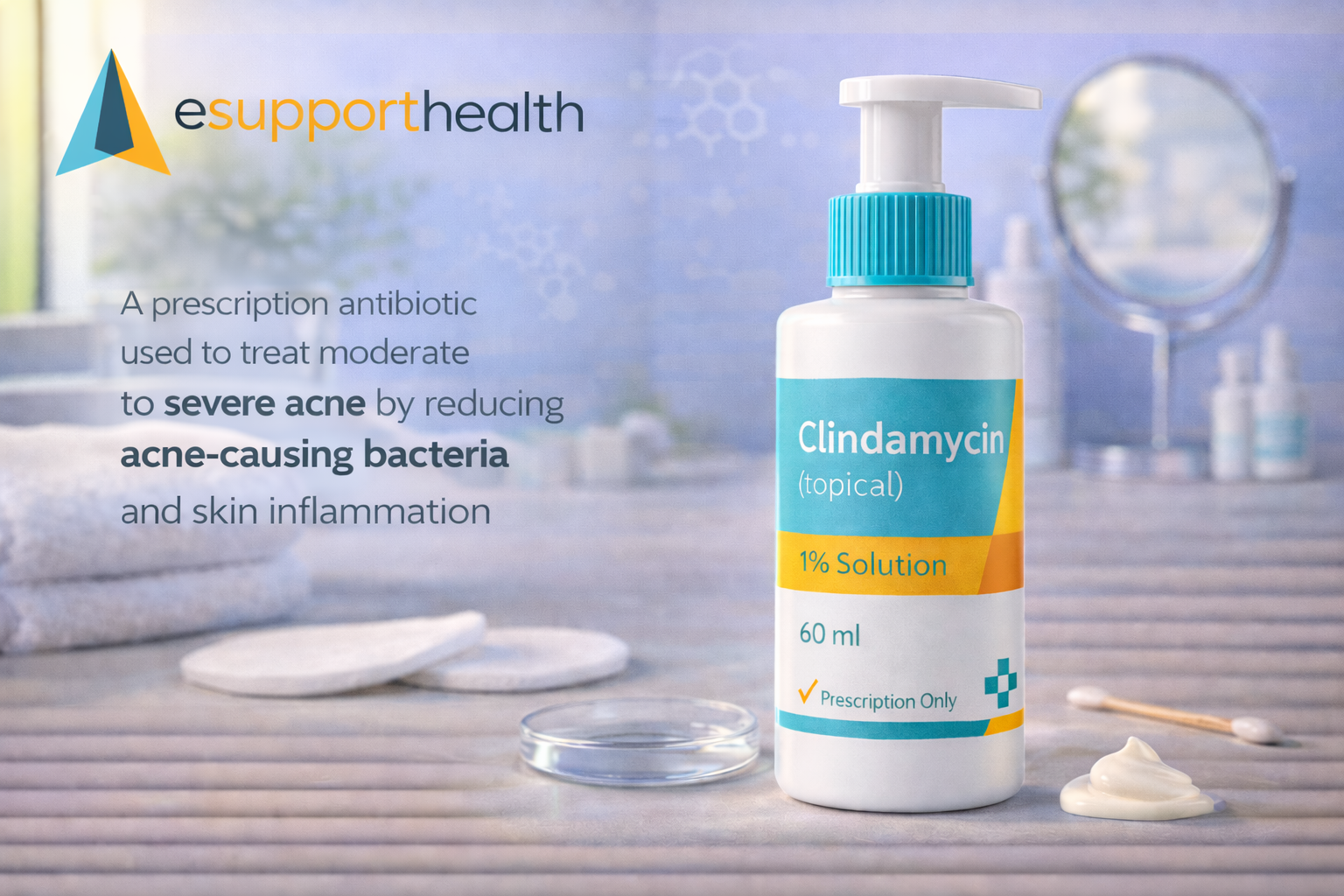
Clindamycin Topical — prescription antibiotic therapy for acne management. A topical antibiotic used to reduce acne-causing bacteria and inflammation in the skin. Clindamycin supports targeted dermatologic treatment when used under clinical guidance.
Begin Clindamycin Treatment Through eSupport Health
Starting treatment through eSupport Health begins with a secure online medical evaluation completed by a licensed healthcare provider. During this process, clinicians review your symptoms, medical history, and current medications to determine whether treatment is appropriate. If a medication is recommended, a prescription may be issued in accordance with medical guidelines and transmitted to a licensed pharmacy for dispensing. This streamlined telehealth approach allows patients to access professional care and treatment guidance in a convenient and confidential manner.
This page provides an educational overview of Clindamycin, including how it works, what conditions it may treat, safety considerations, and how telehealth providers evaluate treatment eligibility.
Medication Overview
Clindamycin topical is an antibiotic medication applied directly to the skin to treat acne. It is commonly used in mild to moderate inflammatory acne and is often combined with other treatments for optimal results.
Acne development involves bacterial proliferation, inflammation, and clogged pores. Clindamycin helps reduce bacterial load on the skin and supports improvement in inflammatory lesions.
It is typically prescribed as part of a broader acne management plan that may include retinoids or benzoyl peroxide to address multiple contributing factors.
Clindamycin Therapy: Antibacterial Action, Inflammation Control, and Acne Treatment Strategy
Bacterial Role in Acne Development
Cutibacterium acnes contributes to the inflammatory component of acne.
This bacterium interacts with sebum and skin cells within hair follicles, triggering immune responses that lead to redness and swelling. Managing bacterial activity is an important aspect of treatment.
Topical Antibiotic Mechanism
Clindamycin inhibits bacterial protein synthesis.
By limiting bacterial growth on the skin, it helps reduce inflammation and supports improvement in acne lesions. Its topical formulation allows targeted delivery to affected areas.
Inflammatory Lesions and Treatment Focus
Clindamycin is particularly effective for inflammatory acne.
It is commonly used to address papules and pustules, which are associated with redness and irritation. Its role is less focused on non-inflammatory comedones.
Combination Therapy and Resistance Prevention
Clindamycin is often used in combination with other treatments.
Combining it with benzoyl peroxide or retinoids helps reduce the risk of bacterial resistance and improves overall treatment outcomes. Multi-agent therapy targets multiple aspects of acne.
Localized Treatment and Skin Tolerability
Topical application allows localized treatment with minimal systemic exposure.
This approach helps limit systemic side effects while delivering medication directly to affected areas. Skin tolerability is generally favorable when used as directed.
Structured Dermatologic Care and Monitoring
Effective acne treatment requires ongoing evaluation and adjustment.
Clindamycin is typically part of a structured dermatologic plan, with periodic reassessment to ensure continued effectiveness and appropriate use.
Antibiotic Stewardship and Responsible Use
Topical antibiotics should be used responsibly to minimize the risk of bacterial resistance.
Clindamycin is often prescribed in combination with other agents to reduce resistance development. Appropriate duration and adherence to treatment guidelines are important for maintaining effectiveness.
Role in Stepwise Acne Treatment Approaches
Acne management often follows a stepwise approach.
Clindamycin may be introduced when inflammatory lesions are present and may be adjusted based on response. This structured strategy allows for individualized treatment.
Skin Barrier Considerations and Supportive Care
Maintaining skin barrier health is important during acne treatment.
Use of gentle cleansers and moisturizers can help reduce irritation associated with topical medications. Supportive skincare enhances tolerability and treatment adherence.
How Clindamycin Works
Clindamycin binds to bacterial ribosomal subunits, inhibiting protein synthesis.
This action prevents bacterial growth and reduces the presence of Cutibacterium acnes on the skin. By decreasing bacterial activity, it also helps reduce inflammation associated with acne lesions.
Key Prescribing Information
| Medication Class | Topical antibiotic |
|---|---|
| Generic name | Clindamycin |
| Brand name | Various topical formulations (gel, lotion, solution) |
| Administration | Topical application to affected areas |
| Typical Dose | Applied once or twice daily as directed |
| Indication | Acne vulgaris (inflammatory lesions) |
| Prescribing | Determined by a licensed clinician following dermatologic evaluation |
Treatment duration depends on the condition being treated, symptom severity, and individual response to therapy.
Candidate Criteria
Clindamycin topical may be considered for individuals with inflammatory acne.
Candidates often include patients with papules and pustules who require antibacterial therapy as part of a broader acne treatment plan. Suitability depends on acne severity, skin type, and prior treatment response.
Final eligibility is determined through a licensed provider.
Safety
Clindamycin topical is generally well tolerated.
Potential considerations include mild skin irritation, dryness, or redness at the application site. Appropriate use and combination therapy help reduce risks associated with prolonged antibiotic exposure.
Patients should follow application instructions and report persistent irritation.
Clinical Onset & Expectations
Initial reduction in inflammation may begin with consistent use.
Visible improvement in inflammatory lesions may develop.
Continued use as part of combination therapy supports sustained acne control.
Telehealth Prescribing Framework
Clindamycin topical prescribing through telehealth follows a structured dermatologic evaluation process.
Patients complete a secure intake including skin history, acne severity, and prior treatments. A licensed provider determines whether topical antibiotic therapy is appropriate.
If prescribed, treatment includes guidance on application, combination therapy, and follow-up care.
Secure Medical Intake
Complete a confidential health questionnaire including symptoms, medical history, and current medications.
Licensed Provider Review
A licensed clinician evaluates your health information and may request additional details or a virtual consultation.
Clinical Decision & Treatment Plan
If appropriate, the provider determines a treatment plan and provides dosing guidance and monitoring instructions.
eRx & Pharmacy Fulfillment
If prescribed, the medication is electronically sent to a licensed pharmacy for dispensing.
Frequently Asked Questions
Can I buy Clindamycin topical online?
Clindamycin topical may be prescribed online through a licensed provider following a dermatologic evaluation.
What is Clindamycin topical used for?
It is used to treat inflammatory acne.
How often should Clindamycin be applied?
It is typically applied once or twice daily as directed.
Can Clindamycin be used alone?
It is often combined with other treatments for best results.
Does Clindamycin require monitoring?
Monitoring may be recommended as part of ongoing acne management.
How does Clindamycin topical treat acne?
It reduces bacteria and inflammation in the skin.
Can Clindamycin help with severe acne?
It is usually used for mild to moderate inflammatory acne.
Is Clindamycin the same as benzoyl peroxide?
No, they work differently and are often used together.
Can Clindamycin cause irritation?
Mild irritation may occur in some individuals.
How long does Clindamycin take to work?
Improvement typically develops over several weeks.
Medical disclaimer: This content is for informational purposes only and does not constitute medical advice, diagnosis, or treatment. Clindamycin topical is a prescription medication and should be used only under the supervision of a licensed healthcare provider. Treatment decisions are based on individual dermatologic evaluation and medical history.
Explore More Treatments
Accutane (Isotretinoin) — advanced dermatology therapy for severe acne under medical supervision. A prescription medication used for the treatment of severe or treatment-resistant acne. Isotretinoin requires strict clinical oversight, monitoring, and adherence to regulated safety protocols.
Tretinoin Topical — prescription retinoid therapy for acne and skin renewal. A topical vitamin A derivative used to treat acne and support skin cell turnover. Tretinoin helps regulate pore function and reduce acne formation when used under clinical guidance.
Zovirax (Acyclovir) — established antiviral therapy for herpes virus management. A prescription antiviral medication used to treat infections caused by herpes viruses, including HSV-1, HSV-2, and varicella-zoster. Acyclovir supports control of viral replication when clinically appropriate.