PRESCRIPTION MEDICATIONS
Tretinoin Topical
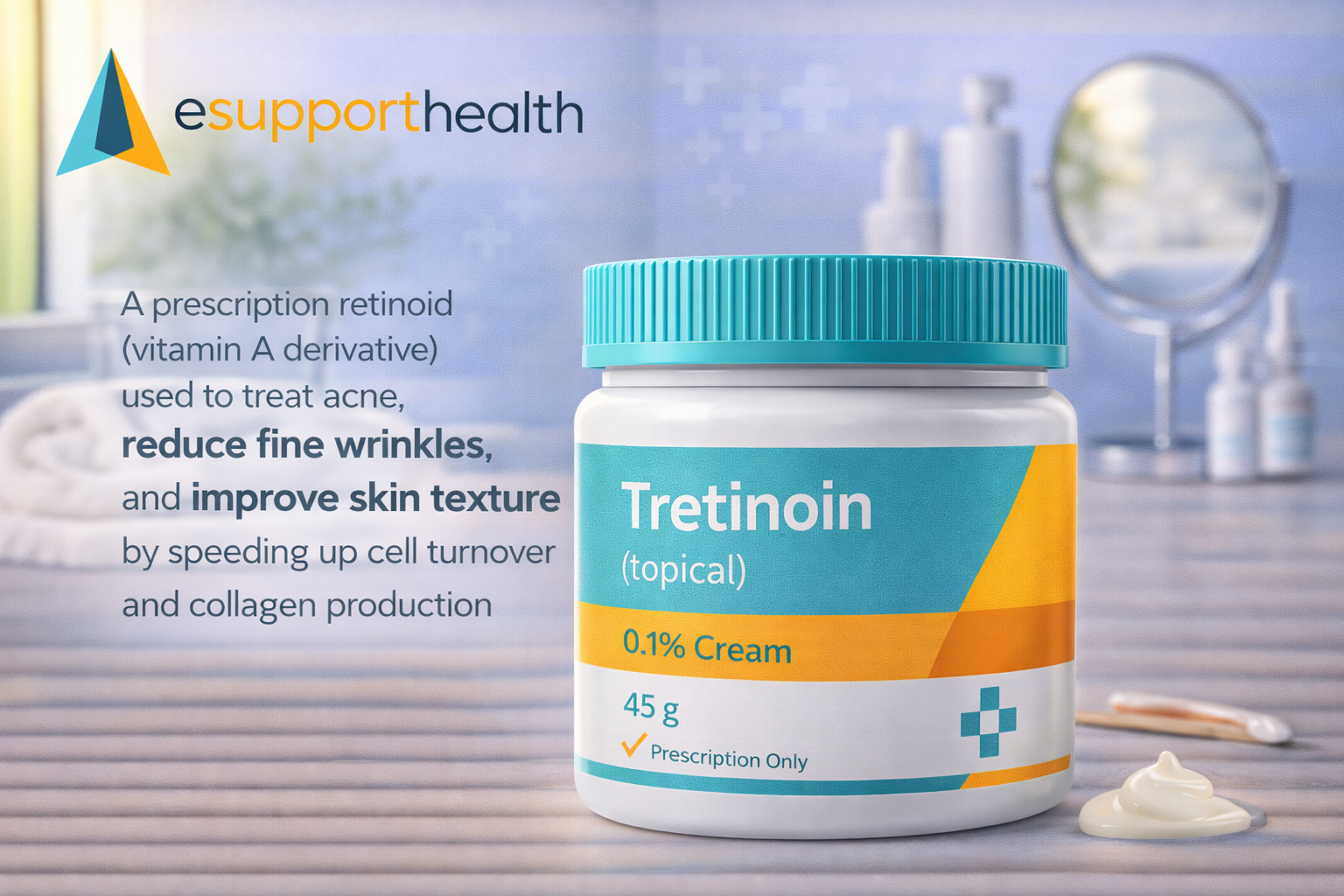
Tretinoin Topical — prescription retinoid therapy for acne and skin renewal. A topical vitamin A derivative used to treat acne and support skin cell turnover. Tretinoin helps regulate pore function and reduce acne formation when used under clinical guidance.
Begin Tretinoin Treatment Through eSupport Health
Starting treatment through eSupport Health begins with a secure online medical evaluation completed by a licensed healthcare provider. During this process, clinicians review your symptoms, medical history, and current medications to determine whether treatment is appropriate. If a medication is recommended, a prescription may be issued in accordance with medical guidelines and transmitted to a licensed pharmacy for dispensing. This streamlined telehealth approach allows patients to access professional care and treatment guidance in a convenient and confidential manner.
This page provides an educational overview of Tretinoin, including how it works, what conditions it may treat, safety considerations, and how telehealth providers evaluate treatment eligibility.
Medication Overview
Tretinoin is a topical retinoid commonly prescribed for acne and other dermatologic conditions involving abnormal skin cell turnover.
It works by promoting exfoliation at the cellular level, preventing clogged pores, and reducing the formation of comedones. This helps improve skin clarity over time and supports a more regulated skin renewal cycle.
Tretinoin is typically used as part of a comprehensive skincare regimen and requires consistent application to achieve optimal results.
Tretinoin Therapy: Retinoid Signaling, Skin Cell Turnover, and Acne Control
Skin Cell Turnover and Acne Formation
The skin naturally sheds dead cells, but in acne-prone individuals, this process may become disrupted.
Accumulated cells can clog pores and contribute to acne development. Tretinoin helps normalize this turnover process, reducing blockages and improving skin clarity.
Comedone Formation and Pore Regulation
Clogged pores, or comedones, are a primary feature of acne.
Tretinoin works at the follicular level to prevent the buildup of keratin and debris, reducing the formation of both whiteheads and blackheads.
Retinoid Receptor Activation and Cellular Effects
Tretinoin binds to nuclear retinoic acid receptors in skin cells.
This interaction influences gene expression, promoting cell differentiation and reducing abnormal keratinization. These changes support healthier skin structure over time.
Inflammation and Acne Progression
While tretinoin is not primarily an anti-inflammatory agent, its effects on pore regulation help reduce the cascade that leads to inflammatory acne lesions.
By preventing clogged pores, it indirectly reduces inflammation associated with acne.
Consistency and Long-Term Skin Regulation
Tretinoin requires consistent use to achieve and maintain results.
Initial adjustments in the skin may occur, but continued use supports improved skin texture and reduced acne formation over time.
Role in Comprehensive Dermatologic Care
Tretinoin is often combined with other therapies such as benzoyl peroxide, antibiotics, or supportive skincare.
A structured dermatologic approach allows for tailored treatment based on skin type, acne severity, and response to therapy.
Retinoid Adaptation Phase and Skin Adjustment
The skin often undergoes an adjustment period when starting tretinoin.
During this phase, irritation and peeling may occur as the skin adapts to increased cell turnover. This process is expected and can be managed with appropriate skincare and dosing adjustments.
Photoprotection and Sun Sensitivity Considerations
Tretinoin increases skin sensitivity to ultraviolet exposure.
Daily use of sunscreen and protective measures are essential to reduce the risk of irritation and maintain skin health. Photoprotection is a key component of treatment success.
Combination Therapy and Acne Treatment Optimization
Tretinoin is often used alongside other acne treatments.
Combining therapies allows clinicians to target multiple aspects of acne pathophysiology, including bacterial growth, inflammation, and pore blockage. This integrated approach supports more effective outcomes.
How Tretinoin Works
Tretinoin modulates epithelial cell growth and differentiation.
It accelerates skin cell turnover, prevents follicular plugging, and reduces comedone formation. By normalizing keratinization, it improves the skin’s ability to shed cells effectively and maintain clear pores.
Key Prescribing Information
| Medication Class | Topical retinoid |
|---|---|
| Generic name | Tretinoin |
| Brand name | Various formulations (cream, gel, lotion) |
| Administration | Topical application to affected skin areas |
| Typical Dose | Applied once daily, usually in the evening, as directed by clinician |
| Indication | Acne vulgaris, abnormal skin cell turnover |
| Prescribing | Determined by a licensed clinician following dermatologic evaluation |
Treatment duration depends on the condition being treated, symptom severity, and individual response to therapy.
Candidate Criteria
Tretinoin may be considered for individuals with acne or conditions involving irregular skin cell turnover.
Candidates often include patients with comedonal acne, mild to moderate inflammatory acne, or persistent skin texture concerns. Suitability depends on skin type, sensitivity, and clinical assessment.
Final eligibility is determined through a licensed provider.
Safety
Tretinoin is generally safe when used as directed but may cause local skin reactions.
Common considerations include dryness, redness, peeling, and irritation, particularly during initial use. Gradual introduction and appropriate skincare can help improve tolerance.
Sun sensitivity may increase, and protective measures are recommended.
Clinical Onset & Expectations
Skin irritation and adjustment period may occur, sometimes with temporary worsening of acne.
Gradual improvement in skin clarity and reduction in comedones may begin.
Consistent use supports sustained improvement in acne and skin texture.
Telehealth Prescribing Framework
Tretinoin prescribing through telehealth follows a structured dermatologic evaluation process.
Patients complete a secure intake including skin history, current skincare routine, and prior treatments. A licensed provider assesses suitability for retinoid therapy.
If prescribed, treatment includes application guidance, skin care recommendations, and follow-up support.
Secure Medical Intake
Complete a confidential health questionnaire including symptoms, medical history, and current medications.
Licensed Provider Review
A licensed clinician evaluates your health information and may request additional details or a virtual consultation.
Clinical Decision & Treatment Plan
If appropriate, the provider determines a treatment plan and provides dosing guidance and monitoring instructions.
eRx & Pharmacy Fulfillment
If prescribed, the medication is electronically sent to a licensed pharmacy for dispensing.
Frequently Asked Questions
Can I buy Tretinoin online?
Tretinoin may be prescribed online through a licensed provider following a dermatologic evaluation.
What is Tretinoin used for?
It is used to treat acne and regulate skin cell turnover.
How often should Tretinoin be applied?
It is typically applied once daily as directed.
Does Tretinoin cause irritation?
Yes, mild irritation is common during the initial phase.
How long does Tretinoin take to work?
Improvement develops gradually over several weeks.
How does Tretinoin improve acne?
It prevents clogged pores and promotes skin renewal.
Can Tretinoin cause purging?
Temporary worsening may occur during early use.
Is Tretinoin the same as retinol?
No, it is a stronger prescription retinoid.
Can Tretinoin be used long-term?
Yes, under clinical guidance.
What side effects can occur with Tretinoin?
Common effects include dryness and skin irritation.
Medical disclaimer: This content is for informational purposes only and does not constitute medical advice, diagnosis, or treatment. Tretinoin is a prescription medication and should be used only under the supervision of a licensed healthcare provider. Treatment decisions are based on individual dermatologic evaluation and medical history.
Explore More Treatments
Accutane (Isotretinoin) — advanced dermatology therapy for severe acne under medical supervision. A prescription medication used for the treatment of severe or treatment-resistant acne. Isotretinoin requires strict clinical oversight, monitoring, and adherence to regulated safety protocols.
Clindamycin Topical — prescription antibiotic therapy for acne management. A topical antibiotic used to reduce acne-causing bacteria and inflammation in the skin. Clindamycin supports targeted dermatologic treatment when used under clinical guidance.
Zovirax (Acyclovir) — established antiviral therapy for herpes virus management. A prescription antiviral medication used to treat infections caused by herpes viruses, including HSV-1, HSV-2, and varicella-zoster. Acyclovir supports control of viral replication when clinically appropriate.