PRESCRIPTION MEDICATIONS
Rizatriptan (Maxalt)
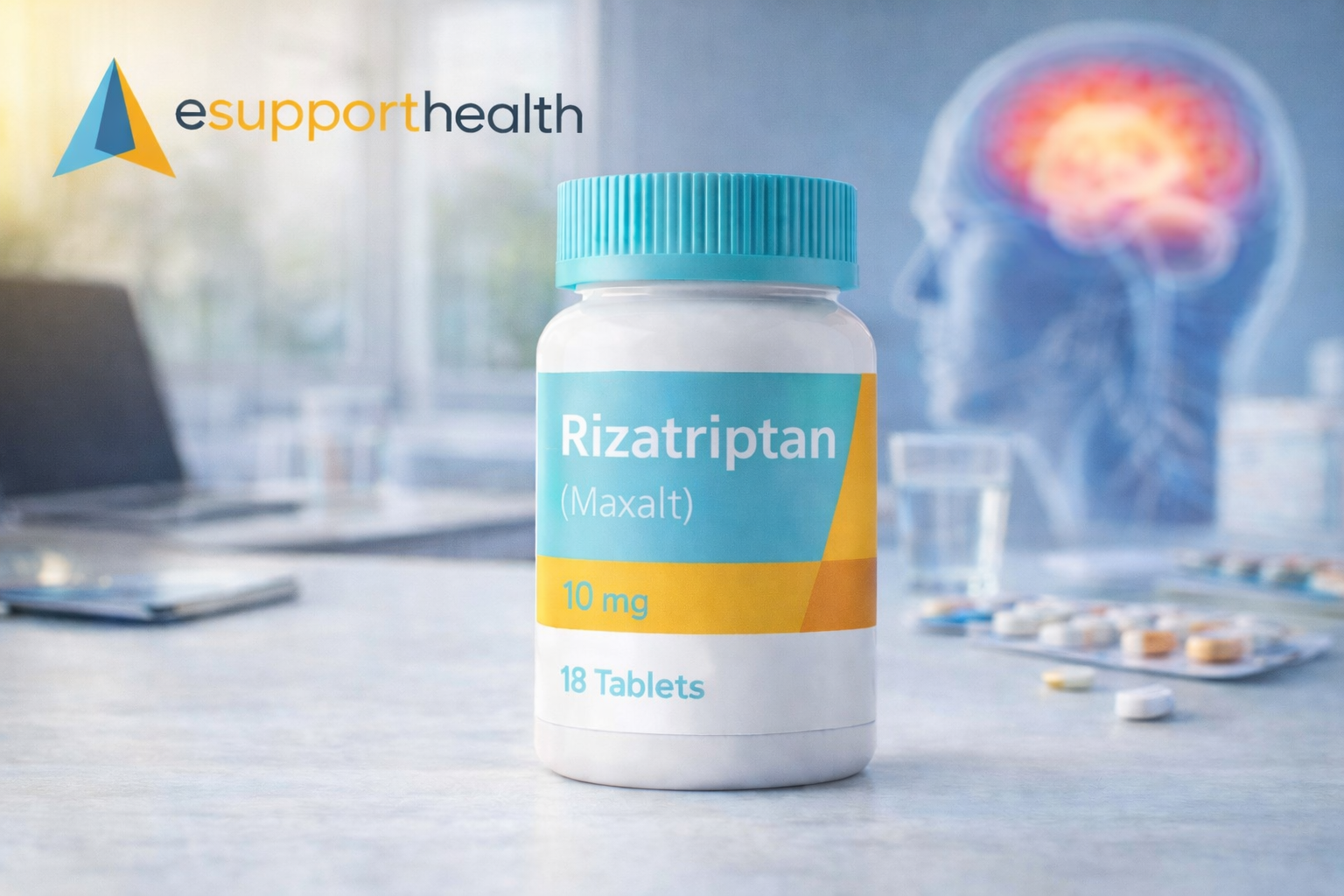
Rizatriptan (Maxalt) — fast-acting triptan therapy for acute migraine relief. A prescription medication used to treat migraine attacks by targeting specific serotonin receptors involved in pain signaling. Rizatriptan is intended for acute use when clinically appropriate.
Begin Rizatriptan Treatment Through eSupport Health
Starting treatment through eSupport Health begins with a secure online medical evaluation completed by a licensed healthcare provider. During this process, clinicians review your symptoms, medical history, and current medications to determine whether treatment is appropriate. If a medication is recommended, a prescription may be issued in accordance with medical guidelines and transmitted to a licensed pharmacy for dispensing. This streamlined telehealth approach allows patients to access professional care and treatment guidance in a convenient and confidential manner.
This page provides an educational overview of Rizatriptan, including how it works, what conditions it may treat, safety considerations, and how telehealth providers evaluate treatment eligibility.
Medication Overview
Rizatriptan is a selective serotonin (5-HT1B/1D) receptor agonist, commonly known as a triptan. It is used for the acute treatment of migraine attacks with or without aura.
Migraines involve neurovascular changes, including dilation of cranial blood vessels and activation of pain pathways. Rizatriptan works by constricting these vessels and reducing inflammatory signaling, helping to relieve migraine symptoms such as headache, nausea, and sensitivity to light or sound.
It is not intended for preventive therapy and is used at the onset of migraine symptoms.
Rizatriptan Therapy: Triptan Pharmacology, Neurovascular Modulation, and Acute Migraine Management
Migraine Mechanisms and Neurovascular Activation
Migraine is a complex neurological condition involving both vascular and neural components.
During an attack, dilation of cranial vessels and activation of trigeminal nerve pathways contribute to pain and associated symptoms. Effective treatment targets these mechanisms.
Serotonin Receptor Targeting in Migraine Relief
Rizatriptan selectively activates 5-HT1B and 5-HT1D receptors.
This action leads to constriction of dilated blood vessels and inhibition of neuropeptide release, which helps reduce migraine-related inflammation and pain.
Acute Episode Treatment Strategy
Rizatriptan is designed for use during active migraine episodes.
It is not used daily or for prevention. Proper timing and diagnosis are essential to ensure appropriate use.
Orally Disintegrating Tablet (ODT) Option
Rizatriptan is available in orally disintegrating formulations.
This option can be beneficial for individuals experiencing nausea or difficulty swallowing during migraine attacks, allowing administration without water.
Symptom Reduction and Functional Recovery
Migraine attacks can significantly disrupt daily activities.
Rizatriptan is used to reduce headache severity and associated symptoms, supporting recovery and improved functional capacity.
Personalized Migraine Treatment Planning
Migraine care is individualized based on symptom patterns and response to therapy.
Rizatriptan may be incorporated into a broader management plan that includes trigger identification and preventive strategies when needed.
Early Intervention and Treatment Timing
Administering Rizatriptan early in a migraine attack may improve treatment response.
Recognizing early symptoms and acting promptly can enhance effectiveness and reduce the duration of attacks.
Cardiovascular Risk Assessment in Triptan Therapy
Because triptans affect vascular tone, cardiovascular assessment is an important part of prescribing.
Providers evaluate patient history to determine whether Rizatriptan is appropriate or if alternative therapies are needed.
Combination Strategies in Migraine Care
Rizatriptan may be used alongside other treatments as part of a comprehensive migraine plan.
This may include anti-nausea medications or preventive therapies depending on frequency and severity of attacks. A structured approach supports individualized care.
How Rizatriptan Works
Rizatriptan binds to 5-HT1B/1D receptors located on cranial blood vessels and nerve endings.
This leads to vasoconstriction and inhibition of pro-inflammatory neuropeptide release. These effects reduce migraine pain and associated symptoms.
Key Prescribing Information
| Medication Class | Triptan (5-HT1 receptor agonist) |
|---|---|
| Generic name | Rizatriptan |
| Brand name | Maxalt |
| Administration | Oral tablet or orally disintegrating tablet (ODT) |
| Typical Dose | Taken at onset of migraine; dosing determined by clinician |
| Indication | Acute migraine treatment |
| Prescribing | Determined by a licensed clinician following medical evaluation |
Treatment duration and dosage depend on the specific condition being treated, symptom severity, and individual patient response.
Candidate Criteria
Rizatriptan may be considered for individuals diagnosed with migraine headaches.
Candidates typically include patients with moderate to severe migraine episodes requiring acute treatment. Suitability depends on medical history, cardiovascular risk profile, and confirmation of migraine diagnosis.
Final eligibility is determined through a licensed provider.
Safety
Rizatriptan requires appropriate clinical evaluation prior to use.
Because it affects vascular function, it may not be suitable for individuals with certain cardiovascular conditions. Common considerations include dizziness, fatigue, or sensations of pressure.
Clinical guidance ensures safe and appropriate use.
Clinical Onset & Expectations
Relief of migraine symptoms may begin after administration.
Reduction in headache intensity and associated symptoms may occur.
Additional dosing may be used as directed if symptoms persist.
Telehealth Prescribing Framework
Rizatriptan prescribing through telehealth follows a structured migraine evaluation process.
Patients complete a secure intake including headache characteristics, triggers, and symptom history. A licensed provider confirms migraine diagnosis and evaluates treatment suitability.
If prescribed, treatment includes dosing guidance and follow-up care.
Secure Medical Intake
Complete a confidential health questionnaire including symptoms, medical history, and current medications.
Licensed Provider Review
A licensed clinician evaluates your health information and may request additional details or a virtual consultation.
Clinical Decision & Treatment Plan
If appropriate, the provider determines a treatment plan and provides dosing guidance and monitoring instructions.
eRx & Pharmacy Fulfillment
If prescribed, the medication is electronically sent to a licensed pharmacy for dispensing.
Frequently Asked Questions
Can I buy Rizatriptan online?
Rizatriptan may be prescribed online through a licensed provider following a migraine evaluation.
What is Rizatriptan used for?
It is used to treat acute migraine attacks.
How is Rizatriptan taken?
It is taken at the onset of migraine symptoms.
Is Rizatriptan used daily?
No, it is used only during migraine episodes.
Does Rizatriptan require monitoring?
Monitoring may be recommended based on individual health factors.
How does Rizatriptan work?
It constricts blood vessels and reduces inflammatory signaling in migraine pathways.
Is Rizatriptan the same as Sumatriptan?
They are both triptans but differ in pharmacologic properties.
Can Rizatriptan treat all headaches?
No, it is specifically for migraines.
How fast does Rizatriptan work?
Relief may begin within hours of dosing.
What side effects can occur with Rizatriptan?
Possible effects include dizziness or fatigue.
Medical disclaimer: This content is for informational purposes only and does not constitute medical advice, diagnosis, or treatment. Rizatriptan is a prescription medication and should be used only under the supervision of a licensed healthcare provider. Treatment decisions are based on individual clinical evaluation and medical history.
Explore More Treatments
Sumatriptan (Imitrex) — targeted triptan therapy for acute migraine relief. A prescription medication used to treat migraine attacks by targeting specific vascular and neurological pathways. Sumatriptan is intended for acute treatment—not prevention—when clinically appropriate.
Gabapentin (Neurontin) — neuromodulating therapy for nerve pain and neurologic conditions. A prescription medication used to manage neuropathic pain and certain neurologic conditions. Gabapentin works by modulating nerve signaling and is prescribed based on clinical evaluation.
Fluconazole (Diflucan) — oral antifungal therapy for candida and fungal infections. A prescription antifungal medication used to treat yeast and fungal infections by targeting fungal cell integrity. Fluconazole is prescribed based on clinical evaluation and infection type.