PRESCRIPTION MEDICATIONS
Ivermectin (Stromectol)
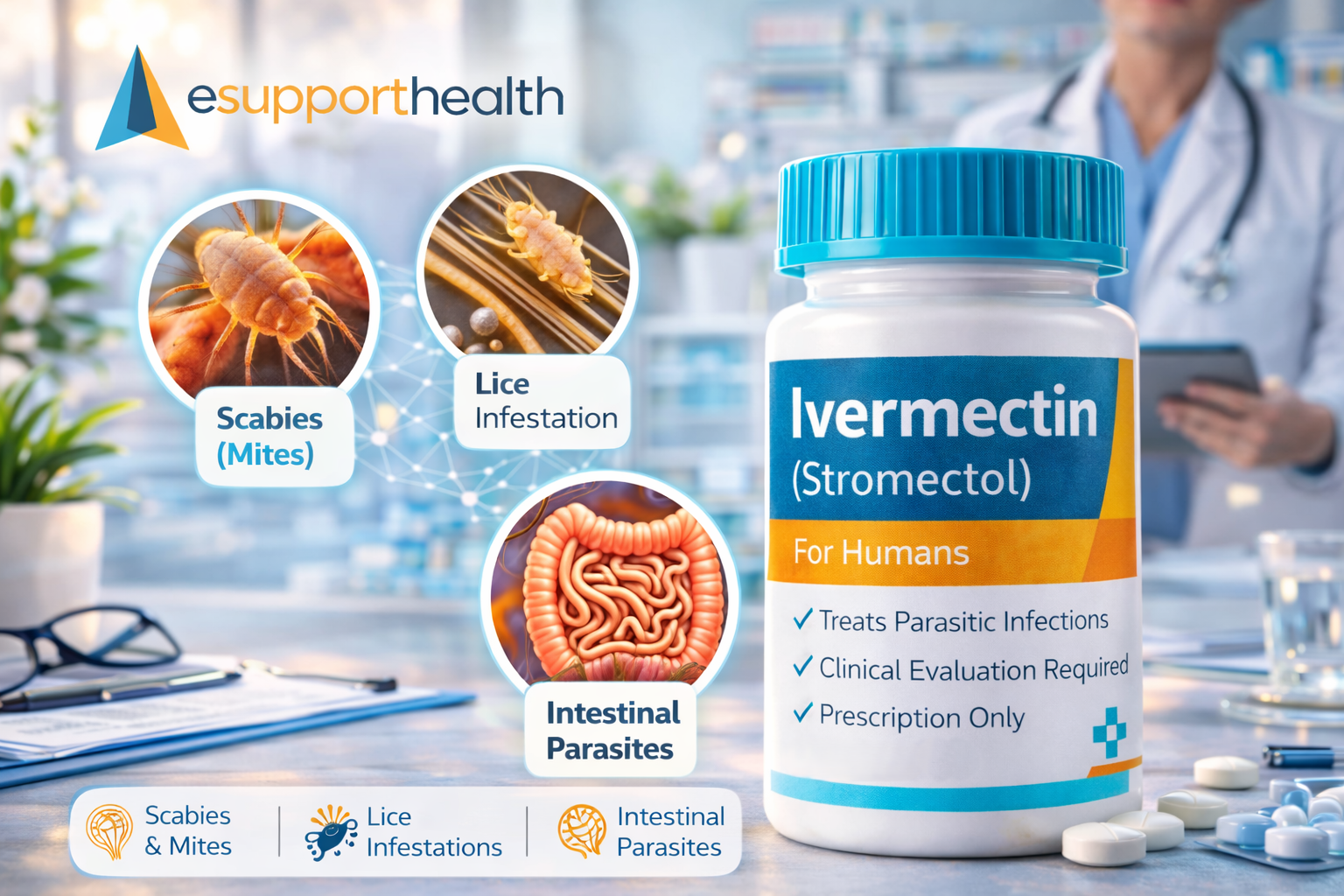
Ivermectin — antiparasitic therapy for parasitic and dermatologic conditions. A prescription medication used to treat certain parasitic infections affecting the skin and gastrointestinal system. Ivermectin is prescribed based on clinical evaluation and diagnosis.
Begin Ivermectin Treatment Through eSupport Health
Starting treatment through eSupport Health begins with a secure online medical evaluation completed by a licensed healthcare provider. During this process, clinicians review your symptoms, medical history, and current medications to determine whether treatment is appropriate. If a medication is recommended, a prescription may be issued in accordance with medical guidelines and transmitted to a licensed pharmacy for dispensing. This streamlined telehealth approach allows patients to access professional care and treatment guidance in a convenient and confidential manner.
This page provides an educational overview of Ivermectin, including how it works, what conditions it may treat, safety considerations, and how telehealth providers evaluate treatment eligibility.
Medication Overview
Ivermectin is an antiparasitic medication belonging to the avermectin class. It is widely used to treat infections caused by parasites, including intestinal worms and ectoparasites such as mites and lice.
It is available in both oral and topical formulations, depending on the condition being treated. Oral ivermectin is commonly used for systemic infections, while topical formulations are used for dermatologic conditions.
Ivermectin is prescribed based on confirmed or suspected parasitic infection and clinical evaluation.
Ivermectin Therapy: Antiparasitic Mechanism, Targeted Treatment, and Clinical Applications
Parasitic Infections and Host Impact
Parasitic infections occur when organisms such as worms or mites invade the body.
These infections may affect:
- Skin (e.g., scabies)
- Hair follicles (e.g., lice)
- Gastrointestinal tract
Proper diagnosis is important to determine appropriate treatment.
Avermectin Class and Drug Origin
Ivermectin is derived from compounds produced by soil bacteria (Streptomyces avermitilis).
This class of medications is specifically designed to target parasitic organisms while minimizing effects on human cells.
Glutamate-Gated Chloride Channel Activation
Ivermectin works by binding to parasite-specific chloride channels.
This leads to:
- Increased membrane permeability
- Paralysis of the parasite
- Eventual death of the organism
Systemic vs Topical Treatment Approaches
Treatment approach depends on infection type.
- Oral ivermectin: systemic infections
- Topical ivermectin: skin conditions such as rosacea or scabies
Targeted Use for Specific Conditions
Ivermectin is commonly used for:
- Strongyloidiasis
- Onchocerciasis
- Scabies
- Head lice
Treatment selection depends on diagnosis and severity.
Clinical Evaluation and Appropriate Use
Ivermectin should be used under medical supervision.
Proper evaluation helps:
- Confirm diagnosis
- Determine appropriate dosing
- Reduce risk of inappropriate use
Scabies and Mite Infestation Management
Scabies is caused by microscopic mites that burrow into the skin.
Ivermectin may be used in certain cases, particularly when topical treatments are insufficient or impractical. Clinical evaluation determines appropriate therapy.
Systemic Parasitic Infections and Global Health
Ivermectin has been widely used in global health programs to control parasitic diseases.
Its effectiveness in treating certain infections has contributed to large-scale disease control efforts.
Appropriate Use and Avoiding Misapplication
Ivermectin should be used only for approved indications.
Using medications outside of appropriate clinical context may reduce effectiveness and increase risk. Medical guidance ensures safe and targeted treatment.
Ivermectin in Human Medicine: Established Role in Antiparasitic Therapy
Ivermectin has been extensively used in human medicine for the treatment of parasitic infections, particularly those caused by helminths and ectoparasites. Its clinical value lies in its targeted mechanism of action, which selectively affects parasite nervous systems without significantly impacting human neurologic pathways when used as directed.
In global and clinical settings, ivermectin has played an important role in managing conditions such as strongyloidiasis and onchocerciasis, as well as certain skin-related infestations like scabies. Its use in these contexts is supported by established treatment protocols and decades of clinical experience.
Appropriate use is based on accurate diagnosis, as ivermectin is not effective for non-parasitic conditions. Medical evaluation ensures that treatment aligns with the underlying cause of symptoms.
Dermatologic Applications: Scabies, Rosacea, and Skin-Related Conditions
In dermatology, ivermectin is used both orally and topically depending on the condition being treated. For scabies, oral ivermectin may be considered in cases where topical therapies are not suitable or when widespread infestation is present.
Topical ivermectin formulations are also used in inflammatory skin conditions such as rosacea, where it helps reduce inflammatory lesions associated with microscopic organisms (e.g., Demodex mites).
These dermatologic applications highlight ivermectin’s versatility, but also reinforce the importance of condition-specific treatment planning. Not all skin conditions require systemic therapy, and selection between oral and topical forms depends on clinical findings.
Pharmacokinetics and Dosing Considerations in Humans
Ivermectin is absorbed systemically after oral administration and distributed throughout the body, with a pharmacokinetic profile that supports single-dose or short-course treatment in many cases.
Dosing is typically weight-based and tailored to the specific infection being treated. In some conditions, repeat dosing may be required to address the parasite lifecycle and prevent reinfestation.
Because ivermectin is metabolized in the liver, clinicians may consider potential interactions with other medications and underlying health conditions before prescribing. Structured medical guidance ensures dosing accuracy, safety, and optimal therapeutic outcomes.
How Ivermectin Works
Ivermectin binds to glutamate-gated chloride channels in parasites.
This causes increased chloride ion influx, leading to paralysis and death of the parasite. Human nerve cells are less affected due to differences in receptor structure.
Key Prescribing Information
| Medication Class | Antiparasitic (anthelmintic) |
|---|---|
| Generic name | Ivermectin |
| Brand name | Stromectol |
| Administration | Oral tablet, topical cream/lotion |
| Typical Dose | Determined by clinician based on infection type |
| Indication | Parasitic infections, certain dermatologic conditions |
| Prescribing | Determined by a licensed clinician following medical evaluation |
Treatment duration and dosage depend on the specific condition being treated, symptom severity, and individual patient response.
Candidate Criteria
Ivermectin may be considered for individuals with suspected or confirmed parasitic infections.
Candidates typically include patients with:
- Dermatologic symptoms (e.g., itching, rash)
- Gastrointestinal parasitic infections
- Exposure history
Final eligibility is determined through a licensed provider.
Safety
Ivermectin is generally well tolerated when used as directed.
Common considerations may include:
- Mild gastrointestinal symptoms
- Dizziness
- Skin irritation (topical forms)
Use should follow medical guidance, particularly in individuals with underlying conditions or when taking other medications.
Clinical Onset & Expectations
Antiparasitic activity begins after administration.
Symptoms such as itching or irritation may begin to improve.
Complete resolution depends on infection type and may require follow-up treatment.
Telehealth Prescribing Framework
Ivermectin prescribing through telehealth follows a structured clinical process.
Secure Medical Intake
Complete a confidential health questionnaire including symptoms, medical history, and current medications.
Licensed Provider Review
A licensed clinician evaluates your health information and may request additional details or a virtual consultation.
Clinical Decision & Treatment Plan
If appropriate, the provider determines a treatment plan and provides dosing guidance and monitoring instructions.
eRx & Pharmacy Fulfillment
If prescribed, the medication is electronically sent to a licensed pharmacy for dispensing.
Frequently Asked Questions
Can I buy ivermectin online?
Ivermectin may be prescribed online through a licensed provider following a clinical evaluation.
What is ivermectin used for?
It is used to treat certain parasitic infections and skin conditions.
Is ivermectin an antibiotic?
No, it is an antiparasitic medication.
Does ivermectin work for all infections?
It is effective only for specific parasitic conditions.
Does ivermectin require a prescription?
Yes, in many cases it requires evaluation by a healthcare provider.
How does ivermectin kill parasites?
It disrupts nerve signaling in parasites, causing paralysis.
Is ivermectin used for skin conditions?
Yes, in topical form for certain conditions.
How quickly does ivermectin work?
It begins working within the first day after dosing.
Can ivermectin be used long-term?
Use depends on the condition and clinical guidance.
Is ivermectin safe?
It is generally safe when used as prescribed.
Medical disclaimer: This content is for informational purposes only and does not constitute medical advice, diagnosis, or treatment. Ivermectin is a prescription medication and should be used only under the supervision of a licensed healthcare provider. Treatment decisions are based on individual clinical evaluation and medical history.
Explore More Treatments
Mebendazole (Vermox, Emverm) — targeted anthelmintic therapy for intestinal parasitic infections. Mebendazole is a prescription antiparasitic medication used to treat specific intestinal worm infections in humans. Therapy is guided by clinical evaluation, diagnosis, and individual …
Amoxicillin, commonly known by the brand name Amoxil, is a prescription antibiotic widely used to treat bacterial infections affecting the respiratory tract, urinary system, skin, and other areas of the body. It belongs to the penicillin class of antibiotics, which work by interfering …
Prednisone — systemic corticosteroid for inflammation & immune modulation. A prescription corticosteroid used to reduce inflammation and regulate immune system activity across a wide range of conditions. Prednisone is commonly prescribed when rapid anti-inflammatory or …