PRESCRIPTION MEDICATIONS
Atomoxetine (Strattera)
Atomoxetine (Strattera) — non-stimulant therapy for ADHD and attention regulation. A prescription medication used to treat attention-deficit/hyperactivity disorder (ADHD) by improving focus and impulse control through non-stimulant pathways. Atomoxetine is used under medical supervision as part of a structured care plan.
Begin Atomoxetine Treatment Through eSupport Health
Starting treatment through eSupport Health begins with a secure online medical evaluation completed by a licensed healthcare provider. During this process, clinicians review your symptoms, medical history, and current medications to determine whether treatment is appropriate. If a medication is recommended, a prescription may be issued in accordance with medical guidelines and transmitted to a licensed pharmacy for dispensing. This streamlined telehealth approach allows patients to access professional care and treatment guidance in a convenient and confidential manner.
This page provides an educational overview of Atomoxetine, including how it works, what conditions it may treat, safety considerations, and how telehealth providers evaluate treatment eligibility.
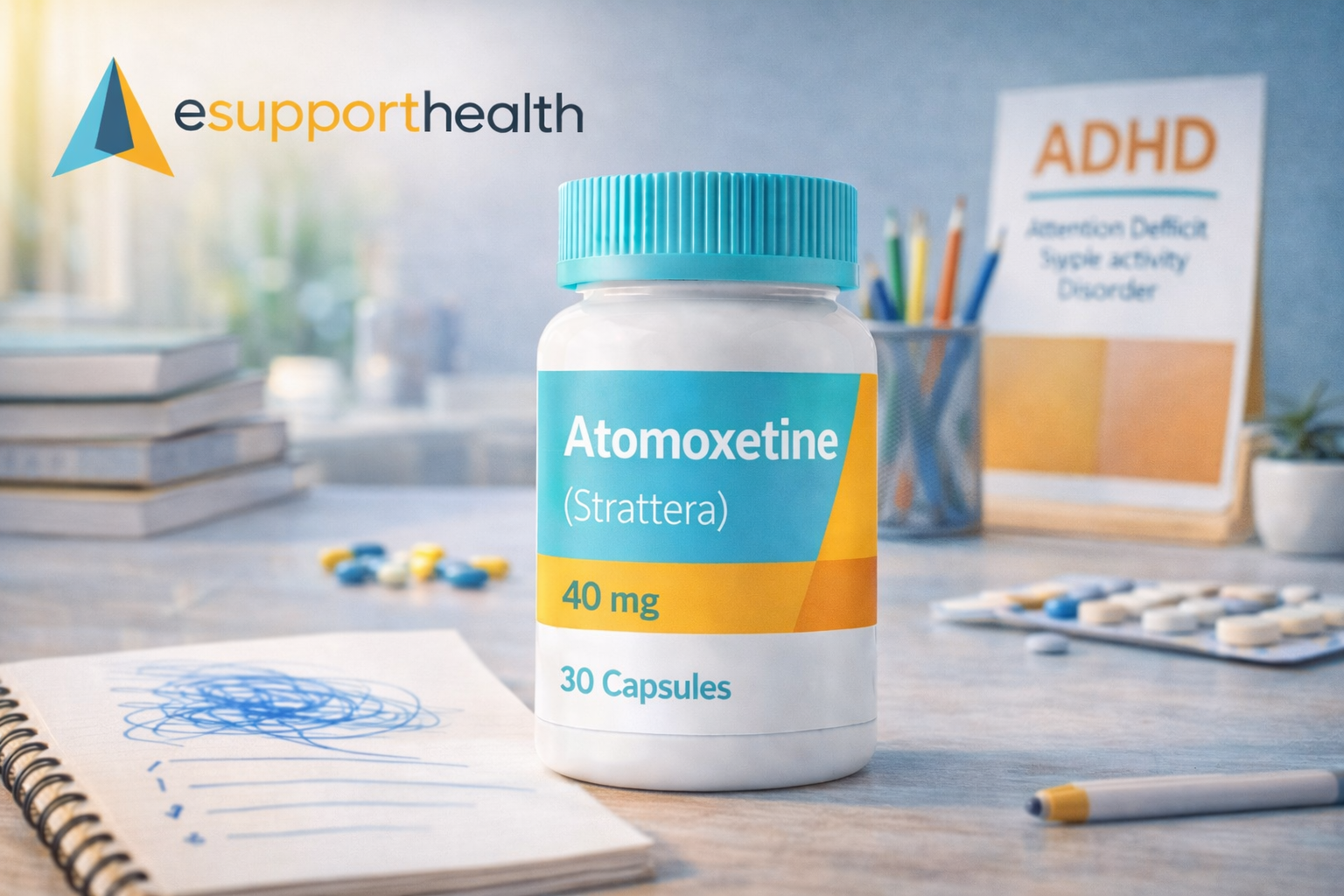
Medication Overview
Atomoxetine is a selective norepinephrine reuptake inhibitor (NRI) used in the treatment of ADHD. Unlike stimulant medications, it does not directly increase dopamine activity in the same way, making it a non-stimulant option for patients requiring alternative treatment approaches.
It works by increasing norepinephrine levels in the brain, a neurotransmitter involved in attention, focus, and executive function. This helps improve symptoms such as inattention, impulsivity, and hyperactivity.
Atomoxetine is typically taken daily and may require consistent use over time to achieve optimal therapeutic effects.
Atomoxetine Therapy: Norepinephrine Modulation, Attention Control, and Non-Stimulant ADHD Management
ADHD and Neurotransmitter Imbalance
ADHD is associated with dysregulation of neurotransmitters involved in attention and executive function.
Norepinephrine plays a key role in maintaining focus, regulating behavior, and managing impulse control. Imbalances in this system contribute to ADHD symptoms.
Selective Norepinephrine Reuptake Inhibition
Atomoxetine inhibits the reuptake of norepinephrine in the brain.
This increases the availability of norepinephrine in synaptic spaces, enhancing communication between neurons involved in attention and cognitive control.
Non-Stimulant Treatment Approach
Unlike stimulant medications, atomoxetine does not produce rapid dopaminergic stimulation.
This may make it suitable for individuals who require a non-stimulant option or who may not tolerate stimulant medications.
Daily Treatment and Consistent Therapeutic Effect
Atomoxetine is designed for continuous daily use.
Its effects build over time, supporting sustained symptom improvement rather than short-term or episodic relief.
Executive Function and Behavioral Regulation
Improved norepinephrine signaling supports executive function.
This includes planning, task organization, and impulse control, which are often affected in individuals with ADHD.
Individualized ADHD Treatment Planning
ADHD treatment varies based on individual needs and response.
Atomoxetine may be used alone or as part of a broader care plan that includes behavioral strategies and ongoing clinical evaluation.
Non-Stimulant Advantage and Treatment Flexibility
Atomoxetine provides an alternative to stimulant-based therapies.
For individuals who cannot tolerate stimulants or require a different pharmacologic approach, it offers flexibility within ADHD treatment planning.
Neurocognitive Stability and Continuous Symptom Control
Because atomoxetine is taken daily, it supports consistent neurotransmitter regulation.
This continuous effect may contribute to stable symptom control throughout the day without fluctuations associated with short-acting treatments.
Behavioral Integration and Functional Outcomes
Medication is one component of ADHD management.
Combining atomoxetine with behavioral strategies, organizational tools, and structured routines supports improved long-term outcomes and daily functioning.
How Atomoxetine Works
Atomoxetine selectively inhibits the presynaptic norepinephrine transporter.
This leads to increased norepinephrine levels in the brain, particularly in areas involved in attention and executive function. The result is improved focus, reduced impulsivity, and better cognitive control.
Key Prescribing Information
| Medication Class | Selective norepinephrine reuptake inhibitor (NRI) |
|---|---|
| Generic name | Atomoxetine |
| Brand name | Strattera |
| Administration | Oral capsule |
| Typical Dose | Determined by clinician with gradual titration |
| Indication | Attention-deficit/hyperactivity disorder (ADHD) |
| Prescribing | Determined by a licensed clinician following psychiatric evaluation |
Treatment duration and dosage depend on the specific condition being treated, symptom severity, and individual patient response.
Candidate Criteria
Atomoxetine may be considered for individuals diagnosed with ADHD.
Candidates often include patients who prefer a non-stimulant treatment option, have contraindications to stimulants, or require continuous symptom management. Suitability depends on medical history and clinical evaluation.
Final eligibility is determined through a licensed provider.
Safety
Atomoxetine requires appropriate clinical assessment before use.
Common considerations may include gastrointestinal symptoms, changes in appetite, or sleep disturbances. Monitoring may also include evaluation of mood and behavioral changes.
Clinical oversight ensures safe and appropriate use.
Clinical Onset & Expectations
Initial changes in attention and focus may begin.
Gradual improvement in ADHD symptoms may develop.
Consistent use supports sustained symptom control and functional improvement.
Telehealth Prescribing Framework
Atomoxetine prescribing through telehealth follows a structured mental health evaluation process.
Patients complete a secure intake including symptom history, functional impact, and prior treatments. A licensed provider assesses ADHD diagnosis and treatment suitability.
If prescribed, treatment includes dosing guidance, monitoring, and follow-up care.
Secure Medical Intake
Complete a confidential health questionnaire including symptoms, medical history, and current medications.
Licensed Provider Review
A licensed clinician evaluates your health information and may request additional details or a virtual consultation.
Clinical Decision & Treatment Plan
If appropriate, the provider determines a treatment plan and provides dosing guidance and monitoring instructions.
eRx & Pharmacy Fulfillment
If prescribed, the medication is electronically sent to a licensed pharmacy for dispensing.
Frequently Asked Questions
Can I buy Atomoxetine online?
Atomoxetine may be prescribed online through a licensed provider following a clinical evaluation.
What is Atomoxetine used for?
It is used to treat ADHD.
Is Atomoxetine a stimulant?
No, it is a non-stimulant medication.
How long does Atomoxetine take to work?
It may take several weeks to achieve full effect.
Does Atomoxetine require monitoring?
Yes, monitoring may be recommended during treatment.
How does Atomoxetine improve focus?
It increases norepinephrine levels in the brain.
Is Strattera effective for ADHD?
It may support symptom improvement when used appropriately.
Can Atomoxetine be taken daily?
Yes, it is designed for daily use.
Is Atomoxetine used in children and adults?
It is prescribed for both populations under medical guidance.
What side effects can occur with Atomoxetine?
Possible effects include nausea or sleep changes.
Medical disclaimer: This content is for informational purposes only and does not constitute medical advice, diagnosis, or treatment. Atomoxetine is a prescription medication and should be used only under the supervision of a licensed healthcare provider. Treatment decisions are based on individual clinical evaluation and medical history.
Explore More Treatments
Disulfiram (Antabuse) — aversion-based therapy for alcohol use disorder (AUD). A prescription medication used to support individuals in maintaining abstinence from alcohol. Disulfiram works by creating an aversive reaction to alcohol consumption when used under medical supervision.
Naltrexone (Revia) — medication-assisted support for alcohol and opioid use disorders. A prescription medication used to support recovery by reducing cravings and blocking the effects of opioids. Naltrexone is used as part of a structured treatment plan under medical supervision.
Fluconazole (Diflucan) — oral antifungal therapy for candida and fungal infections. A prescription antifungal medication used to treat yeast and fungal infections by targeting fungal cell integrity. Fluconazole is prescribed based on clinical evaluation and infection type.