PRESCRIPTION MEDICATIONS
Valtrex (Valacyclovir)
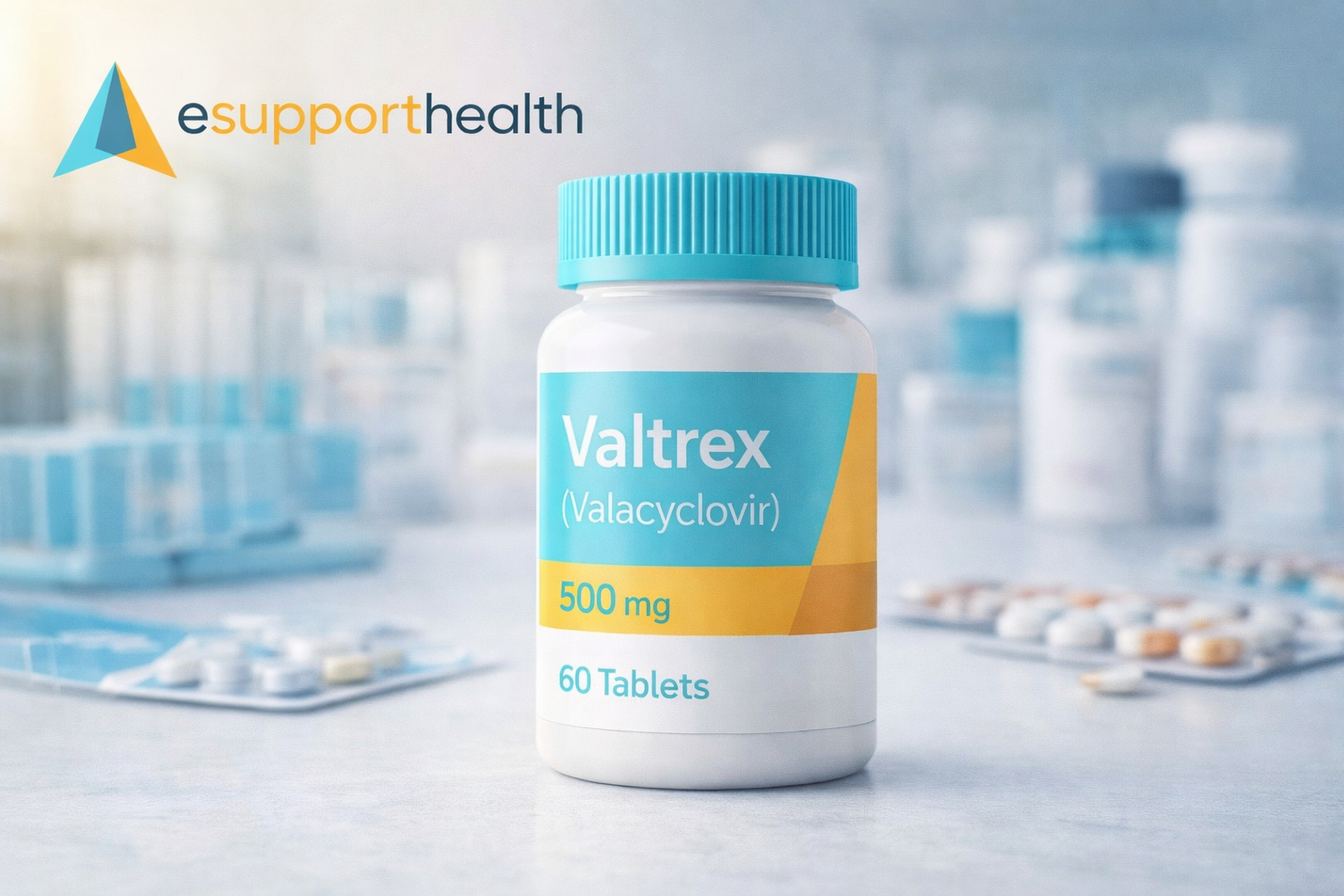
Valtrex (Valacyclovir) — antiviral therapy for herpes virus management. A prescription antiviral medication used to manage herpes simplex virus (HSV) infections, including oral and genital herpes. Valtrex supports symptom control and viral suppression when clinically appropriate.
Begin Valacyclovir Treatment Through eSupport Health
Starting treatment through eSupport Health begins with a secure online medical evaluation completed by a licensed healthcare provider. During this process, clinicians review your symptoms, medical history, and current medications to determine whether treatment is appropriate. If a medication is recommended, a prescription may be issued in accordance with medical guidelines and transmitted to a licensed pharmacy for dispensing. This streamlined telehealth approach allows patients to access professional care and treatment guidance in a convenient and confidential manner.
This page provides an educational overview of Valacyclovir, including how it works, what conditions it may treat, safety considerations, and how telehealth providers evaluate treatment eligibility.
Medication Overview
Valacyclovir is an antiviral medication used to treat infections caused by herpes viruses, including herpes simplex virus type 1 (HSV-1) and type 2 (HSV-2).
It is a prodrug of acyclovir, meaning it is converted in the body into its active form. Once activated, it interferes with viral DNA replication, helping limit viral activity.
Valtrex is used for episodic treatment during outbreaks as well as suppressive therapy to reduce recurrence frequency. While it does not eliminate the virus, it plays a key role in managing symptoms and transmission risk.
Valacyclovir Therapy: Antiviral Mechanism, Viral Suppression, and HSV Management Strategies
Herpes Simplex Virus and Infection Patterns
HSV infections are characterized by periods of activity and latency.
After initial infection, the virus remains dormant in nerve cells and can reactivate periodically. These reactivations lead to outbreaks of symptoms such as lesions or discomfort.
Understanding this cycle is key to effective management.
Antiviral Mechanism and Viral DNA Inhibition
Valacyclovir works by interfering with viral DNA replication.
After conversion to acyclovir, it inhibits viral DNA polymerase, preventing the virus from multiplying. This helps reduce the severity and duration of outbreaks.
Episodic Treatment vs Suppressive Therapy
Valtrex may be used in two primary ways.
Episodic treatment is initiated at the onset of symptoms to shorten outbreaks, while suppressive therapy involves daily use to reduce recurrence frequency and viral shedding.
Symptom Control and Outbreak Management
Antiviral therapy helps reduce symptom intensity and duration.
Early initiation of treatment may improve outcomes during outbreaks and support faster resolution of lesions.
Transmission Considerations and Risk Reduction
Valacyclovir may reduce viral shedding in certain contexts.
While it does not eliminate transmission risk, appropriate use as part of a comprehensive strategy may support risk reduction alongside other protective measures.
Long-Term Management and Patient-Specific Planning
HSV management is individualized based on recurrence patterns and symptom severity.
Valtrex may be incorporated into a long-term care plan tailored to patient needs, including episodic or suppressive approaches.
Latency and Reactivation of Herpes Viruses
After initial infection, herpes viruses establish latency in nerve tissue.
Periodic reactivation leads to symptomatic outbreaks. Antiviral therapy targets active viral replication but does not eliminate latent virus, which is why recurrences may occur.
Renal Function and Dose Adjustment Considerations
Valacyclovir is primarily cleared through the kidneys.
Dose adjustments may be required in individuals with reduced renal function to ensure safe and effective use. Clinical evaluation supports appropriate dosing.
Combination Strategies in HSV Management
Effective HSV management often involves multiple strategies.
In addition to antiviral therapy, lifestyle considerations, trigger identification, and preventive measures contribute to overall management and improved quality of life.
How Valacyclovir Works
Valacyclovir is converted into acyclovir in the body.
Acyclovir selectively inhibits viral DNA polymerase, preventing replication of herpes virus DNA. This limits viral spread and supports resolution of active infections.
Key Prescribing Information
| Medication Class | Antiviral (nucleoside analog) |
|---|---|
| Generic name | Valacyclovir |
| Brand name | Valtrex |
| Administration | Oral tablet |
| Typical Dose | Determined by clinician based on indication and treatment strategy |
| Indication | HSV-1, HSV-2, herpes zoster (shingles) |
| Prescribing | Determined by a licensed clinician following medical evaluation |
Treatment duration and dosage depend on the specific condition being treated, symptom severity, and individual patient response.
Candidate Criteria
Valtrex may be considered for individuals with confirmed or suspected herpes virus infections.
Candidates often include patients with recurrent outbreaks, initial HSV infections, or those requiring suppressive therapy. Suitability depends on medical history, symptom frequency, and clinical evaluation.
Final eligibility is determined through a licensed provider.
Safety
Valacyclovir is generally well tolerated when used as directed.
Common considerations may include headache, nausea, or mild gastrointestinal symptoms. Dose adjustments may be necessary in individuals with reduced kidney function.
Clinical evaluation ensures safe and appropriate use.
Clinical Onset & Expectations
When started early, antiviral activity may reduce symptom progression.
Outbreak duration and severity may be reduced with treatment.
Suppressive therapy may reduce recurrence frequency and viral shedding over time.
Telehealth Prescribing Framework
Valtrex prescribing through telehealth follows a structured evaluation process.
Patients complete a secure intake including symptom history, outbreak patterns, and relevant medical background. A licensed provider determines whether antiviral therapy is appropriate.
If prescribed, treatment includes dosing guidance, management strategies, and follow-up care.
Secure Medical Intake
Complete a confidential health questionnaire including symptoms, medical history, and current medications.
Licensed Provider Review
A licensed clinician evaluates your health information and may request additional details or a virtual consultation.
Clinical Decision & Treatment Plan
If appropriate, the provider determines a treatment plan and provides dosing guidance and monitoring instructions.
eRx & Pharmacy Fulfillment
If prescribed, the medication is electronically sent to a licensed pharmacy for dispensing.
Frequently Asked Questions
Can I buy Valtrex online?
Valtrex may be prescribed online through a licensed provider following a clinical evaluation.
What is Valtrex used for?
It is used to manage herpes virus infections.
Does Valtrex cure herpes?
No, it manages symptoms but does not eliminate the virus.
When should Valtrex be taken?
It may be taken at symptom onset or daily for suppression, depending on clinical guidance.
Does Valtrex require monitoring?
Monitoring may be recommended based on individual health factors.
How does Valacyclovir work?
It blocks viral DNA replication to reduce viral activity.
Can Valtrex reduce outbreaks?
Yes, it may reduce frequency and severity when used appropriately.
Is Valtrex used daily?
It can be used daily for suppressive therapy.
Can Valtrex prevent transmission?
It may reduce viral shedding but does not eliminate risk.
What side effects can occur with Valtrex?
Possible effects include headache or nausea.
Medical disclaimer: This content is for informational purposes only and does not constitute medical advice, diagnosis, or treatment. Valacyclovir is a prescription medication and should be used only under the supervision of a licensed healthcare provider. Treatment decisions are based on individual clinical evaluation and medical history.
Explore More Treatments
Zovirax (Acyclovir) — established antiviral therapy for herpes virus management. A prescription antiviral medication used to treat infections caused by herpes viruses, including HSV-1, HSV-2, and varicella-zoster. Acyclovir supports control of viral replication when clinically appropriate.
Accutane (Isotretinoin) — advanced dermatology therapy for severe acne under medical supervision. A prescription medication used for the treatment of severe or treatment-resistant acne. Isotretinoin requires strict clinical oversight, monitoring, and adherence to regulated safety protocols.
Tretinoin Topical — prescription retinoid therapy for acne and skin renewal. A topical vitamin A derivative used to treat acne and support skin cell turnover. Tretinoin helps regulate pore function and reduce acne formation when used under clinical guidance.