PRESCRIPTION MEDICATIONS
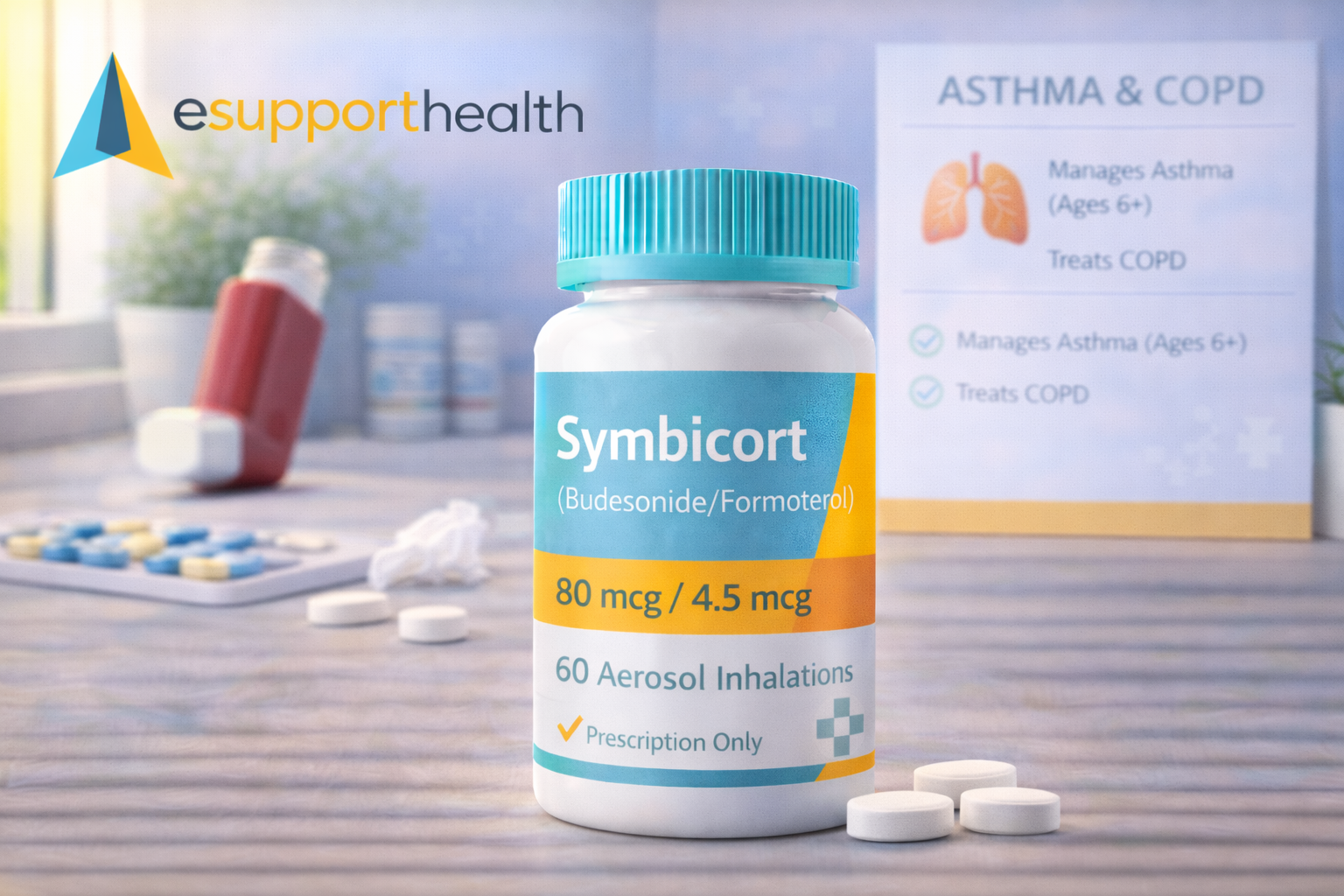
Symbicort
(Budesonide / Formoterol)
Symbicort (Budesonide/Formoterol) — combination inhaler for long-term asthma and COPD control. A prescription inhaler that combines an inhaled corticosteroid and a long-acting bronchodilator to manage airway inflammation and maintain respiratory stability. Symbicort is used for ongoing control not immediate relief when clinically appropriate.
Begin Symbicort Treatment Through eSupport Health
Starting treatment through eSupport Health begins with a secure online medical evaluation completed by a licensed healthcare provider. During this process, clinicians review your symptoms, medical history, and current medications to determine whether treatment is appropriate. If a medication is recommended, a prescription may be issued in accordance with medical guidelines and transmitted to a licensed pharmacy for dispensing. This streamlined telehealth approach allows patients to access professional care and treatment guidance in a convenient and confidential manner.
This page provides an educational overview of Symbicort, including how it works, what conditions it may treat, safety considerations, and how telehealth providers evaluate treatment eligibility.
Medication Overview
Symbicort is a combination inhaler containing budesonide (an inhaled corticosteroid) and formoterol (a long-acting beta-2 agonist). It is used to manage asthma and chronic obstructive pulmonary disease (COPD) by addressing both airway inflammation and bronchoconstriction.
Budesonide reduces inflammation in the airways, while formoterol relaxes airway muscles to improve airflow. This dual-action approach supports long-term symptom control, reduces exacerbation risk, and improves overall respiratory function.
Symbicort is typically prescribed as part of a maintenance treatment plan and is not intended for acute symptom relief.
Symbicort Therapy: Inflammation Control, Bronchodilation, and Long-Term Respiratory Management
Airway Inflammation as a Core Driver of Respiratory Disease
In asthma and COPD, chronic inflammation plays a central role in airway narrowing and symptom development.
Inflammation leads to swelling, mucus production, and increased airway sensitivity. Controlling this inflammation is essential for reducing symptoms and preventing exacerbations.
Budesonide in Symbicort targets this inflammatory process directly.
Bronchodilation and Airflow Improvement
Formoterol, the bronchodilator component of Symbicort, relaxes smooth muscle in the airways.
This leads to sustained airway opening and improved airflow over time. Unlike short-acting bronchodilators, formoterol provides longer-lasting effects, supporting maintenance therapy.
Combination Therapy and Synergistic Effects
The combination of an inhaled corticosteroid and a long-acting bronchodilator provides complementary benefits.
While budesonide reduces inflammation, formoterol maintains airway openness. Together, they address multiple mechanisms underlying respiratory symptoms, leading to more effective disease control.
Controller Therapy vs. Rescue Inhalers
Symbicort is classified as a controller medication.
It is used regularly to maintain stable respiratory function and prevent symptoms. Rescue inhalers, in contrast, are used for immediate relief during acute episodes.
Understanding this distinction is essential for appropriate use.
Asthma and COPD Management Strategies
Symbicort is used in both asthma and COPD management.
In asthma, it helps reduce symptom frequency and exacerbations. In COPD, it supports airflow improvement and reduces flare-ups. Treatment plans are tailored based on disease severity and patient-specific factors.
Adherence and Consistent Use in Chronic Care
Consistent use of Symbicort is essential for achieving optimal outcomes.
Irregular use may reduce its effectiveness and increase the risk of symptom recurrence. Adherence to prescribed dosing schedules supports long-term respiratory stability.
ICS/LABA Synergy and Disease Control Optimization
The combination of inhaled corticosteroids and long-acting bronchodilators creates a synergistic therapeutic effect.
By addressing both inflammation and bronchoconstriction simultaneously, Symbicort provides more comprehensive control than single-agent therapy. This dual mechanism is central to modern respiratory treatment strategies.
Inhaler Technique and Drug Delivery Efficiency
Effective delivery of medication depends heavily on proper inhaler technique.
Incorrect usage may reduce the amount of medication reaching the lungs, limiting effectiveness. Patients are often guided on proper inhalation technique to ensure optimal drug delivery and therapeutic benefit.
Stepwise Therapy and Escalation Strategies
Respiratory conditions such as asthma are often managed using a stepwise treatment approach.
Symbicort may be introduced when symptoms are not adequately controlled with lower-intensity therapies. This escalation strategy allows for tailored treatment based on disease severity and response.
How Symbicort Works
Symbicort combines two mechanisms of action:
Budesonide reduces inflammation by inhibiting inflammatory mediators and immune cell activity in the airways.
Formoterol stimulates beta-2 receptors, leading to relaxation of airway smooth muscle and sustained bronchodilation.
Together, these effects improve airflow, reduce inflammation, and support long-term respiratory control.
Key Prescribing Information
| Medication Class | ICS/LABA combination inhaler |
|---|---|
| Generic name | Budesonide/Formoterol |
| Brand name | Symbicort |
| Administration | Inhalation (metered-dose inhaler) |
| Typical Dose | Determined by clinician based on condition severity and response |
| Indication | Asthma, chronic obstructive pulmonary disease (COPD) |
| Prescribing | Determined by a licensed clinician following medical evaluation |
Treatment duration and dosage depend on the specific condition being treated, symptom severity, and individual patient response.
Candidate Criteria
Symbicort may be considered for individuals requiring long-term management of asthma or COPD.
Candidates typically include patients with persistent respiratory symptoms not adequately controlled with single-agent therapy. Suitability depends on diagnosis, symptom frequency, and overall respiratory health.
Final eligibility is determined through clinical evaluation.
Safety
Symbicort requires appropriate use and clinical oversight.
Potential considerations may include throat irritation, hoarseness, oral fungal infections, and systemic effects with prolonged corticosteroid exposure. Proper inhaler technique and mouth rinsing after use may help reduce certain risks.
Patients should follow prescribed instructions and report any unusual symptoms.
Clinical Onset & Expectations
Some improvement in breathing and symptom control may begin with consistent use.
More noticeable stabilization of symptoms may develop.
Sustained use supports reduced exacerbations and improved respiratory function.
Telehealth Prescribing Framework
Symbicort prescribing through telehealth follows a structured and clinically guided process.
Patients complete a secure intake including respiratory history, symptom patterns, and current medications. A licensed provider evaluates whether combination therapy is appropriate.
If prescribed, treatment includes guidance on inhaler use, adherence, and follow-up care.
Secure Medical Intake
Complete a confidential health questionnaire including symptoms, medical history, and current medications.
Licensed Provider Review
A licensed clinician evaluates your health information and may request additional details or a virtual consultation.
Clinical Decision & Treatment Plan
If appropriate, the provider determines a treatment plan and provides dosing guidance and monitoring instructions.
eRx & Pharmacy Fulfillment
If prescribed, the medication is electronically sent to a licensed pharmacy for dispensing.
Frequently Asked Questions
Can I buy Symbicort online?
Symbicort may be prescribed online through a licensed provider following a medical evaluation.
What is Symbicort used for?
It is used for long-term management of asthma and COPD.
Is Symbicort a rescue inhaler?
No, it is a controller medication used for maintenance therapy.
How often is Symbicort used?
It is typically used regularly as prescribed.
Does Symbicort require monitoring?
Monitoring may be recommended based on clinical response and long-term use.
How does Symbicort work in the lungs?
It reduces inflammation and relaxes airway muscles to improve airflow.
Can Symbicort prevent asthma symptoms?
It is used to reduce the frequency and severity of symptoms over time.
Can Symbicort be used daily?
Yes, it is designed for regular daily use.
What side effects can occur with Symbicort?
Possible effects include throat irritation or hoarseness.
Do I need a rescue inhaler with Symbicort?
In many cases, a separate rescue inhaler may still be used for acute symptoms.
Medical disclaimer: This content is for informational purposes only and does not constitute medical advice, diagnosis, or treatment. Symbicort is a prescription medication and should be used only under the supervision of a licensed healthcare provider. Treatment decisions are based on individual clinical evaluation, medical history, and applicable regulatory standards.
Explore More Treatments
Fluticasone Nasal (Flonase) — intranasal corticosteroid for allergy and nasal inflammation control. A prescription nasal spray used to manage allergic rhinitis and reduce inflammation in the nasal passages. Fluticasone supports long-term symptom control when used consistently and as directed.
Montelukast (Singulair) — leukotriene receptor antagonist for asthma and allergy control. A prescription medication used for long-term management of asthma and allergic rhinitis. Montelukast works by targeting inflammatory pathways involved in airway constriction and allergic responses.
Albuterol (Ventolin) — rapid-acting bronchodilator for airway relief. A prescription short-acting bronchodilator used to relieve bronchospasm and improve airflow in individuals with respiratory conditions. Albuterol is commonly used as a rescue inhaler when clinically appropriate.