PRESCRIPTION MEDICATIONS
Accutane (Isotretinoin)
Accutane (Isotretinoin) — advanced dermatology therapy for severe acne under medical supervision. A prescription medication used for the treatment of severe or treatment-resistant acne. Isotretinoin requires strict clinical oversight, monitoring, and adherence to regulated safety protocols.
Begin Isotretinoin Treatment Through eSupport Health
Starting treatment through eSupport Health begins with a secure online medical evaluation completed by a licensed healthcare provider. During this process, clinicians review your symptoms, medical history, and current medications to determine whether treatment is appropriate. If a medication is recommended, a prescription may be issued in accordance with medical guidelines and transmitted to a licensed pharmacy for dispensing. This streamlined telehealth approach allows patients to access professional care and treatment guidance in a convenient and confidential manner.
This page provides an educational overview of Isotretinoin, including how it works, what conditions it may treat, safety considerations, and how telehealth providers evaluate treatment eligibility.
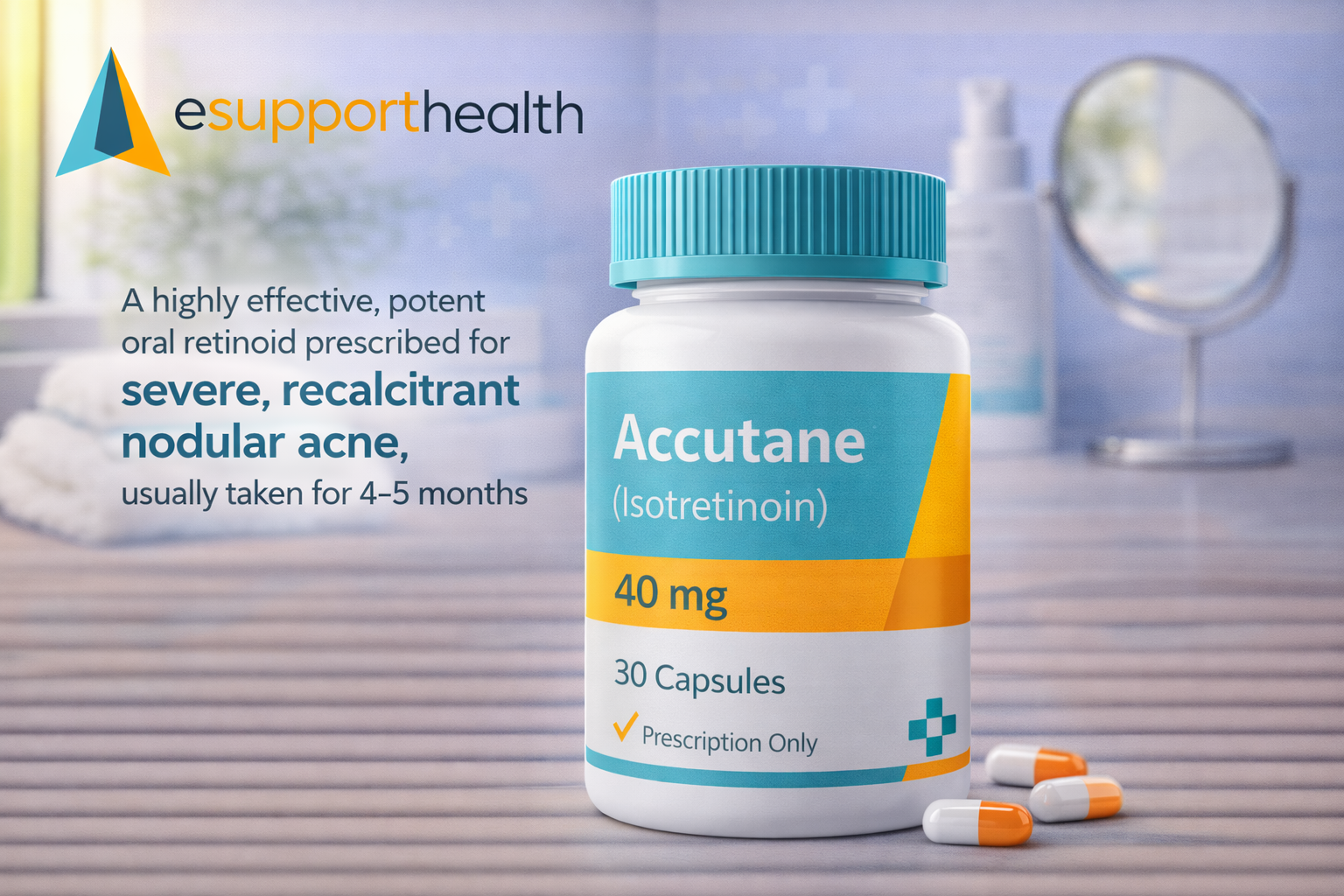
Medication Overview
Isotretinoin is an oral retinoid used in the treatment of severe nodular acne and acne that has not responded to conventional therapies such as topical agents or oral antibiotics.
It works by targeting several underlying mechanisms of acne development, including excess sebum production, follicular obstruction, bacterial growth, and inflammation.
Due to its potency and risk profile, isotretinoin is prescribed within a highly controlled clinical framework that includes monitoring and patient-specific risk assessment.
Isotretinoin Therapy: Sebaceous Suppression, Acne Pathophysiology, and Regulated Dermatologic Care
Severe Acne and Treatment Resistance
Severe acne involves deeper inflammation, nodular lesions, and potential scarring.
In some individuals, standard therapies such as topical retinoids, benzoyl peroxide, or oral antibiotics may not provide sufficient control. Isotretinoin is often considered when these approaches are inadequate.
Sebaceous Gland Activity and Oil Production
Excess sebum production is a major contributor to acne formation.
Isotretinoin significantly reduces sebaceous gland activity, leading to decreased oil production. This change alters the skin environment and reduces conditions that promote acne development.
Follicular Keratinization and Pore Obstruction
Acne is associated with abnormal shedding of skin cells within hair follicles.
Isotretinoin helps normalize this process, reducing blockage of pores and preventing the formation of comedones.
Bacterial Reduction and Inflammatory Control
Cutibacterium acnes contributes to inflammation in acne.
By reducing sebum production and altering the follicular environment, isotretinoin indirectly reduces bacterial proliferation and associated inflammatory responses.
Long-Term Remission Potential
Unlike many acne treatments that manage symptoms, isotretinoin may lead to prolonged remission.
This effect is related to its impact on sebaceous gland function and overall acne pathophysiology. Treatment courses are typically finite but require careful planning.
Strict Regulation and Monitoring Requirements
Isotretinoin is prescribed under regulated programs due to its safety profile.
Treatment involves structured monitoring, laboratory testing, and adherence to specific guidelines. These safeguards are essential for safe use.
Teratogenic Risk and Pregnancy Prevention Requirements
Isotretinoin carries a high risk of severe birth defects if used during pregnancy.
For this reason, strict pregnancy prevention protocols are required, including regular testing and adherence to regulated programs. These safeguards are central to safe treatment.
Patient education and compliance are essential components of care.
Laboratory Monitoring and Clinical Oversight
Regular laboratory monitoring is part of isotretinoin therapy.
This may include evaluation of liver function, lipid levels, and other parameters depending on clinical context. Monitoring helps ensure safe continuation of treatment and early detection of potential issues.
Psychological and Systemic Considerations
Treatment decisions may include assessment of psychological and systemic factors.
While isotretinoin is effective, clinicians consider overall patient health, mental well-being, and risk profile when initiating therapy. This comprehensive approach supports safe and individualized care.
How Isotretinoin Works
Isotretinoin is a vitamin A derivative that affects gene expression in skin cells.
It reduces sebaceous gland size and activity, normalizes keratinization, decreases inflammation, and limits bacterial growth. These combined effects target multiple pathways involved in acne development.
Key Prescribing Information
| Medication Class | Oral retinoid |
|---|---|
| Generic name | Isotretinoin |
| Brand name | Accutane |
| Administration | Oral capsule |
| Typical Dose | Weight-based and determined by clinician |
| Indication | Severe nodular acne, treatment-resistant acne |
| Prescribing | Restricted; requires licensed dermatology evaluation, monitoring, and adherence to regulated safety programs |
Treatment duration depends on the condition being treated, symptom severity, and individual response to therapy.
Candidate Criteria
Isotretinoin may be considered for individuals with severe acne or acne that has not responded to standard treatments.
Candidates typically include patients with nodular acne, scarring risk, or significant psychosocial impact. Suitability depends on medical history, prior treatment response, and risk assessment.
Final eligibility is determined through a licensed clinician.
Safety
Isotretinoin requires strict adherence to safety protocols.
Potential considerations include dry skin and mucous membranes, laboratory abnormalities, and serious risks such as teratogenicity. Pregnancy prevention measures and regular monitoring are essential.
Patients must follow all clinical instructions and reporting requirements during treatment.
Clinical Onset & Expectations
Initial skin changes may occur, and temporary worsening of acne is possible.
Gradual improvement in acne severity typically develops over time.
Many patients experience sustained improvement following completion of therapy.
Telehealth Prescribing Framework
Isotretinoin prescribing through telehealth follows a highly regulated and structured process.
Patients complete a detailed intake including dermatologic history, prior treatments, and medical background. Laboratory testing and eligibility screening are required.
A licensed provider determines appropriateness for therapy and ensures compliance with all regulatory requirements. Ongoing monitoring and follow-up are mandatory components of care.
Secure Medical Intake
Complete a confidential health questionnaire including symptoms, medical history, and current medications.
Licensed Provider Review
A licensed clinician evaluates your health information and may request additional details or a virtual consultation.
Clinical Decision & Treatment Plan
If appropriate, the provider determines a treatment plan and provides dosing guidance and monitoring instructions.
eRx & Pharmacy Fulfillment
If prescribed, the medication is electronically sent to a licensed pharmacy for dispensing.
Frequently Asked Questions
Can I buy Accutane online?
Isotretinoin may be prescribed online only through licensed providers following strict evaluation and regulatory requirements.
What is Accutane used for?
It is used to treat severe or treatment-resistant acne.
Does Accutane require monitoring?
Yes, regular monitoring and laboratory testing are required.
How long is Accutane treatment?
Treatment is typically completed over several months, depending on clinical response.
Are there strict safety requirements?
Yes, treatment involves regulated protocols and adherence to safety programs.
How does isotretinoin treat acne?
It reduces oil production, normalizes skin cell turnover, and decreases inflammation.
Is Accutane used for mild acne?
It is generally reserved for severe or resistant cases.
Can Accutane cause initial worsening of acne?
Temporary worsening may occur early in treatment.
Does isotretinoin require lab tests?
Yes, laboratory monitoring is typically required during treatment.
Why is Accutane regulated?
It has significant safety considerations that require controlled prescribing.
Medical disclaimer: This content is for informational purposes only and does not constitute medical advice, diagnosis, or treatment. Isotretinoin is a highly regulated prescription medication and should be used only under the supervision of a licensed healthcare provider. Treatment requires strict adherence to safety protocols, monitoring, and applicable regulatory programs.
Explore More Treatments
Tretinoin Topical — prescription retinoid therapy for acne and skin renewal. A topical vitamin A derivative used to treat acne and support skin cell turnover. Tretinoin helps regulate pore function and reduce acne formation when used under clinical guidance.
Clindamycin Topical — prescription antibiotic therapy for acne management. A topical antibiotic used to reduce acne-causing bacteria and inflammation in the skin. Clindamycin supports targeted dermatologic treatment when used under clinical guidance.
Valtrex (Valacyclovir) — antiviral therapy for herpes virus management. A prescription antiviral medication used to manage herpes simplex virus (HSV) infections, including oral and genital herpes. Valtrex supports symptom control and viral suppression when clinically appropriate.