PRESCRIPTION MEDICATIONS
Buspirone (Buspar)
Buspirone, commonly known by the brand name Buspar, is a prescription medication used primarily in the treatment of generalized anxiety disorder (GAD) and certain chronic anxiety conditions. Unlike benzodiazepines, buspirone belongs to a different class of medications often referred to as anxiolytic serotonin receptor modulators.
Buspirone influences neurotransmitter systems involved in emotional regulation, particularly serotonin pathways associated with anxiety and stress response. Because of its unique pharmacological profile, it does not produce the sedative effects typically associated with many traditional anti-anxiety medications.
By modulating serotonin receptor activity, buspirone may help reduce persistent worry, nervous tension, and cognitive symptoms of anxiety.
Begin Buspirone Treatment Through eSupport Health
Starting treatment through eSupport Health begins with a secure online medical evaluation completed by a licensed healthcare provider. During this process, clinicians review your symptoms, medical history, and current medications to determine whether treatment is appropriate. If a medication is recommended, a prescription may be issued in accordance with medical guidelines and transmitted to a licensed pharmacy for dispensing. This streamlined telehealth approach allows patients to access professional care and treatment guidance in a convenient and confidential manner.
This page provides educational information about how Buspirone works, who may be evaluated for treatment, potential safety considerations, and what individuals may expect during therapy.
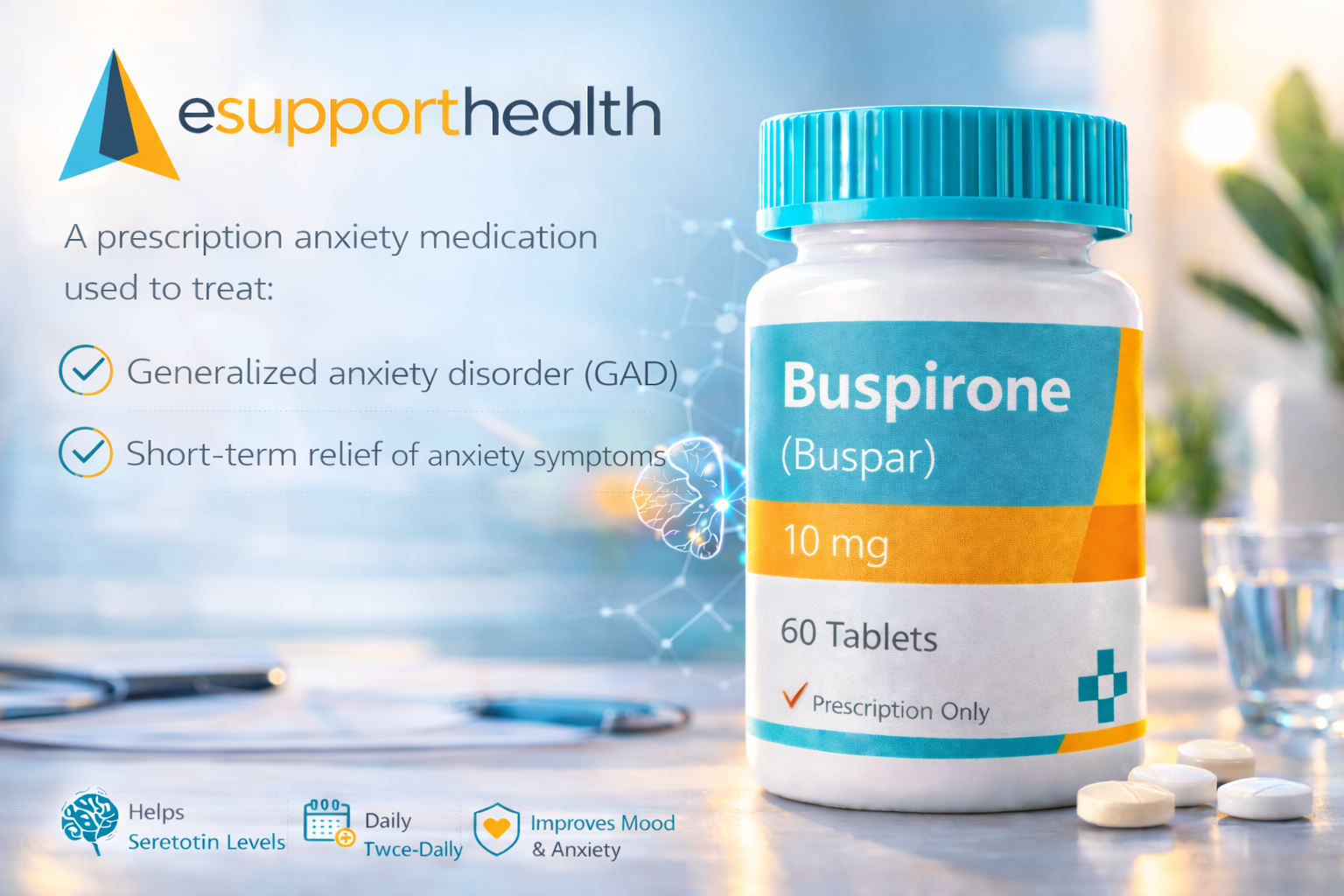
Medication Overview
Buspirone, commonly known by the brand name Buspar, is a prescription medication used primarily in the treatment of generalized anxiety disorder (GAD) and certain chronic anxiety conditions. Unlike benzodiazepines, buspirone belongs to a different class of medications often referred to as anxiolytic serotonin receptor modulators.
Buspirone influences neurotransmitter systems involved in emotional regulation, particularly serotonin pathways associated with anxiety and stress response. Because of its unique pharmacological profile, it does not produce the sedative effects typically associated with many traditional anti-anxiety medications.
By modulating serotonin receptor activity, buspirone may help reduce persistent worry, nervous tension, and cognitive symptoms of anxiety. This page provides educational information about how buspirone works, who may be evaluated for treatment, potential safety considerations, and what individuals may expect during therapy.
Understanding Buspirone: A Non-Sedative Medication for Anxiety
Buspirone is distinct from many traditional anxiety medications because it does not belong to the benzodiazepine class. Instead, it acts on serotonin receptors that help regulate emotional processing and stress response.
Serotonin is a neurotransmitter involved in mood regulation, cognitive function, and emotional stability. When serotonin signaling becomes disrupted, individuals may experience persistent worry, nervous tension, or difficulty concentrating.
By influencing serotonin receptor activity, buspirone may help stabilize communication within neural circuits responsible for anxiety regulation. Because this process involves gradual neurological adaptation, treatment effects typically develop over time.
Why Bupropion Is Different From SSRIs and SNRIs
Most commonly prescribed antidepressants belong to the SSRI or SNRI classes, which influence serotonin or serotonin-norepinephrine signaling. Bupropion operates through a different mechanism, targeting dopamine and norepinephrine transporters.
This difference means that bupropion may affect symptoms related to energy levels, motivation, and concentration in ways that differ from serotonin-focused medications. Because of these distinctions, clinicians sometimes consider bupropion when evaluating alternative antidepressant strategies.
The Role of Serotonin in Anxiety Regulation
Serotonin helps regulate emotional responses and stress processing in the brain. When serotonin signaling becomes dysregulated, neural circuits involved in fear response and worry may become more reactive.
Buspirone interacts with specific serotonin receptors that help regulate these pathways. By modulating serotonin signaling, the medication may support improved emotional stability and reduced anxiety over time.
Why Buspirone Works Gradually
Unlike medications designed to produce immediate calming effects, buspirone works through gradual changes in neurotransmitter receptor activity. These changes influence how neural circuits involved in anxiety regulation respond to stress signals.
Because this process involves neurological adaptation, consistent daily dosing is typically required before improvements become noticeable.
Understanding Chronic Anxiety and Brain Signaling
Generalized anxiety disorder is often associated with persistent activation of neural circuits involved in stress perception. Brain regions such as the amygdala and prefrontal cortex play key roles in processing perceived threats and emotional responses.
When these circuits become overly reactive, individuals may experience ongoing worry or tension even in the absence of immediate danger. Medications that influence serotonin signaling may help stabilize these pathways.
Why Anxiety Treatment Often Combines Medication and Therapy
Medication therapy may help regulate biological systems involved in anxiety, while psychotherapy can help individuals develop coping strategies for managing stress and anxious thought patterns.
Combining both approaches may provide a more comprehensive treatment strategy for individuals experiencing chronic anxiety symptoms.
The Importance of Consistency in Anxiety Treatment
Because buspirone works gradually, consistent medication use and follow-up with a healthcare provider are important for evaluating treatment progress.
Clinicians may adjust dosing strategies over time to ensure that therapy remains appropriate for the patient’s symptoms and treatment goals.
Why Non-Sedative Anxiety Treatments Are Important for Long-Term Care
Many individuals with generalized anxiety disorder experience symptoms that persist for months or even years. While certain medications can provide rapid calming effects, some of these treatments are intended primarily for short-term use due to risks related to sedation or dependence.
Buspirone represents a different therapeutic approach. Because it does not act on the same neurological pathways as sedative anti-anxiety medications, it may be considered for individuals who require longer-term management of anxiety symptoms.
Instead of producing immediate calming effects, buspirone gradually influences serotonin receptor activity involved in emotional regulation. This mechanism allows the medication to support stabilization of anxiety-related neural circuits over time without causing significant sedation.
For many patients, the goal of treatment is not simply temporary relief, but improved long-term emotional stability and daily functioning.
How Brain Circuits Regulate Worry and Stress Response
Anxiety disorders involve complex interactions between several regions of the brain responsible for evaluating threats and regulating emotional responses. Key structures involved in this process include the amygdala, which processes fear signals, and the prefrontal cortex, which helps regulate emotional reactions.
When anxiety pathways become overactive, individuals may experience persistent worry even when no immediate threat is present. This heightened neural activity can contribute to symptoms such as restlessness, irritability, difficulty concentrating, and sleep disturbances.
Buspirone influences serotonin receptor signaling within these neural networks. By modulating serotonin activity, the medication may help restore more balanced communication between brain regions involved in emotional regulation and stress perception.
Why Gradual Neurochemical Changes Support Anxiety Improvement
Unlike medications designed to produce immediate sedation, buspirone works through gradual neurochemical adjustments within the brain. These adjustments influence how serotonin receptors respond to stress-related signals.
Over time, these changes may alter how neural circuits process anxiety triggers. Rather than reacting with heightened alarm responses, the brain may gradually develop more balanced stress regulation.
Because these changes occur progressively, clinicians typically recommend consistent medication use and follow-up evaluation when assessing treatment outcomes. Gradual improvement in worry patterns and emotional stability is often a key goal of long-term anxiety treatment.
How Buspirone (Buspar) Works
Buspirone works primarily by modulating serotonin receptor activity, particularly the 5-HT1A receptor, which plays a role in regulating mood and anxiety.
Rather than blocking neurotransmitter reuptake like many antidepressants, buspirone acts as a partial agonist at specific serotonin receptors. This action helps regulate the balance of serotonin signaling within neural circuits associated with emotional regulation.
Over time, these changes may reduce excessive worry and improve the brain’s response to stress.
Key Prescribing Information
| Medication Class | Anxiolytic serotonin receptor modulator |
|---|---|
| Generic name | Buspirone |
| Brand name | Buspar |
| Administration | Oral tablet |
| Typical Frequency | Two to three times daily |
| Dose Adjustment | Determined by licensed clinician |
| Monitoring | Periodic clinical follow-up recommended |
Treatment duration and dosing decisions depend on symptom severity, treatment response, and overall clinical evaluation.
Candidate Criteria
Healthcare providers may evaluate buspirone for individuals experiencing persistent symptoms of anxiety.
Potential candidates may include individuals experiencing:
- chronic worry or nervous tension
- difficulty concentrating due to anxiety
- restlessness or irritability
- sleep disturbances associated with anxiety
Clinicians consider medical history, current medications, and symptom patterns when determining whether buspirone may be appropriate.
Safety
Like all prescription medications, buspirone may cause side effects in some individuals.
Common side effects may include:
- dizziness
- headache
- nausea
- nervousness
- lightheadedness
Buspirone is generally considered to have a lower risk of sedation and dependency compared with benzodiazepine medications.
Patients should inform their healthcare provider about other medications or supplements they are taking to reduce the risk of potential drug interactions.
Clinical Onset & Expectations
Buspirone typically requires several weeks of consistent use before therapeutic benefits become noticeable.
Some individuals may notice mild reductions in physical tension or nervousness.
Gradual improvements in worry patterns and emotional stability may begin.
More consistent symptom relief may develop as treatment continues.
Because treatment responses vary, clinicians typically monitor progress and adjust therapy if needed.
Telehealth Prescribing Framework
A licensed provider reviews your information to determine whether treatment is medically appropriate. Prescriptions are not guaranteed and are issued only when clinically indicated and permitted by applicable laws.
Secure Medical Intake
Complete a confidential health questionnaire including symptoms, medical history, and current medications.
Licensed Provider Review
A licensed clinician evaluates your health information and may request additional details or a virtual consultation.
Clinical Decision & Treatment Plan
If appropriate, the provider determines a treatment plan and provides dosing guidance and monitoring instructions.
eRx & Pharmacy Fulfillment
If prescribed, the medication is electronically sent to a licensed pharmacy for dispensing.
Frequently Asked Questions
How long does bupropion take to work?
Many individuals notice gradual improvement within several weeks, although full therapeutic effects may take six to eight weeks.
How long does buspirone take to work?
Many individuals notice gradual improvement within several weeks of consistent treatment.
Is buspirone addictive?
Buspirone is not considered addictive and is not classified as a controlled substance.
Can buspirone treat panic attacks?
Buspirone is primarily used for generalized anxiety disorder rather than acute panic symptoms.
Can buspirone be used long term?
Some individuals may use buspirone long term under medical supervision depending on their treatment needs.
Can buspirone be combined with antidepressants?
In some cases, clinicians may prescribe buspirone alongside antidepressant medications when appropriate.
What makes buspirone different from benzodiazepines?
Buspirone affects serotonin receptors rather than GABA pathways and generally does not produce sedative effects.
Does buspirone cause drowsiness?
Buspirone typically has a lower risk of sedation compared with many other anti-anxiety medications.
Why does buspirone take time to work?
The medication gradually influences serotonin receptor signaling, which requires time for neural circuits to adapt.
Can buspirone improve concentration affected by anxiety?
By reducing persistent worry, buspirone may help some individuals experience improved focus.
How do clinicians determine if buspirone is appropriate?
Healthcare providers evaluate symptoms, medical history, and possible medication interactions before recommending treatment.
Medical disclaimer: This information is provided for educational purposes only and does not constitute medical advice. Medication therapy should only be initiated or modified under the supervision of a qualified healthcare professional following an appropriate clinical evaluation.
If you are experiencing a medical emergency or severe mental health crisis, seek immediate professional assistance.
Explore More Treatments
Venlafaxine, commonly known by the brand name Effexor, is a prescription medication used to treat several mood and anxiety disorders. It belongs to a class of antidepressants known as serotonin–norepinephrine reuptake inhibitors (SNRIs), which influence both serotonin and norepinephrine signaling within the brain.
Duloxetine, widely known by the brand name Cymbalta, is a prescription medication used to treat several mood disorders and certain chronic pain conditions. It belongs to the class of medications called serotonin–norepinephrine reuptake inhibitors (SNRIs), which influence both serotonin and norepinephrine signaling within the brain.
Bupropion, commonly known by the brand name Wellbutrin, is a prescription medication used primarily for the treatment of major depressive disorder and seasonal affective disorder. It belongs to a class of medications known as norepinephrine–dopamine reuptake inhibitors (NDRIs), which influence neurotransmitters involved in motivation, focus, and mood regulation.