PRESCRIPTION MEDICATIONS
Proscar (Finasteride 5 mg)
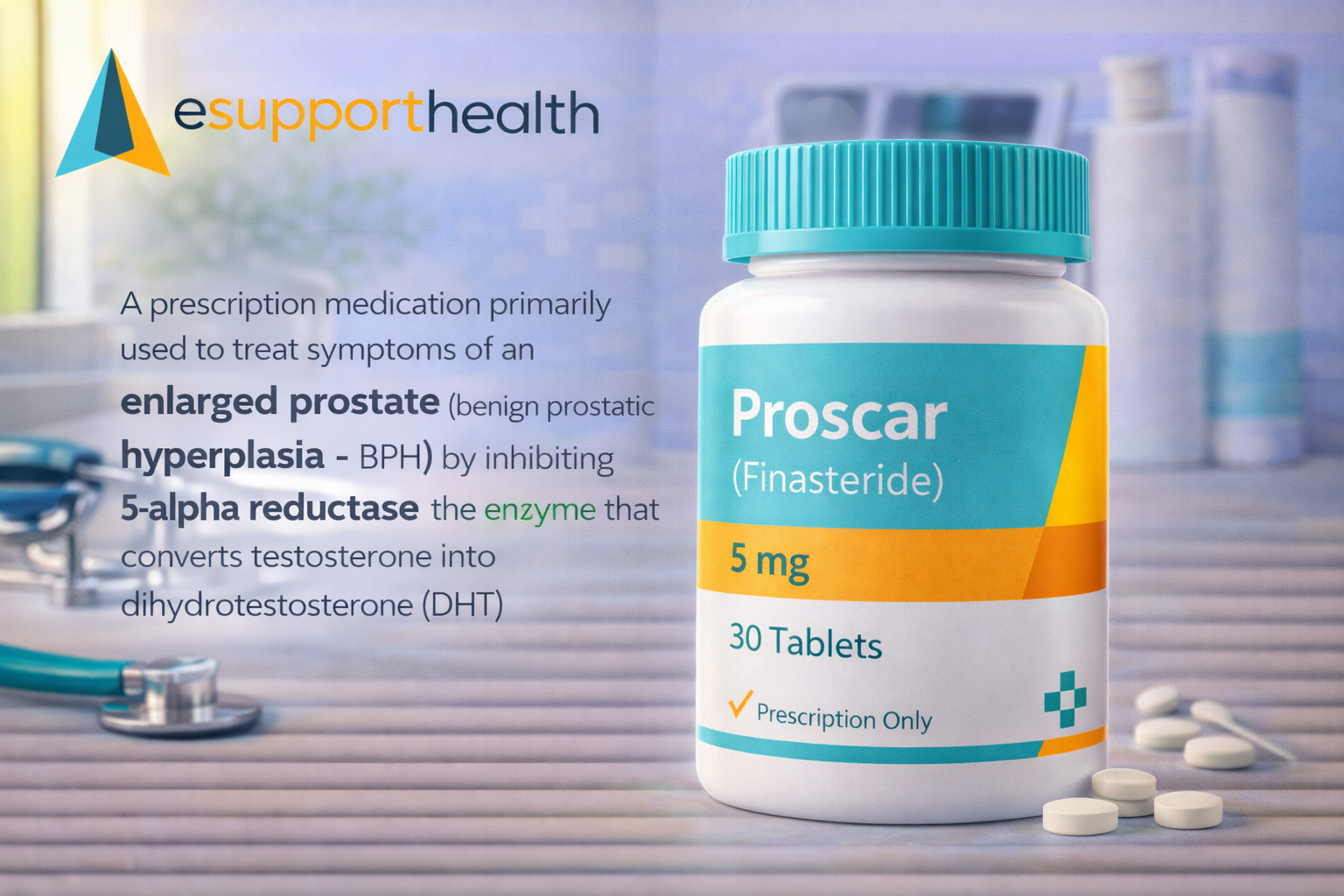
Proscar is the brand name for Finasteride 5 mg, a prescription medication used to treat symptoms associated with benign prostatic hyperplasia (BPH), commonly known as an enlarged prostate.
Begin Proscar Treatment Through eSupport Health
Starting treatment through eSupport Health begins with a secure online medical evaluation completed by a licensed healthcare provider. During this process, clinicians review your symptoms, medical history, and current medications to determine whether treatment is appropriate. If a medication is recommended, a prescription may be issued in accordance with medical guidelines and transmitted to a licensed pharmacy for dispensing. This streamlined telehealth approach allows patients to access professional care and treatment guidance in a convenient and confidential manner.
This page provides educational information about how Proscar works, treatment expectations, safety considerations, and telehealth evaluation for BPH management.
Medication Overview
Proscar is the brand name for Finasteride 5 mg, a prescription medication used to treat symptoms associated with benign prostatic hyperplasia (BPH), commonly known as an enlarged prostate. BPH is a noncancerous enlargement of the prostate gland that may develop as men age and can lead to urinary symptoms such as difficulty starting urination, weak urinary flow, or frequent nighttime urination.
Finasteride works by targeting hormonal pathways that contribute to prostate growth. By lowering levels of dihydrotestosterone (DHT), a hormone involved in prostate enlargement, the medication may help reduce prostate size and improve urinary function over time.
Benign prostatic hyperplasia is one of the most common urologic conditions affecting men over the age of 50. As the prostate gradually enlarges, it can compress the urethra and interfere with normal urine flow.
Proscar was developed to address this hormonal component of prostate enlargement. The medication belongs to a class of drugs called 5-alpha-reductase inhibitors, which reduce the conversion of testosterone into dihydrotestosterone (DHT).
Lower DHT levels can help slow the progression of prostate growth and may gradually reduce prostate volume. Because these changes occur slowly, Proscar is typically prescribed as a long-term therapy for managing BPH symptoms and reducing the risk of certain complications associated with prostate enlargement.
Understanding Benign Prostatic Hyperplasia and Hormonal Treatment
Benign prostatic hyperplasia occurs when prostate cells gradually increase in number under the influence of hormonal signals. This growth can narrow the urethra, the tube that carries urine from the bladder, making urination more difficult.
Hormonal therapies such as Finasteride address the underlying biological mechanism driving prostate enlargement. By lowering DHT levels, these medications help reduce stimulation of prostate tissue and may allow the gland to shrink gradually.
Because BPH develops slowly over time, treatment strategies often focus on long-term symptom control and prevention of progression.
Why the Prostate Enlarges With Age
The prostate gland is influenced by hormonal activity throughout a man’s life. As men age, hormonal balance changes in ways that can promote prostate tissue growth.
DHT plays a major role in this process. When testosterone is converted into DHT within prostate cells, it stimulates cellular activity that leads to gradual enlargement of the gland.
Understanding this hormonal mechanism has helped researchers develop medications that specifically target DHT production.
Common Symptoms of Benign Prostatic Hyperplasia
BPH symptoms often develop gradually and may worsen over time. Common urinary symptoms include:
- difficulty starting urination
- weak or interrupted urinary stream
- frequent urination, particularly at night
- a sensation of incomplete bladder emptying
These symptoms occur because the enlarged prostate compresses the urethra and interferes with normal bladder function.
How Hormonal Therapy Helps Manage Prostate Enlargement
Unlike medications that relax muscles around the prostate, Finasteride works by targeting the hormonal pathway responsible for prostate growth. By lowering DHT levels, the medication helps reduce stimulation of prostate cells.
Over time, this reduction in hormonal signaling may allow the prostate gland to shrink gradually, improving urinary flow and reducing symptoms associated with enlargement.
The Importance of Early Evaluation for Urinary Symptoms
Many men delay seeking medical evaluation for urinary symptoms associated with prostate enlargement. However, early assessment allows healthcare providers to identify the underlying cause and recommend appropriate treatment strategies.
Addressing symptoms early may help reduce discomfort and improve quality of life while preventing potential complications related to untreated BPH.
Long-Term Management of Benign Prostatic Hyperplasia
Because BPH develops slowly, treatment strategies often focus on long-term symptom control. Medications such as Finasteride may be used for extended periods to maintain lower DHT levels and help prevent further prostate enlargement.
Regular medical follow-up allows clinicians to monitor symptom progression and adjust treatment plans when necessary.
Lifestyle Factors That May Influence Urinary Health
Certain lifestyle factors may influence urinary symptoms associated with BPH. Examples include fluid intake patterns, caffeine consumption, alcohol use, and sleep habits.
Although lifestyle adjustments alone may not eliminate prostate enlargement, maintaining overall health may help support urinary function and complement medical treatment.
Finasteride vs Alpha-Blockers: Two Different BPH Treatment Strategies
Medications used to manage benign prostatic hyperplasia often fall into two primary categories: 5-alpha-reductase inhibitors and alpha-blockers. Finasteride belongs to the first category and works by reducing the hormonal signals that stimulate prostate growth.
Alpha-blockers, such as tamsulosin, work differently. Instead of shrinking the prostate, they relax smooth muscle around the bladder neck and prostate, allowing urine to flow more easily.
Because these medications act through different mechanisms, healthcare providers sometimes use them individually or in combination depending on symptom severity and prostate size.
How Prostate Enlargement Affects Urinary Function
The prostate gland surrounds the urethra, the tube that carries urine from the bladder out of the body. When the prostate enlarges, it can gradually narrow this passage and create resistance to urine flow.
As a result, the bladder must work harder to push urine through the urethra. Over time, this increased effort may lead to symptoms such as frequent urination, weak stream, or difficulty emptying the bladder completely.
Treatments for BPH aim to reduce this obstruction either by relaxing surrounding muscles or by reducing the size of the prostate gland.
Why Prostate Health Monitoring Is Important
Benign prostatic hyperplasia is a common condition, particularly in men over the age of 50. Although BPH itself is not cancerous, many urinary symptoms associated with prostate enlargement can overlap with other prostate conditions.
Regular evaluation allows healthcare providers to monitor symptom progression, review treatment effectiveness, and rule out other causes of urinary changes.
Routine monitoring may include symptom assessments, physical examinations, and appropriate diagnostic testing when necessary.
How Proscar (Finasteride) Works
Finasteride works by inhibiting the enzyme 5-alpha-reductase, which converts testosterone into dihydrotestosterone (DHT).
DHT is a hormone that stimulates prostate cell growth. By blocking the enzyme responsible for DHT production, Finasteride lowers DHT levels in the bloodstream and prostate tissue.
Reduced DHT activity decreases hormonal stimulation of prostate cells, which may gradually lead to reduced prostate volume and improved urinary flow over time.
Key Prescribing Information
| Medication Class | 5-alpha-reductase inhibitor |
|---|---|
| Generic name | Finasteride |
| Brand name | Proscar |
| Administration | Oral tablet |
| Typical Dose | Once daily |
| Indication | Benign prostatic hyperplasia |
| Prescribing | Determined by licensed clinician |
Treatment duration and dosage depend on the specific condition being treated, symptom severity, and individual patient response.
Candidate Criteria
Healthcare providers may evaluate Proscar for individuals experiencing symptoms of benign prostatic hyperplasia, including:
- frequent urination
- weak urinary stream
- difficulty starting urination
- nighttime urination
Clinicians typically review medical history, symptom severity, and overall health when determining whether Finasteride therapy may be appropriate.
Safety
Like all medications, Finasteride may cause side effects in some individuals.
Possible side effects may include:
- reduced libido
- changes in sexual function
- breast tenderness or enlargement
- mild skin reactions in rare cases
Women who are pregnant or may become pregnant should avoid handling crushed or broken Finasteride tablets, as the medication may affect fetal development.
Patients should discuss potential risks and benefits with a healthcare provider before starting treatment.
Clinical Onset & Expectations
Hormonal changes begin lowering DHT levels within prostate tissue.
Some individuals may notice improvements in urinary symptoms.
More noticeable improvements in urinary flow and symptom reduction may occur as prostate volume decreases.
Telehealth Prescribing Framework
A licensed provider reviews your information to determine whether treatment is medically appropriate. Prescriptions are not guaranteed and are issued only when clinically indicated and permitted by applicable laws.
Secure Medical Intake
Complete a confidential health questionnaire including symptoms, medical history, and current medications.
Licensed Provider Review
A licensed clinician evaluates your health information and may request additional details or a virtual consultation.
Clinical Decision & Treatment Plan
If appropriate, the provider determines a treatment plan and provides dosing guidance and monitoring instructions.
eRx & Pharmacy Fulfillment
If prescribed, the medication is electronically sent to a licensed pharmacy for dispensing.
Frequently Asked Questions
How long does Proscar take to work?
Because prostate size changes gradually, noticeable symptom improvement may take several months of consistent treatment.
Is generic Finasteride the same as Proscar?
Generic Finasteride contains the same active ingredient as Proscar and works through the same mechanism.
Do I need to take Proscar long term?
Many treatment plans involve long-term therapy to maintain reduced DHT levels.
Can Proscar be prescribed online?
Licensed healthcare providers may prescribe Proscar (Finasteride 5 mg) through telehealth consultations when clinically appropriate.
What causes an enlarged prostate?
An enlarged prostate, medically known as benign prostatic hyperplasia (BPH), develops when prostate cells gradually multiply as men age. Hormonal changes—particularly the influence of dihydrotestosterone (DHT)—can stimulate prostate tissue growth over time. As the gland enlarges, it may compress the urethra and lead to urinary symptoms such as difficulty starting urination, weak stream, or frequent nighttime urination.
How effective is Finasteride for BPH?
Finasteride has been shown in clinical studies to help reduce prostate size and improve urinary symptoms in many individuals with benign prostatic hyperplasia. By lowering DHT levels, the medication addresses one of the hormonal drivers of prostate enlargement. Because the prostate shrinks gradually, noticeable improvement may take several months of consistent treatment.
Can Finasteride improve urinary flow?
Yes. Finasteride may help improve urinary flow by reducing prostate volume over time, which can decrease pressure on the urethra. As the obstruction lessens, some individuals may experience stronger urinary flow and reduced urinary symptoms.
Can telehealth doctors prescribe BPH medications?
Yes. Licensed healthcare providers may prescribe medications used to treat benign prostatic hyperplasia through telehealth consultations when clinically appropriate. During the evaluation, clinicians review symptoms, medical history, and potential medication interactions before recommending treatment.
Can I buy Proscar online with a prescription?
Yes. Proscar (Finasteride 5 mg) may be prescribed through licensed healthcare providers using telehealth consultations when clinically appropriate. During the evaluation, clinicians review urinary symptoms, medical history, and possible medication interactions before determining whether treatment is suitable.
Is it safe to buy Finasteride online?
Purchasing prescription medications online can be safe when prescriptions are issued by licensed healthcare providers and medications are dispensed by regulated pharmacies. Patients should avoid websites that offer prescription medications without a medical evaluation.
How long does Finasteride take to improve prostate symptoms?
Finasteride works gradually because it reduces prostate size over time. Some individuals may notice improvements in urinary symptoms after three to six months of treatment, while maximum benefit may take six to twelve months.
Does Finasteride shrink the prostate?
Yes. Finasteride lowers levels of dihydrotestosterone (DHT), a hormone that stimulates prostate growth. Over time, reducing DHT levels may lead to decreased prostate volume, which can help relieve pressure on the urethra and improve urinary flow.
What dosage of Finasteride is used for BPH?
Proscar typically contains Finasteride 5 mg, taken once daily for the treatment of benign prostatic hyperplasia. The appropriate dosage and treatment plan should always be determined by a licensed healthcare provider.
Can Finasteride prevent BPH progression?
Finasteride may help slow the progression of prostate enlargement by reducing hormonal stimulation of prostate tissue. In some individuals, this can reduce the risk of worsening urinary symptoms or complications related to BPH.
Can Finasteride be used with other prostate medications?
In certain treatment plans, Finasteride may be used alongside alpha-blocker medications, which help relax muscles around the prostate and bladder neck. Healthcare providers determine whether combination therapy is appropriate based on symptom severity and prostate size.
Who should not take Proscar?
Proscar is typically prescribed for adult men with benign prostatic hyperplasia. It may not be appropriate for individuals with certain medical conditions or those taking medications that interact with Finasteride. Women who are pregnant or may become pregnant should avoid exposure to crushed or broken tablets.
How do doctors diagnose an enlarged prostate?
Healthcare providers usually diagnose benign prostatic hyperplasia by reviewing symptoms, medical history, and physical examination findings. Additional tests, such as urine studies, prostate-specific antigen (PSA) testing, or imaging studies, may be used when clinically appropriate.
Can telehealth consultations help manage prostate symptoms?
Yes. Telehealth consultations allow patients to discuss urinary symptoms and prostate health concerns with licensed healthcare providers remotely. Clinicians can review symptoms, evaluate medical history, and recommend treatment options when appropriate.
Medical disclaimer: This content is provided for educational purposes only and does not constitute medical advice. Medication therapy should only be initiated or modified under the supervision of a qualified healthcare professional following an appropriate clinical evaluation.
If you are experiencing a medical emergency or severe infection symptoms, seek immediate medical care.
Explore More Treatments
Sildenafil, widely recognized as the generic form of Viagra, is a prescription medication used to treat erectile dysfunction (ED) in adult men. It belongs to a class of medications known as phosphodiesterase type-5 (PDE5) inhibitors, which support erectile function by enhancing blood flow to penile tissues during sexual stimulation.
Tadalafil, widely recognized as the generic form of Cialis, is a prescription medication used to treat erectile dysfunction (ED) and certain urinary symptoms associated with benign prostatic hyperplasia (BPH). It belongs to a group of medications known as phosphodiesterase type-5 (PDE5) inhibitors, which improve blood flow by relaxing smooth muscle within blood vessel walls.
Vardenafil, commonly known as the generic form of Levitra, is a prescription medication used to treat erectile dysfunction (ED) in adult men. It belongs to a group of medications called phosphodiesterase type-5 (PDE5) inhibitors, which improve erectile function by enhancing blood flow to penile tissues during sexual stimulation.