PRESCRIPTION MEDICATIONS
Pantoprazole (Protonix)
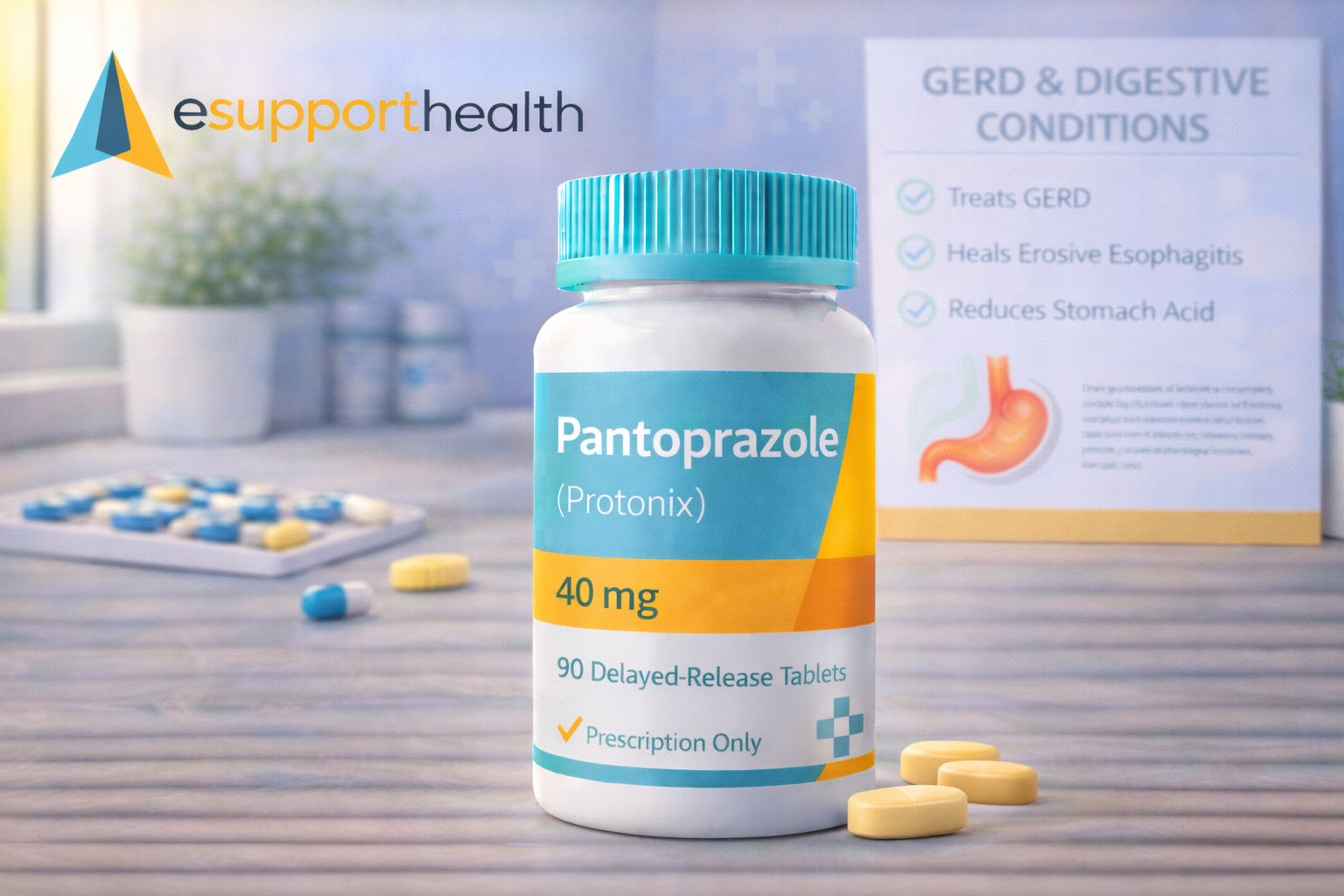
Pantoprazole (Protonix) — proton pump inhibitor for acid control and esophageal protection. A prescription medication used to reduce stomach acid production and manage conditions such as GERD and erosive esophagitis. Pantoprazole supports healing and long-term symptom control when clinically appropriate.
Begin Pantoprazole Treatment Through eSupport Health
Starting treatment through eSupport Health begins with a secure online medical evaluation completed by a licensed healthcare provider. During this process, clinicians review your symptoms, medical history, and current medications to determine whether treatment is appropriate. If a medication is recommended, a prescription may be issued in accordance with medical guidelines and transmitted to a licensed pharmacy for dispensing. This streamlined telehealth approach allows patients to access professional care and treatment guidance in a convenient and confidential manner.
This page provides an educational overview of Pantoprazole, including how it works, what conditions it may treat, safety considerations, and how telehealth providers evaluate treatment eligibility.
Medication Overview
Pantoprazole is a proton pump inhibitor (PPI) that suppresses gastric acid production by targeting acid-secreting cells in the stomach lining.
It is commonly prescribed for gastroesophageal reflux disease (GERD), erosive esophagitis, and other acid-related conditions. Excess stomach acid can lead to irritation of the esophagus, resulting in symptoms such as heartburn, regurgitation, and discomfort.
By reducing acid production, Pantoprazole helps relieve symptoms and supports healing of the esophageal lining. It is typically part of a comprehensive management plan that may include dietary and lifestyle modifications.
Pantoprazole Therapy: Acid Suppression, Mucosal Healing, and Long-Term Digestive Management
GERD Pathophysiology and Acid Exposure
GERD develops when stomach acid repeatedly flows into the esophagus, causing irritation and inflammation.
This repeated exposure can lead to symptoms such as burning discomfort, regurgitation, and in some cases tissue damage. Managing acid exposure is a key objective in treatment.
Pantoprazole reduces acid levels to limit this irritation.
Proton Pump Inhibition and Acid Reduction
Pantoprazole targets proton pumps responsible for acid secretion in the stomach.
These pumps represent the final step in acid production. By inhibiting them, Pantoprazole significantly reduces gastric acidity, creating a less irritating environment for the esophagus.
Esophageal Healing and Tissue Recovery
Lowering acid levels allows damaged esophageal tissue to recover.
Over time, reduced exposure to gastric acid may support healing of inflammation and improve overall comfort. This is an important goal in managing chronic reflux conditions.
Consistent Daily Therapy and Clinical Outcomes
Pantoprazole is typically used as a daily medication for sustained effect.
Consistent use maintains reduced acid levels throughout the day, supporting symptom control and healing. Irregular use may limit therapeutic benefit.
Differentiating PPIs from Other Acid Therapies
Proton pump inhibitors like Pantoprazole differ from other acid-reducing medications.
They provide more comprehensive suppression of acid production compared to H2 blockers or antacids. This makes them particularly useful in managing more persistent or severe conditions.
Integration with Lifestyle and Dietary Measures
Medication is often combined with lifestyle strategies to optimize results.
Avoiding trigger foods, adjusting meal timing, and maintaining a healthy weight may enhance treatment effectiveness. A combined approach supports long-term digestive health.
Delayed-Release Formulation and Acid Stability
Pantoprazole is often formulated as a delayed-release medication to protect it from degradation in stomach acid.
This design ensures that the medication reaches the appropriate site of action in the small intestine before absorption. Proper formulation supports consistent therapeutic effect and optimal acid suppression.
Acid Rebound and Discontinuation Strategy
Stopping proton pump inhibitors abruptly may lead to increased acid production in some individuals.
This rebound effect can temporarily worsen symptoms. Clinicians may recommend a structured approach to discontinuation when appropriate.
Understanding this phenomenon helps guide long-term management.
Comparative Role Among Proton Pump Inhibitors
Pantoprazole is one of several proton pump inhibitors available for acid-related conditions.
While similar in mechanism, individual PPIs may differ in pharmacokinetics and clinical use considerations. Selection is based on patient-specific factors and treatment response.
This individualized approach supports effective and tailored therapy.
How Pantoprazole Works
Pantoprazole inhibits the hydrogen-potassium ATPase enzyme system in gastric parietal cells.
This enzyme system is responsible for secreting acid into the stomach. By blocking this process, Pantoprazole significantly reduces gastric acid production, leading to decreased irritation of the esophagus.
Key Prescribing Information
| Medication Class | Proton pump inhibitor (PPI) |
|---|---|
| Generic name | Pantoprazole |
| Brand name | Protonix |
| Administration | Oral tablet (delayed-release) |
| Typical Dose | Determined by clinician based on condition and response |
| Indication | GERD, erosive esophagitis, acid-related disorders |
| Prescribing | Determined by a licensed clinician following medical evaluation |
Treatment duration and dosage depend on the specific condition being treated, symptom severity, and individual patient response.
Candidate Criteria
Pantoprazole may be considered for individuals experiencing persistent acid reflux or diagnosed acid-related conditions.
Candidates typically include patients with GERD, esophageal irritation, or chronic heartburn. Suitability depends on symptom profile, medical history, and clinical evaluation.
Final eligibility is determined by a licensed provider.
Safety
Pantoprazole is generally well tolerated when used appropriately.
Potential considerations may include headache, gastrointestinal changes, and long-term considerations associated with prolonged acid suppression. Clinical guidance helps determine appropriate duration of use.
Patients should follow prescribed instructions and report persistent or worsening symptoms.
Clinical Onset & Expectations
Initial reduction in acid production may begin early in treatment.
Symptom improvement such as reduced heartburn may become more noticeable.
Sustained use supports healing and long-term symptom control.
Telehealth Prescribing Framework
Pantoprazole prescribing through telehealth follows a structured and clinically guided process.
Patients complete a secure intake including symptoms, dietary factors, and medical history. A licensed provider evaluates whether acid suppression therapy is appropriate.
If prescribed, treatment includes dosing guidance and follow-up recommendations.
Secure Medical Intake
Complete a confidential health questionnaire including symptoms, medical history, and current medications.
Licensed Provider Review
A licensed clinician evaluates your health information and may request additional details or a virtual consultation.
Clinical Decision & Treatment Plan
If appropriate, the provider determines a treatment plan and provides dosing guidance and monitoring instructions.
eRx & Pharmacy Fulfillment
If prescribed, the medication is electronically sent to a licensed pharmacy for dispensing.
Frequently Asked Questions
Can I buy Pantoprazole online?
Pantoprazole may be prescribed online through a licensed provider following a clinical evaluation.
What is Pantoprazole used for?
It is used to treat acid reflux and related conditions.
How long does Pantoprazole take to work?
Some effects begin within days, with improvement over time.
Should Pantoprazole be taken daily?
Yes, it is typically used consistently for best results.
Does Pantoprazole require monitoring?
Monitoring may be recommended depending on duration and clinical use.
How does Pantoprazole reduce acid?
It blocks proton pumps responsible for acid production.
Can Pantoprazole help GERD symptoms?
Yes, it is commonly used for GERD management.
Can Pantoprazole heal the esophagus?
Reducing acid exposure may support healing.
Is Pantoprazole used long-term?
It may be used under medical guidance depending on the condition.
What side effects can occur with Pantoprazole?
Possible effects include headache or digestive changes.
Medical disclaimer: This content is for informational purposes only and does not constitute medical advice, diagnosis, or treatment. Pantoprazole is a prescription medication and should be used only under the supervision of a licensed healthcare provider. Treatment decisions are based on individual clinical evaluation and medical history.
Explore More Treatments
Omeprazole (Prilosec) — proton pump inhibitor for acid reflux and GERD management. A prescription medication used to reduce stomach acid production and manage conditions such as gastroesophageal reflux disease (GERD). Omeprazole supports healing of the esophagus and long-term symptom control when clinically appropriate.
Famotidine (Pepcid) — H2 receptor blocker for acid reduction and heartburn relief. A prescription medication used to reduce stomach acid production and manage conditions such as heartburn and GERD. Famotidine supports symptom control through targeted acid suppression when clinically appropriate.
Esomeprazole (Nexium) — advanced proton pump inhibitor for GERD and acid control. A prescription medication used to reduce stomach acid production and manage conditions such as GERD and erosive esophagitis. Esomeprazole supports sustained acid suppression and mucosal healing when clinically appropriate.