PRESCRIPTION MEDICATIONS
Levothyroxine (Synthroid)
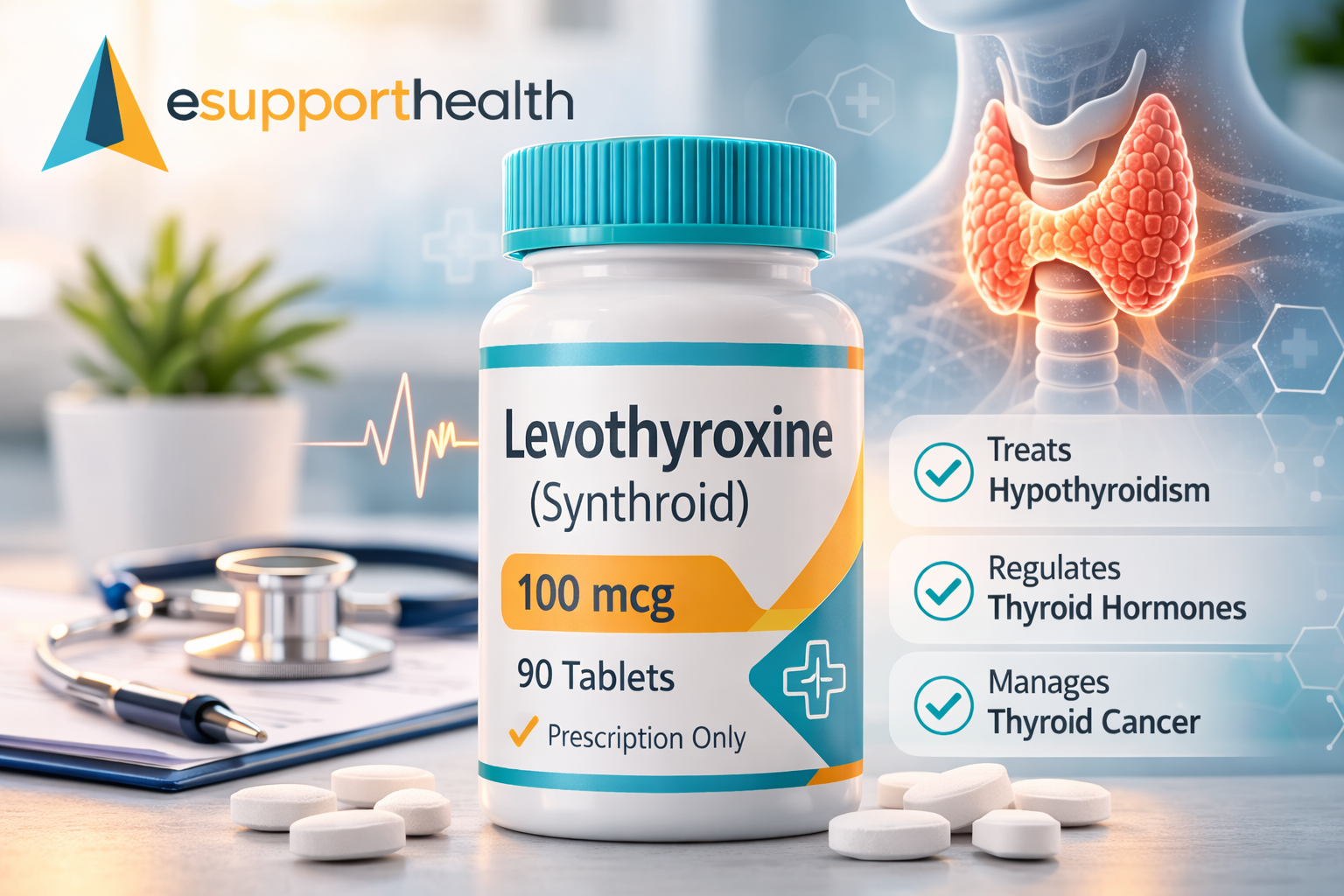
Levothyroxine (Synthroid) — precision thyroid hormone replacement therapy. A prescription medication used to restore normal thyroid hormone levels in individuals with hypothyroidism. Levothyroxine supports metabolic balance, energy regulation, and overall endocrine function when clinically appropriate.
Begin Levothyroxine Treatment Through eSupport Health
Starting treatment through eSupport Health begins with a secure online medical evaluation completed by a licensed healthcare provider. During this process, clinicians review your symptoms, medical history, and current medications to determine whether treatment is appropriate. If a medication is recommended, a prescription may be issued in accordance with medical guidelines and transmitted to a licensed pharmacy for dispensing. This streamlined telehealth approach allows patients to access professional care and treatment guidance in a convenient and confidential manner.
This page provides an educational overview of Levothyroxine, including how it works, what conditions it may treat, safety considerations, and how telehealth providers evaluate treatment eligibility.
Medication Overview
Levothyroxine is a synthetic form of thyroxine (T4), a hormone naturally produced by the thyroid gland. It is used to treat hypothyroidism, a condition in which the body does not produce sufficient thyroid hormone.
Thyroid hormones play a central role in regulating metabolism, energy levels, cardiovascular function, and temperature control. When levels are low, patients may experience fatigue, weight changes, cognitive slowing, and other systemic effects.
Levothyroxine therapy aims to restore hormone balance and normalize thyroid-stimulating hormone (TSH) levels. Treatment is highly individualized and guided by laboratory testing and clinical response.
Levothyroxine Therapy: Thyroid Regulation, Hormone Balance, and Clinical Management
Understanding Thyroid Hormones and Metabolic Regulation
Thyroid hormones are essential for regulating the body’s metabolic processes.
T4 (thyroxine) and its active form T3 influence how the body uses energy, maintains temperature, and supports organ function. When thyroid hormone levels are insufficient, metabolic activity slows, leading to a range of systemic symptoms.
Levothyroxine provides a consistent source of T4 to restore physiologic balance.
TSH as a Key Marker in Treatment Guidance
Thyroid-stimulating hormone (TSH) is the primary laboratory marker used to guide Levothyroxine therapy.
TSH reflects how the body is responding to circulating thyroid hormone levels. Elevated TSH typically indicates insufficient thyroid hormone, while suppressed TSH may suggest over-replacement.
Regular monitoring allows clinicians to adjust dosing with precision.
Individualized Dosing and Fine-Tuning
Levothyroxine dosing is highly individualized and requires careful adjustment.
Factors such as age, weight, cardiovascular status, and baseline thyroid function influence dose selection. Small dose changes can have significant physiologic effects, making gradual titration essential.
This precision-based approach supports both effectiveness and safety.
Consistency of Administration and Absorption
Levothyroxine absorption can be influenced by timing, diet, and other medications.
It is typically taken on an empty stomach to ensure consistent absorption. Variations in administration timing or interactions with certain substances may affect hormone levels and treatment stability.
Consistency in daily use is a key factor in achieving reliable outcomes.
Long-Term Hormone Replacement Strategy
For many individuals, Levothyroxine is a long-term or lifelong therapy.
Maintaining stable thyroid hormone levels supports metabolic health, cognitive function, and cardiovascular balance. Regular follow-up and laboratory monitoring are essential to ensure continued effectiveness.
Subclinical vs. Overt Hypothyroidism Management
Levothyroxine may be used in both overt and selected cases of subclinical hypothyroidism.
In overt hypothyroidism, treatment is generally indicated to restore hormone levels. In subclinical cases, decisions are based on TSH levels, symptoms, and individual risk factors.
Clinical judgment guides whether and how therapy is initiated.
Drug and Nutrient Interactions Affecting Absorption
Levothyroxine absorption may be influenced by certain medications, supplements, and dietary factors.
Substances such as calcium, iron, and certain gastrointestinal medications can interfere with absorption if taken simultaneously. For this reason, clinicians often recommend separating Levothyroxine from other substances by a specific time interval.
Managing these interactions helps maintain stable thyroid hormone levels.
Thyroid Hormone Balance and Cardiovascular Effects
Thyroid hormones play a direct role in cardiovascular function.
Both insufficient and excessive hormone levels can affect heart rate, rhythm, and vascular tone. Proper Levothyroxine dosing helps maintain cardiovascular stability by keeping hormone levels within an appropriate physiologic range.
This highlights the importance of accurate dosing and monitoring.
Life Stage Considerations and Dose Adjustments
Levothyroxine requirements may change over time due to life stage and physiologic factors.
Adjustments may be necessary during aging, pregnancy, or changes in body weight or health status. Regular reassessment ensures that therapy remains aligned with evolving clinical needs.
This dynamic approach supports long-term treatment effectiveness.
How Levothyroxine Works
Levothyroxine provides synthetic T4, which is converted in the body to the active hormone triiodothyronine (T3).
T3 binds to nuclear receptors and regulates gene expression involved in metabolism, energy production, and cellular function. By restoring normal hormone levels, Levothyroxine helps normalize metabolic processes and physiological balance.
Key Prescribing Information
| Medication Class | Thyroid hormone replacement |
|---|---|
| Generic name | Levothyroxine |
| Brand name | Synthroid, Levoxyl |
| Administration | Oral tablet |
| Typical Dose | Individualized based on TSH levels, clinical response, and patient factors |
| Indication | Hypothyroidism, thyroid hormone replacement |
| Prescribing | Determined by a licensed clinician based on laboratory evaluation and clinical assessment |
Treatment duration and dosage depend on the specific condition being treated, symptom severity, and individual patient response.
Candidate Criteria
Levothyroxine may be considered for individuals with confirmed or suspected hypothyroidism.
Candidates typically include patients with elevated TSH levels, reduced thyroid hormone production, or symptoms consistent with thyroid dysfunction. Suitability depends on laboratory findings, clinical presentation, and overall health status.
Final eligibility is determined through medical evaluation.
Safety
Levothyroxine is generally well tolerated when dosed appropriately, but over- or under-replacement can lead to clinical effects.
Excess dosing may result in symptoms such as increased heart rate, anxiety, or unintended weight loss, while insufficient dosing may leave hypothyroid symptoms unresolved. Monitoring ensures that hormone levels remain within an appropriate range.
Patients should follow prescribed instructions carefully and attend recommended follow-up evaluations.
Clinical Onset & Expectations
Some patients may begin to notice gradual improvements in energy levels and overall well-being.
TSH levels are typically reassessed, and dose adjustments may be made based on laboratory results.
Once optimal dosing is achieved, hormone levels and symptoms generally stabilize with consistent therapy.
Telehealth Prescribing Framework
Levothyroxine prescribing through telehealth follows a structured, lab-guided process.
Patients provide medical history, symptoms, and available laboratory data. A licensed provider evaluates thyroid function and determines whether treatment is appropriate.
If prescribed, therapy includes dosing guidance, lab monitoring recommendations, and follow-up to ensure effective thyroid management.
Secure Medical Intake
Complete a confidential health questionnaire including symptoms, medical history, and current medications.
Licensed Provider Review
A licensed clinician evaluates your health information and may request additional details or a virtual consultation.
Clinical Decision & Treatment Plan
If appropriate, the provider determines a treatment plan and provides dosing guidance and monitoring instructions.
eRx & Pharmacy Fulfillment
If prescribed, the medication is electronically sent to a licensed pharmacy for dispensing.
Frequently Asked Questions
Can I buy Levothyroxine online?
Levothyroxine may be prescribed online through a licensed provider following laboratory evaluation.
What is Levothyroxine used for?
It is used to treat hypothyroidism by replacing deficient thyroid hormone.
How long does Levothyroxine take to work?
Improvements may begin within weeks, with full stabilization over time.
Do I need regular lab tests while taking Levothyroxine?
Yes, TSH and related tests are typically monitored to guide dosing.
Is Levothyroxine a lifelong medication?
In many cases, it is used long-term depending on the underlying condition.
What does Levothyroxine do in the body?
It replaces thyroid hormone and helps regulate metabolism.
How is Levothyroxine dosing determined?
Dosing is based on TSH levels, symptoms, and individual factors.
Can Levothyroxine improve energy levels?
It may help restore energy in patients with hypothyroidism.
Should Levothyroxine be taken on an empty stomach?
Yes, it is typically taken under specific conditions to optimize absorption.
What happens if the dose is too high?
Excess hormone levels may lead to symptoms of overactive thyroid function.
Medical disclaimer: This content is for informational purposes only and does not constitute medical advice, diagnosis, or treatment. Levothyroxine is a prescription medication and should be used only under the supervision of a licensed healthcare provider. Treatment decisions are based on individual clinical evaluation, laboratory results, and applicable regulatory standards.
Explore More Treatments
Testosterone Gel (AndroGel) — transdermal hormone replacement for low testosterone. A prescription testosterone therapy designed to restore physiologic hormone levels in men with confirmed testosterone deficiency. Transdermal gel provides steady absorption and supports hormonal balance when clinically appropriate.
Spironolactone (Aldactone) — potassium-sparing diuretic for hormonal and cardiovascular care. A prescription medication used to manage fluid balance, blood pressure, and certain hormone-related conditions. Spironolactone works through aldosterone blockade to support cardiovascular and endocrine stability when clinically appropriate.
Cabergoline (Dostinex) — dopamine agonist therapy for prolactin regulation. A prescription medication used to reduce elevated prolactin levels and restore hormonal balance. Cabergoline is commonly prescribed for prolactin-related conditions when clinically appropriate.